
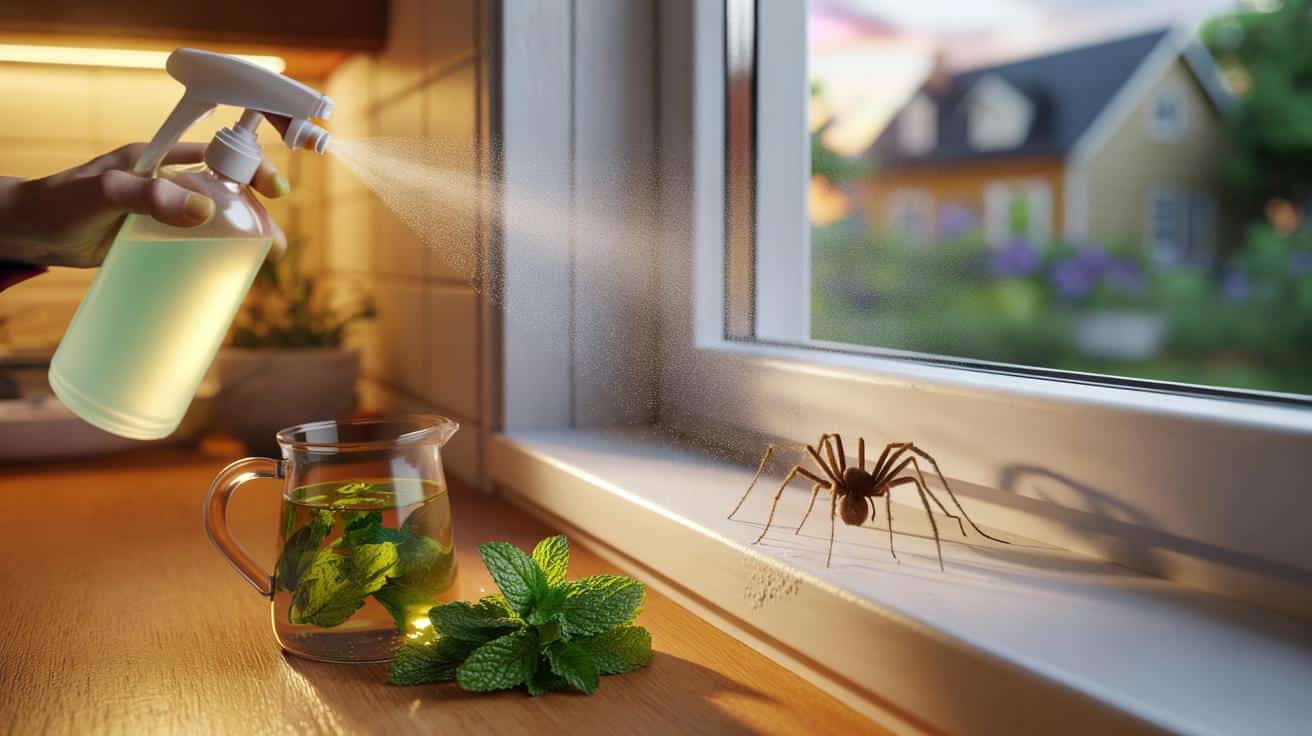
A small, stubborn spider on the ceiling; the quiet dread of a web by the window; the creeping feeling that tonight, it moves closer to the sofa. We’ve all had that moment when a tiny intruder takes over the room, and a shoe suddenly feels like a poor substitute for a plan. There’s a better way hiding next to your tea and biscuits. And it smells like mint.
I reached for a mug and saw it: long legs, patient, halfway up the curtain like it owned the night. No shouting, no glass-and-envelope, no drama. Just three peppermint tea bags dropping into a jug, a breath of cool air, and a quiet spray along the sill. The spider paused, then turned and made for the crack behind the radiator. Gone in under a minute.
The pantry scent spiders can’t stand
Trust your nose: peppermint doesn’t just smell fresh to us. It’s sharp, volatile and bossy in the air. Spiders, with their tiny sensory hairs and chemical receptors, read that intensity like a warning sign. **Peppermint is the scent spiders hate most in everyday kitchens.** You don’t need a lab or a fumigator. Just something you already own.
In Norwich, a reader told me she sprays the skirting boards by the bin and the patio door every Sunday evening. Her sightings dropped from three a week to one in a fortnight. Search data mirrors that instinct: UK spikes for “peppermint for spiders” hit late August, right as house spiders wander in looking for mates and warmth. The ritual becomes part of Sunday. Brew. Cool. Mist. Then sleep.
Why does it work? Peppermint contains menthol and related compounds that flood a small space with a strong, prickly odour. Spiders don’t smell like we do, but they pick up airborne chemicals through receptors on legs and mouthparts. Overwhelming scent makes a doorway feel hostile, so they turn. **It repels; it doesn’t harm.** That’s the point. No toxins, no sticky traps. Just a smell that says “not welcome” at the right threshold.
How to use peppermint the clever way
Here’s the simple method when you’ve only got tea bags. Steep three peppermint tea bags in 250 ml of boiling water for 10 minutes. Let it cool fully, then pour into a clean spray bottle and add a tiny dash of washing-up liquid to help it cling. Mist door frames, window sills, skirting boards and the outside of bins. Re-apply every two to three days while the season runs.
If you’ve got peppermint essential oil, go lighter. Ten drops in 300 ml of warm water plus a splash of white vinegar, shake, spray the same routes. Don’t drench wooden finishes or silk curtains. Test an unseen patch first and wait a day. Let’s be honest: nobody does that every day. Still, small, consistent sprays beat one heroic blitz that you forget next week. **Consistency beats intensity.**
Plenty of people overdo the scent and then blame the method. Go steady. If you’ve got cats, keep the mix mild and avoid bedding; concentrated oils can irritate paws and noses. Focus on entry points: vents, cable holes, the gap under the back door. Clean old webs first so you’re not perfuming a spider’s “map”. This is the tiny home habit that quietly changes your evenings.
“Peppermint spray isn’t a magic shield. It works best as a nudge, paired with tidy corners, sealed gaps and a routine you can stick to,” says Tom, a North London technician who swears by tea-bag brews for late-summer callouts.
- Brew: 3 peppermint tea bags in 250 ml boiling water, 10 minutes.
- Cool: room temperature before bottling.
- Boost: a dash of washing-up liquid for cling; optional 1 tsp vinegar.
- Spray: sills, skirtings, vents, bin rims, door thresholds.
- Repeat: every 2–3 days, then weekly once traffic drops.
Rethinking spiders, without inviting them in
You don’t need to love spiders to live more calmly with them nearby. They help with flies and moths, they don’t want your bed, and they prefer quiet corners to human drama. Peppermint lets you set boundaries without guilt. It’s a polite tap on the shoulder that says, “Next house along, please.” Share it with a neighbour who’s done the glass-and-paper dance one too many times.
The trick is rhythm. A little tidy, a little sealant, a little scent. Close the daylight under doors with a brush strip. Wipe crumbs from the toaster tray. Dry out the bathroom after steamy showers. Your peppermint trail then does the rest, like guiding lights on a runway. The message is consistent, and the room feels different.
There’s a quiet pleasure in small fixes that hold. The jug on the counter. The cool bottle ready by the sink. The soft tss tss along the sill before bed, and the strange satisfaction of a corner that stays empty. Not war. Not fear. Just a minty, human nudge that turns a visitor around without a scene.
When you strip this back, it’s about control that feels kind. A household trick passed in whispers, tested at 10pm on a damp Tuesday, then texted to a mate who can’t sleep for scanning the ceiling. The pantry gives you power without harsh sprays or late-night panic. Post-its on the fridge help. So do reminders on your phone. Small rituals beat bravado, every time.
| Key point | Detail | Interest for the reader |
|---|---|---|
| Peppermint repels, not kills | Menthol-rich scent triggers avoid-and-turn behaviour | Humane, low-cost and quick to try tonight |
| Tea-bag method works | 3 bags, 250 ml water, cool, spray on entry points | No need for pricey oils or gadgets |
| Routine beats one-off bursts | Reapply every 2–3 days in peak season, then weekly | Fewer sightings, calmer evenings, long-term control |
FAQ :
- Does peppermint really keep spiders away?It won’t make a forcefield, but strong peppermint odour at doorways, vents and sills pushes most house spiders to turn back. Results stack when paired with tidy corners and sealed gaps.
- Can I use peppermint tea instead of essential oil?Yes. A strong brew from tea bags works for most homes. Essential oil is more concentrated, so go easy and keep it off delicate fabrics.
- Is it safe around pets and kids?Mild tea-based sprays are generally fine on hard surfaces. Keep bottles out of reach and avoid spraying pet beds. High concentrations of essential oils can irritate cats and small pets, so stay light.
- How often should I spray?Every two to three days during peak spider season, then once a week as sightings drop. Refresh after heavy cleaning or rain if you treat outdoor thresholds.
- What else do spiders dislike?Citrus peel, eucalyptus and vinegar can help, but peppermint wins for strength and availability. You can also fit door brush strips, tidy clutter and fix gaps for a broader, calmer defence.








Interesting read, but is there any controlled study showing peppermint outperforms plain cleaning or sealing gaps? Anecdotes are nice, yet species matter—do house Tegenaria/Eratigena react the same as cellar spiders? Also, could repeated exposure make them habituate? Not trying to be a grump, just want data before I mist my whole place.