
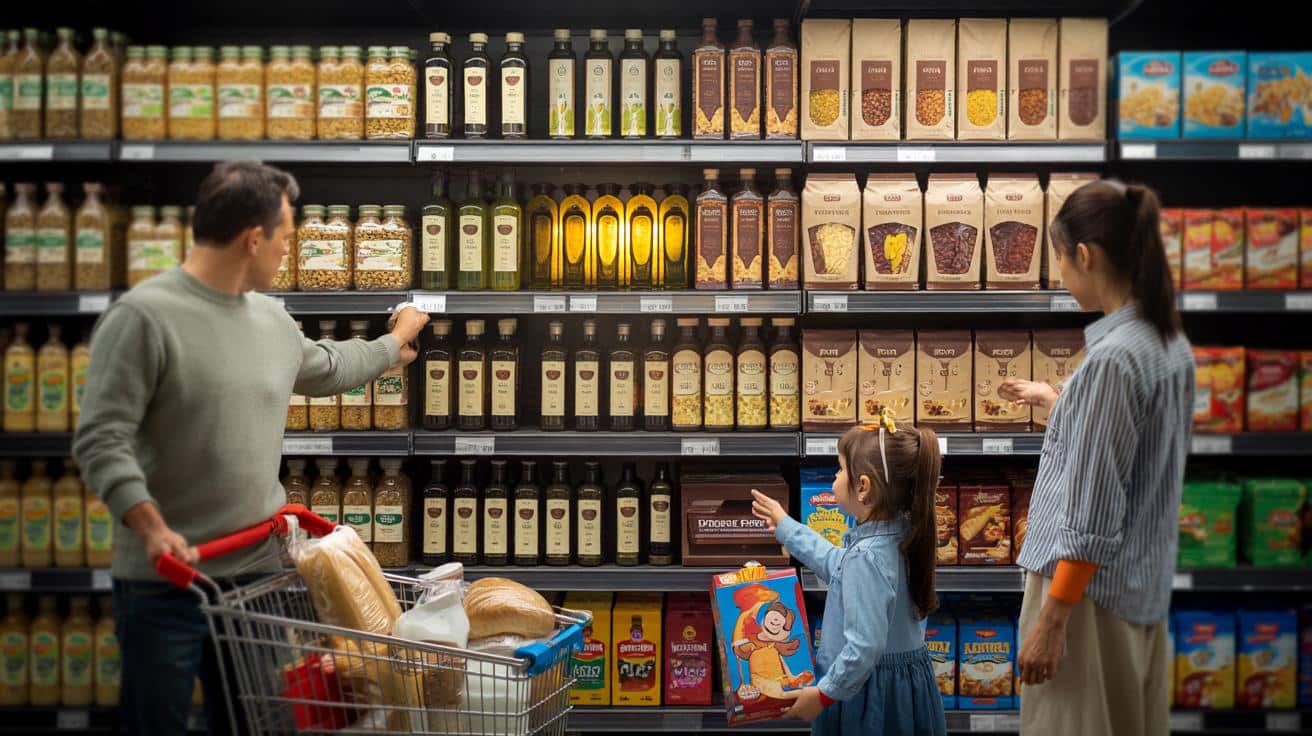
You go in for bread and milk, and somehow a fancy granola, a premium olive oil, and posh chocolate leap into your trolley. It isn’t clumsiness. It’s choreography. Supermarkets design shelves to guide your gaze and nudge your choice, and the sweet spot is right where your eyes naturally settle. You’re not broken. The aisle is brilliantly engineered.
15pm, watching a dad scan boxes while his daughter, still in school uniform, pointed at the cartoon tiger grinning from shoulder height. Behind them, a woman reached for the middle shelf olive oil without even reading the label. The hum of fridges and a faint bakery smell set the scene. We were all moving to an invisible tempo.
The expensive things were right there, almost greeting us by name. The cheaper ones needed a stretch or a bend. *You were meant to see it.*
The silent choreography of the shelf
Walk into any big supermarket and look straight ahead. That strip from chest to eye level is prime real estate. Brands fight for it because we’re wired to shop with our eyes first and our hands second. **Eye-level is buy-level** isn’t just a rhyme. It’s an industry mantra.
Think of the tea aisle. The premium loose-leaf tins gleam in the middle, labels clean and modern, prices a shade higher. Drop your gaze and you’ll find the value packs in plain sleeves, often with a better price per brew. Climb one shelf and niche imports appear, gorgeous but pricey. One simple nod or stoop can save a pound or two, sometimes more.
There’s logic behind the glamour. Shelves are laid out using planograms—digital maps that decide where each product sits, how many “facings” it gets, and which level it earns. Brands often pay **slotting fees** or offer promotions to secure those gold positions. The maths is brutal: every centimetre of shelf must earn its keep. Space isn’t decoration. It’s revenue per linear foot.
How to outsmart the aisle
Start with a tiny habit: scan top to bottom before you pick. That pause adds seconds, not minutes, and it resets your eyes. Compare the value line, the mid-tier, then the premium. Flip to **price per unit**—per 100g, per sheet, per litre—because the front label price can lie by omission.
We’ve all had that moment where the easy option wins because hunger and habit are loud. So make the shelf work for you. If it’s a staple—pasta, rice, oats—check the lower shelf first. If it’s a treat, set a price boundary in your head before you look. Let’s be honest: nobody really does that every day. But when you do, it works.
There’s a mindset shift hiding here: shop with your eyes moving, not parked at the middle. The middle is designed to be frictionless; the edges are where deals live.
“The shelf is a stage. The centre is the spotlight. The corners are where the interesting stuff waits in the wings.” — A veteran merchandiser, off the record
- Look high and low: value and niche live away from the centre strip.
- Read price per unit, not just the big label price.
- Treat end caps like adverts, not always bargains.
The economics behind your glance
Why this theatre? Because our eyes linger in the middle band, and that linger turns into lift. Brands with bigger ad budgets chase visibility, and retailers chase margin. A premium olive oil might make more profit per bottle than a standard one, even if it sells less. So it wins the centre stage.
There’s also a quiet battle between national brands and own label. Supermarkets want you to buy their private brand—it builds loyalty and margin—so they’ll give it multiple facings and friendly signage. National brands counter with promotional spend and those bright shelf-edge tags that pop in your peripheral vision. The shelf edge is where money talks.
Children’s eye level matters too. Sugary cereals and colourful snacks often land right where small hands can reach and small eyes lock on. Adults meet margin; kids meet mascots. That’s no accident. It’s a family decision finely tuned to a trolley’s height and a child’s plea.
Little tactics, big wins
Most of us shop on autopilot. So slip in pattern-breakers. Walk the aisle in a zigzag, not a straight line. Pick up the cheaper version first, then compare the premium—holding the value option sets a new anchor in your head. If a product is a weekly staple, find your baseline price and treat everything above it as a special-occasion buy.
Beware the halo. A clean label and nice typography can make a product feel healthier or better, and sometimes it is. Test your assumptions with two checks: ingredients you can pronounce and the unit price. If both look good, great. If not, the thriftier option might be hiding one shelf down, quietly waiting for you to bend your knees.
This trick also lives beyond aisles. End caps, chillers near the tills, and those “must-see” eye-level fridges are part of the same game. Buy with your plan, not the store’s.
“If you always shop from the middle shelf, you’re shopping someone else’s priorities.” — Shopper behaviour analyst
- Set a weekly “swap one” rule: trade a middle-shelf item for a top or bottom alternative.
- Treat bright shelf-edge labels as alerts, not instructions.
- When in doubt, step back two paces. Reframe the whole shelf and choose again.
Where your attention goes next
Grocery aisles are turning into media. Digital screens, electronic shelf labels, and retailer data all feed smarter planograms. The middle shelf won’t vanish. It will become even more dynamic, shifting by hour, promotion, and local taste. That means your best tool remains old-school: curiosity.
Stand back for a second and watch the dance. Which products scream for your eyes? Which whisper? The gap between them is where better value often hides. If a brand truly earns its place—taste, ethics, durability—you’ll feel good buying it, middle shelf or not. If not, take the detour. The cheapest item isn’t always the best choice, but the middle shelf isn’t always the best either.
Next time you reach out without thinking, pause. Scan up. Scan down. Pick with intent. The aisle will keep playing its music. You can change the tune.
| Key point | Detail | Interest for the reader |
|---|---|---|
| Eye-level drives spend | Middle shelves get premium placement because our gaze lands there first, raising sales and margin. | Spot when you’re being nudged and choose alternatives that fit your budget or values. |
| Planograms and fees | Retailers map shelves by data and often take fees or support from brands to secure prime space. | Understand the money flows behind displays to decode what’s hype and what’s value. |
| Look high and low | Value lines and niche gems usually sit above or below the centre strip, away from the spotlight. | Simple habit—scan top to bottom—can save money without sacrificing quality. |
FAQ :
- Is eye-level always the most expensive?Often, yes, because premium and promoted items cluster there. There are exceptions when a store pushes its own label, but the middle still skews pricier.
- Do end caps mean a bargain?Not automatically. End caps sell attention. Some deals are great, others are full price with big signs. Check the unit price.
- Where do the best value items sit?Frequently on the bottom shelf for staples and sometimes the top for niche or bulk packs. Scan both edges of the shelf.
- How can I avoid impulse buys?Shop with a shortlist, eat before you go, and pause for a unit-price check. One ten-second pause beats a week of regret.
- Are store brands worth it?Often, yes. Own label can match or beat brand quality, especially in basics like pasta, tinned tomatoes, oats, and cleaning supplies.





Great breakdown of planograms and slotting fees. I always check price per 100g now; amazing how the “deal” lable can hide a worse unit price. This nails how eye-level equals margin. Thanks for the nudge—scan top to bottom, every time.
Isn’t this kind of obvious though? Sometimes my local puts the store brand at eye level and it’s cheaper. Feels like “often, not always” is the key.