
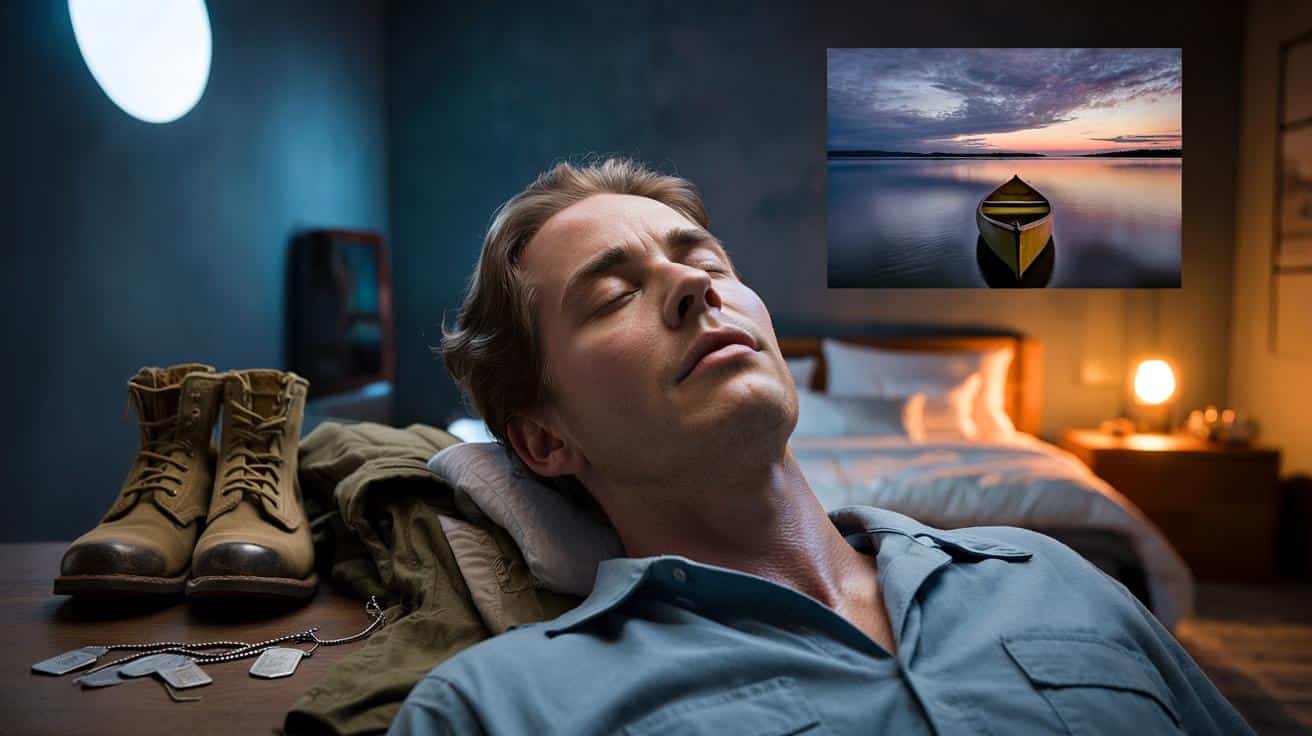
You’re wide awake at 1:43 a.m., blinking at the ceiling while your brain drafts emails you’ll never send. The military can’t afford nights like that. Pilots had to learn a trick to fall asleep fast—almost on command.
A friend, ex-service, leaned on the counter and showed me how he’d power down on a noisy transport plane. He spoke softly, like a person describing a knot that once saved them. Face loose. Shoulders heavy. A breath that hushes the body. He said the trick worked in barracks, on buses, against cold windows, even sitting upright with boots still laced.
He called it a method, not magic. It sounded suspicious, almost too clean. Then I tried it after a brutal day under strip lights. Two minutes later, I came back from the edge of sleep and realised I’d slipped under without noticing. Two minutes to silence.
Why soldiers needed a 120‑second switch‑off
Sleep is not a luxury in uniform. It’s fuel. On a flight deck or in a tent, nobody can stage-manage silence or perfect bedding. The brain races, the body hums, and the stakes are not an 8 a.m. meeting but a dawn briefing. The **Military Method** grew from this pressure: a tiny, repeatable drill that teaches the nervous system to stand down. It’s oddly physical and surprisingly kind. Relax the face. Drop the shoulders. Breathe with purpose. Then replace thought with a simple picture so the mind stops chasing its own tail.
The story often told traces back to a U.S. pre-flight school manual from the 1940s, passed around locker rooms and then the internet. The headline claim is stark: after six weeks of practice, up to 96% of trainees could nod off in about two minutes. The exact number is debated. The vibe isn’t. Field notes from veterans echo the same thing: it’s portable, it’s teachable, and it works in ugly places. NHS figures say one in three UK adults struggles with sleep at least once a week. That’s a lot of bedrooms that feel like barracks.
Why would a 120‑second drill matter? Because the body listens to certain cues more than it listens to chatter. Drop micro‑tensions in the face and jaw and the brain reads “safe.” Let the shoulders hang and the chest soften, and the breath finds a slower tide. Long, gentle exhalations activate the **parasympathetic switch**, the side of your nervous system that stores tools for recovery. The final step—neutral imagery or a blank mantra—stops rumination from hijacking the moment. It’s not hypnosis. It’s basic wiring, used on purpose.
The Military Method, step by step
Lie on your back or settle in your seat. Release your face first: forehead smooth, eyes heavy in their sockets, jaw unlatched, tongue resting like a pebble. Let the shoulders fall. Relax the upper arms, then forearms, then hands—one side at a time. Exhale slowly and let the chest slacken. Sink the thighs, the calves, the feet, as if each part melts a little lower. For 10 seconds, keep the mind empty of problem-solving. Then picture something simple: a canoe on a glassy lake at dusk; a dark room with a velvet hammock; or repeat “don’t think” for ten slow seconds. It sounds oddly childlike. *It feels almost like cheating.*
People trip up by trying too hard. Sleep punishes effort. Think of it like parking a car: the last bit is a glide, not a shove. If your jaw clenches, open your lips a touch. If your breath is choppy, lengthen the out-breath till it’s soft at the end, four seconds in, six out. We’ve all had that moment where the brain sprints through tomorrow’s to-do list like it’s training for a marathon. When that happens, gently slide back to the picture or the simple phrase. Let’s be honest: nobody really does this every day. Even a few nights a week changes the vibe of mornings.
You might not hit lights-out in two minutes on night one. The original training said six weeks of practice built the reflex. Results often arrive sooner once your body trusts the pattern.
“The body follows the breath. When the exhale is longer, the guard dog in your nervous system lies down,” a former military trainer told me.
- Do the same sequence every time: face, shoulders, chest, legs, 10 seconds of quiet, then imagery or the mantra.
- Dim the room and cool it slightly. The method still works on trains and planes, just go softer on expectations.
- If thoughts intrude, label it “thinking,” and reset to the picture. Don’t wrestle the thought.
- If you wake at 3 a.m., run the drill again. No clock-watching. Give it two rounds before changing position.
Beyond barracks: a tiny ritual in a loud world
Most of us won’t sleep under rotor blades or in desert heat. We will sleep after late emails, with neighbours’ music leaking through walls, or the tug of a never-ending feed in our hands. That’s its own battlefield. The 120‑second method works because it gives you a lever you can pull even as life gets messy. It downsizes sleep into a series of small, doable moves that ask almost nothing from you. On nights when the mind roars, small and repeatable wins.
The deeper change is psychological. A method builds a feeling of control, and that feeling reduces dread. You’re no longer hoping sleep arrives like a bus that’s always late. You’re doing something. That alone cools the system. Wear it lightly. If it works, great. If it doesn’t tonight, that’s data, not failure. The next attempt is just two minutes away, a simple ritual that reminds your body it still remembers how to drift.
| Key point | Detail | Interest for the reader |
|---|---|---|
| Face-first relaxation | Smooth eyes, unhook the jaw, soften the tongue and brow | Quiets signals of vigilance that block sleep |
| Exhale-led breathing | Gentle rhythm, about four seconds in, six out | Lowers heart rate and nudges the body into recovery mode |
| Thought replacement | Neutral imagery or a simple “don’t think” loop for 10 seconds | Breaks rumination without a fight, keeping the mind quiet |
FAQ :
- Does the Military Method really work?Many people report strong results, especially after a few weeks of practice. It’s not a cure for clinical insomnia, yet it’s a solid tool for calming a busy mind.
- Is there scientific proof behind the exact “120 seconds” claim?The original number comes from training lore rather than a peer‑reviewed trial. The elements—muscle release, slow exhale, neutral imagery—are well supported by sleep and stress research.
- How long should I practice before I notice change?Some feel a shift in a few nights. The old training schedule suggested six weeks to make it automatic. Treat it like brushing your teeth: short, regular, boring—in a good way.
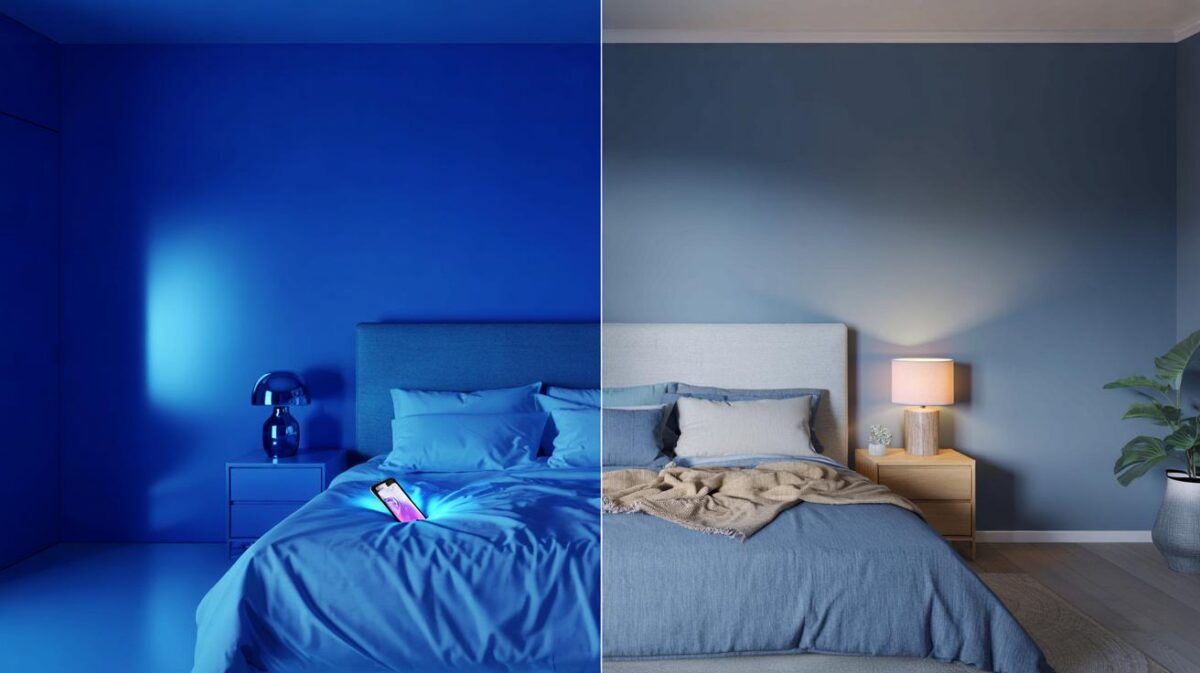
- Can I use it after caffeine or late-night screens?It still helps, but both caffeine and blue light make the road longer. Try a 90‑minute caffeine cut‑off in the afternoon and dimmer light at night to give the method a fair shot.
- What if I fall asleep and wake at 3 a.m.?Run one quiet round of the drill without checking the time. If you stay awake, switch positions or read something paper‑based under low light, then try again.






I tried the “face first, shoulders, slow exhale” sequence after a brutal day and it definitly calmed me down. Didn’t hit 120 seconds, but I felt a switch around minute three. That’s still a win. Should I practice at nap time too, or save it for bedtime only?