
Your chrome taps looked like jewellery once. Now they wear a chalky halo of limescale and mystery splashes that never quite buff away. We’ve all had that moment where the bathroom looks clean, yet the fixtures dull the whole scene by half a shade.
I watched mine catch the morning light, every water spot throwing back a white wink. The spray under the sink promised shine, smelt like a swimming pool, and left streaks that dried into new ones. On the counter: a lemon, the survivor from last night’s G&T. I’d heard the trick online, filed it under “things people say but never genuinely do”. Then curiosity beat habit. I cut the lemon, pressed it to chrome, and felt the drag turn to glide. The tap seemed to wake up.
Why a lemon turns dull chrome bright
Limescale is stubborn because it’s not dirt, it’s chemistry. Hard water leaves mineral deposits that lock onto chrome like barnacles on a jetty. The lemon’s acidity interrupts that grip, loosening the chalky layer so it wipes away without force. You feel it under your fingers — a gritty edge that suddenly smooths. Then the citrus oils kick in, lifting soap film and fingerprints, leaving a surface that flashes rather than sighs.
There’s a tiny jolt of satisfaction in watching the white fog melt back to mirror. A friend in Bristol timed it on a grey Sunday: two minutes of rubbing, three minutes of wait, thirty seconds of rinse and buff. The before-and-after looked like a filter, but real. Hard water areas make shiny things age fast, especially taps and shower heads. In many homes, a dull film forms within a day or two of use. The lemon trick doesn’t fight that truth. It just makes the reset easy.
The reason it works is beautifully simple. Lemon juice sits around pH 2, which means it’s strong enough to dissolve calcium carbonate — the chalky mainstay of limescale — yet gentle enough for most household finishes if you don’t overdo it. Citric acid chelates minerals, loosening their bond so they rinse away with less rubbing. Chrome is a plating, not a solid block, so harsh abrasives can scuff it or break the seal. The lemon gives you the win without the wear. Treat it like a short conversation, not a long argument.
How to use the lemon tap trick, step by step
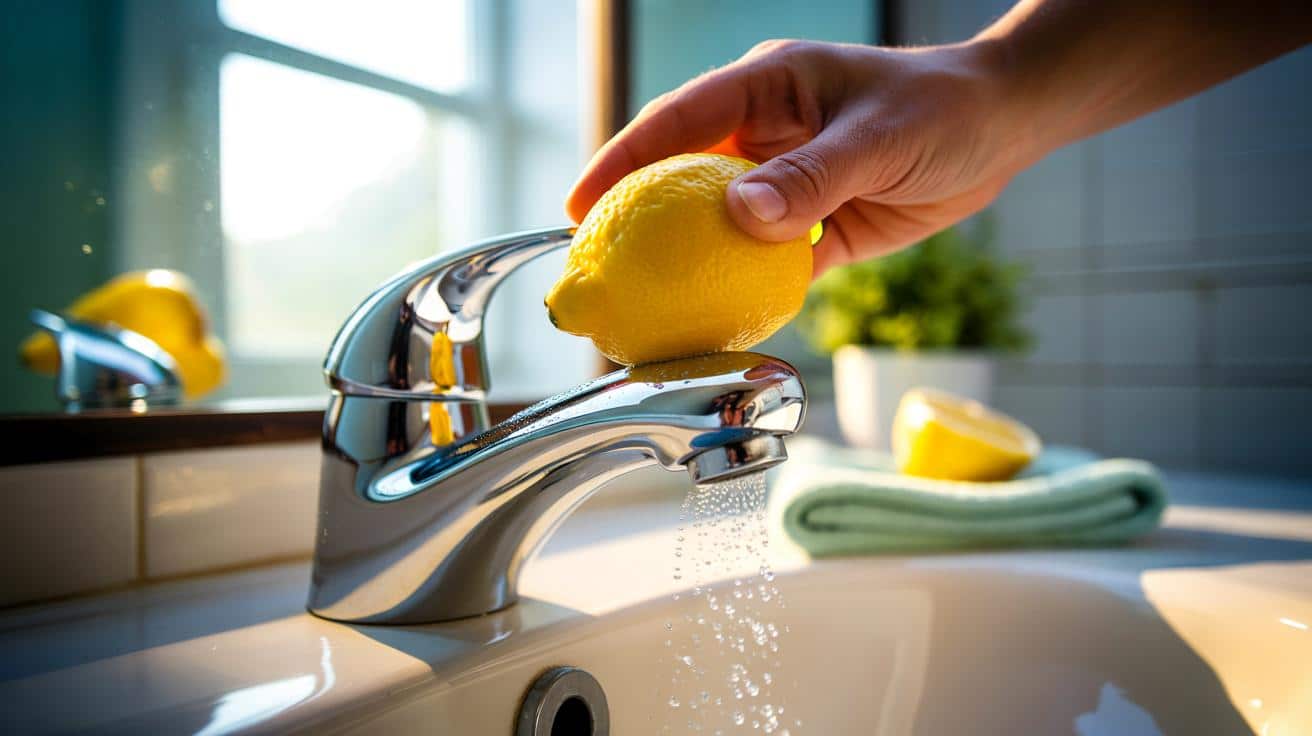
Grab a fresh lemon and cut it in half. If you want extra juice, roll it on the counter first, or warm it for 10 seconds in the microwave. Press the cut side onto the chrome and rub slowly, letting the juice coat every curve and nook, especially around the base where spray marks bloom. Squeeze gently to feed a little more juice as you go, like refilling a brush with paint.
Let the juice sit for 3–5 minutes. Then rinse with warm water and buff dry with a microfibre cloth until the finish sings. For sticky corners, wrap a lemon-soaked strip of kitchen paper around the area for a few minutes, then lift and wipe. If your tap has a removable aerator, twist it off, dip it in lemon juice for five, rinse, and reattach. Let’s be honest: nobody actually does this every day. But once a week, or whenever the shine slips, feels doable.
Common pitfalls are easy to dodge. Don’t walk away for twenty minutes — acids and fancy finishes are not best friends. If your tap is brushed nickel, gold-plated, or lacquered, test a tiny hidden spot first. Keep lemon away from natural stone like marble or limestone around the sink, because acid can etch those surfaces. Work gently and dry thoroughly. Your tap wants a kindness, not a scolding.
“Short contact, full rinse, soft buff — that’s the rhythm. Get the juice on, give it time to nibble, then wash it all away and finish with a dry cloth.”
- Patch-test on an inconspicuous spot if the finish is unusual or new.
- Avoid scrubbing pads; use a soft sponge or microfibre to protect the plating.
- Keep lemon off natural stone and grout that looks fragile or powdery.
- Swap in diluted white vinegar if you’re out of lemons; same idea, different scent.
- Buff dry every time you clean — water left sitting invites the next film.
What this tiny ritual unlocks
This isn’t really about fruit versus chemicals. It’s about momentum. A small, sensory fix that makes the whole bathroom feel new, even if the laundry basket is plotting a coup. The citrus scent nudges the room brighter, and the gleam tricks the eye into seeing tidy. You start rinsing the glass, tidying the shelf, pulling a hair from the drain without sighing. It stacks.
It also reframes the job. You’re not battling grime, you’re dissolving yesterday’s minerals and moving on. If the tap dulls again, it’s not failure, it’s just water doing what water does. That shift in story turns chores from guilt to rhythm. A lemon in the fruit bowl becomes both garnish and toolkit. Small rituals like this make home care feel human, not heroic.
| Key point | Detail | Interest for the reader |
|---|---|---|
| Lemon dissolves limescale | Citric acid breaks down calcium carbonate without abrasion | Faster shine with less scrubbing and no harsh fumes |
| Short contact time | 3–5 minutes is enough for most taps and aerators | Protects finishes while still delivering a clear result |
| Finish matters | Avoid natural stone and test unusual coatings first | Prevents costly damage and keeps the quick win truly quick |
FAQ :
- Will lemon juice damage my chrome tap?Used briefly and rinsed well, lemon juice is generally safe on chrome plating. Keep contact to a few minutes, avoid scrubbing pads, and buff dry to protect the finish.
- What if I don’t have a lemon?Use diluted white vinegar on a soft cloth, then rinse and dry. You can also use a citric-acid solution (1–2 teaspoons in a cup of warm water) for a similar effect.
- Can I use this on brushed nickel or gold finishes?Proceed with caution. Test a hidden spot first, keep contact short, and rinse immediately. Some specialty coatings prefer pH-neutral cleaners.
- How do I clean the aerator with lemon?Unscrew the aerator, soak it in lemon juice for 5–10 minutes, gently brush away residue, rinse thoroughly, and reinstall. This improves flow and reduces splashback.
- Why does the limescale come back so quickly?Hard water keeps delivering minerals that dry onto surfaces. Drying taps after use slows it down, and periodic lemon treatments reset the shine without heavy effort.






Just did this and WHOA—my chrome looks brand-new. Took under 5 minutes, and the citrus smell is way nicer than bleachy spray. Definately remember to buff dry; that’s when it really pops 🙂