
Towels coming out scratchy, duvets drying in lumpy clumps, bills inching higher with every cycle. There’s a tiny, bouncing fix hiding in your sports bag that changes all of that today.
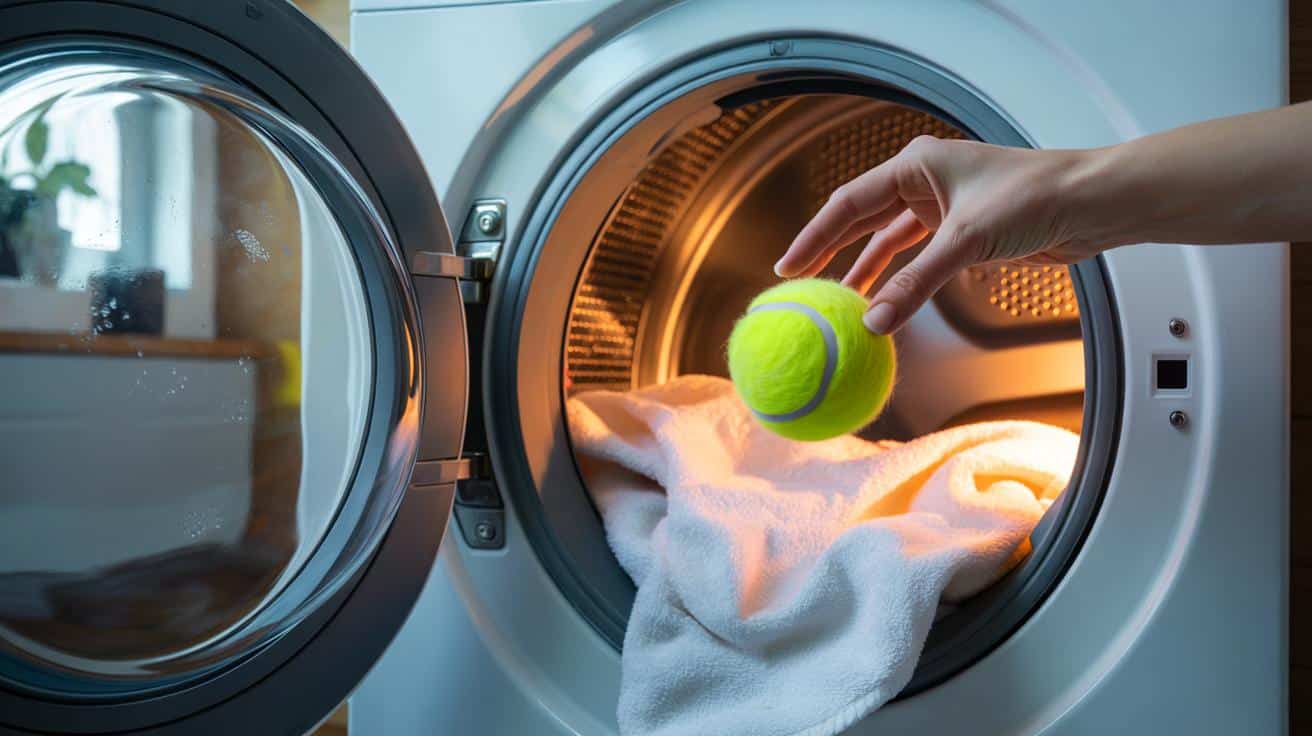
I watched a woman toss a single tennis ball into a tumble dryer with her towels, then shut the door like she’d just shared a secret handshake. The drum spun, a soft thump-thump joined the hiss of hot air, and her towels started to lift and billow instead of sticking to the glass.
*The sound is oddly reassuring.* Steam fogged the window, and the neon ball kept prying everything apart. Ten minutes later, her load looked lighter, less heavy with damp. She smiled, lifted a towel, and it bloomed in her arms. The trick felt old, like something your gran muttered, yet fresh as a clean sheet.
Their towels didn’t just dry. They fluffed. Their duvet didn’t just stop clumping. It breathed. The secret was bouncing in plain sight.
The bounce that changes your laundry
We’ve all had that moment when you open the dryer door and find a duvet glued into a soggy sausage. The tennis ball breaks that stalemate. It moves, it nudges, it keeps fibres from hugging themselves too tightly.
Inside a spinning drum, a tennis ball does two things at once: it creates gaps for hot air, and it gently pummels bulky items. **A single tennis ball can turn a damp bundle into a breezy swirl.** The result is faster evaporation and fewer stubborn wet patches hiding in corners.
The science is simple enough. Airflow is king in a tumble dryer. When fabrics clump, air can’t pass through. The ball knocks items apart and acts like a tiny rolling pin. Less contact means less trapped moisture, which means less time spent paying for heat.
Think of a down jacket. Feathers clump when wet. A tennis ball keeps them agitated so they dry evenly and re-loft. A duvet behaves the same. Towels, too, love that extra space. Their loops lift instead of matting down, which is the difference between spa-soft and sandpaper.
One London launderette pinned a cheeky note above the dryers: “Ball in drum = bills down.” It’s not far off. Households testing the trick report drying times cut by roughly 10–20% on bulky loads. That gap becomes real money when the weather turns, and hanging washing outside stops being an option.
Static gets a nudge, too. Less friction in tight clumps means fewer crackles when you fold. There’s a bonus around lint as well. When fibres stay moving, they shed more evenly and end up on the filter, not welded onto your blacks.
Noise? Yes, there’s a thud. Pick a newer ball if you can, with a clean, bright felt. It glides better and sheds less. Pop it in with towels, bedding, jackets, or fleece throws. Skip silks, lace, anything delicate or labelled “no tumble”.
If the colour worries you on a pristine white load, choose a white tennis practice ball or switch to wool dryer balls. They’re quieter and dye-free. **The method takes ten seconds and costs pennies.** One ball for small loads, two for duvets, three for king-size bedding or heavy throws.
Let the dryer do its job. Medium heat suits most loads, and the ball keeps them open. Pull items early for a feel test. If edges are dry and centres still cool, give it a short top-up. You’ll notice the ball seems to make the “last 20%” happen faster.
How to do it today without faff
Start simple: drop one clean tennis ball into the drum with your towels or duvet. Choose a medium heat and a standard cycle. Check halfway and give the load a shake to unlock corners. If you’re drying down, add a second ball to keep loft building. That’s it.
Let’s be honest: nobody really does that every day. Life’s busy. So anchor the habit to a “big” load only—duvets, coats, weekly towels. Keep the ball by your detergent so your hands almost pick it up by accident. Small frictions decide whether a hack sticks.
New tennis balls thump less and keep their bounce. If the sound bothers you late at night, use wool balls instead and save tennis for weekend bedding. Switch out anything that looks grimy or flattened. If you’re drying whites and feel nervous about colour transfer, play it safe with white balls or wool.
“The ball doesn’t ‘soften’ fabric by magic,” says Amina, who runs a high-street launderette in Manchester. “It just gives hot air a fair shot. That’s where the savings live.”
- Use: 1 ball for towels, 2 for duvets, 2–3 for king-size or heavy throws.
- Pick: Clean, bright, good-bounce balls or wool dryer balls for quieter runs.
- Avoid: Delicates, heat-sensitive gear, waterproof membranes that trap heat.
- Tip: Stop the cycle once to shake out clumps, then finish strong.
- Bonus: Toss in a clean microfibre cloth to help catch lint and pet hair.
What you’ll notice after a week
Your towels start landing with a softer thud when you stack them. That’s the loops standing up instead of lying flat. Your duvet regains its shape across the whole width, not just the edges. **Small hacks spread fast when they work.** You’ll talk about the thump-thump like a new song stuck in your head.
Energy adds up in the background. Shaving minutes off a bulky cycle takes the edge off winter bills. The hidden win is time, though. Less hanging around for that last damp patch. Less temptation to crank the heat “just in case”. Laundry feels lighter because it moves.
The tennis ball is a tiny reminder that small changes, repeated, beat grand plans that never leave the drawer. You might start with bedding and end up tweaking everything—filters cleaned on schedule, mixed-fabric loads split smarter, timing your runs when the house is already warm. The bounce becomes a rhythm you keep.
| Key point | Detail | Interest for the reader |
|---|---|---|
| Faster drying | Ball creates airflow gaps and breaks clumps | Shorter cycles, lower bills, less waiting around |
| Softer feel | Gentle pummelling lifts towel loops and re-lofts down | Hotel-style towels and puffier duvets without fabric softener |
| Fewer problems | Reduces static, evens out lint shedding and heat exposure | Less crackle, fewer lint patches, longer garment life |
FAQ :
- Can the felt dye from a tennis ball transfer to whites?It’s rare with quality, clean balls, but if you’re cautious, use white practice balls or wool dryer balls for pure whites.
- Is the noise harmful to the machine?No. The thump is normal, like drying trainers, but lighter. If it’s too loud, switch to wool balls for a softer sound.
- How many balls should I use for a king-size duvet?Two, sometimes three. The extra bounce helps keep the filling from bundling in the corners.
- Will this replace fabric softener?It won’t perfume your laundry, yet it often delivers a fluffier hand feel without residue on fibres.
- Does it work in washer-dryers?Yes, in the drying phase. Make sure the drum isn’t overfilled so the ball can move and do its job.






Tried this today with towels and a down jacket—huge difference in fluff and dry time. Honestly didn’t expect the last 20% to speed up like that. Thanks for the no-faff hack! 😊
Question: for pure white loads, is a brand-new regular ball really safe, or should I go straight to white practice balls/wool? A tiny dye tranfer would be a disaster.