
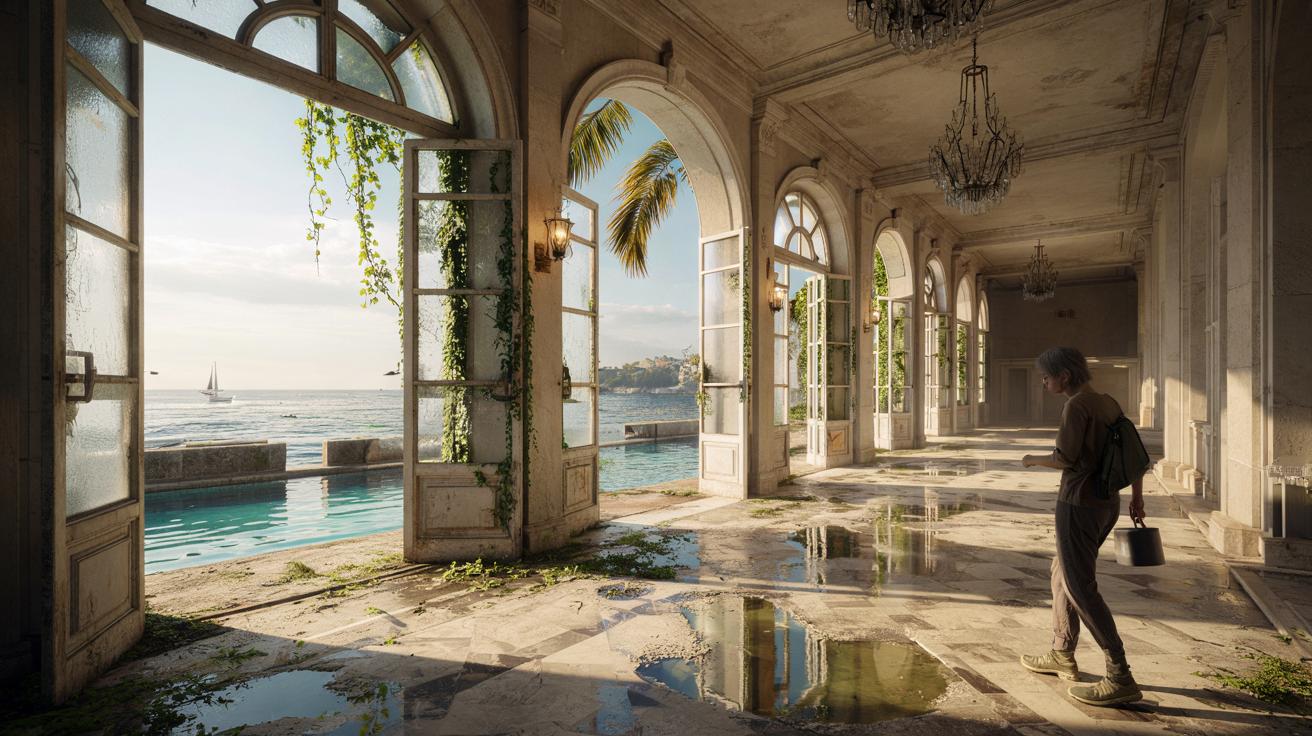
A five-star dream by the Adriatic, built for champagne nights and silk-lunged whispers, now stands open to the wind. Vines pour through chandeliers. Salt gnaws at marble like a patient animal. And yet the gates are not shut. You can still wander this luxury resort reclaimed by nature, step softly through a past that refuses to fully die.
The sea moved loud and close, pushing briny air into the old casino hall where palm fronds had colonised the dance floor. A gull perched on a crystal sconce as if it owned the place. It sort of does.
Here, in Malinska on the Croatian island of Krk, the Haludovo Palace was once a headline. Penthouse-branded parties. Sailboats lined like teeth. Now the lobby is a cathedral of echoes, and the pool is a turquoise ghost. You feel watched by ivy and stares in long-gone mirrors.
I stopped where the red carpet would have started. The tile was wet and breathing in a way that made no sense. Then, very faintly, I heard the sea inside the walls. Strange.
The resort time forgot — and the sea remembered
What draws people to an abandoned luxury resort is not just the ruin. It’s the memory of excess layered over the quiet. You see it in brass door handles dulled to the colour of fog, in a ballroom swallowed by green. The island air tastes like salt and old perfume.
Haludovo opened in the early 1970s with a casino, a private beach and serious swagger. Locals still talk about limousines that once idled outside and a fountain that never slept. The war years and the shifting economy dimmed those lights, then switched them off. The skeleton remained, and nature stepped onto the stage.
Resorts age faster by the sea. Salt creeps, concrete rusts from the inside. When the maintenance stops, vines find the fractures first. Then come saplings and birds that bring seeds in their feathers. It’s not demolition. It’s a soft takeover. **Nature’s timetable is not ours.**
How to visit without ruining what you came for
Arrive early, when the light is kind and the site is almost empty. Walk the public paths and beach that border the complex, then edge inward only where it’s clearly open and already used by locals. Wear sturdy shoes, not flip-flops. A small torch helps in shaded corners. Keep your hands free.
Ruins are fragile, and so is your luck. Don’t climb stairwells that look chipped or slick; they usually are. If there’s tape or fencing, take the hint and reroute. Take photos, not souvenirs. We’ve all had that moment where the place gets under your skin and you want to pocket a tile. Don’t. Let’s be honest: nobody actually does that every day, but this is where discipline counts.
Think about sound, too. Loud voices feel wrong here. Let waves do the talking. You will see more if you move slowly.
“This is not a theme park. It’s a living ruin, and it’s still somebody’s shoreline.”
- Check local guidance before you go; rules change with seasons and ownership.
- Stick to daylight visits; cracks and drop-offs hide well at dusk.
- Bring water; there’s no bar service in a ghost hotel.
- Mind the weather; wet floors turn glossy and treacherous after rain.
- Go with one other person; not for bravado, for sense.
What the ivy teaches
Places like Haludovo hold a spell because they’re honest about endings. Luxury turns out to be temporary, like most things, and that’s weirdly comforting. You can stand where a thousand toasts once lifted, listen to the sea, and feel the room give a small shrug. **The drama is gone; the dignity remains.**
Travel has grown louder, faster, more packaged. An abandoned resort is the opposite. You bring your own story, and the building lends you silence. It is beautiful without asking for your money, or your likes. It’s messy, too, which is part of the gift. **Respect the ruin or don’t go.**
Leave nothing but a set of lighter footsteps, and maybe a thought that follows you back to the ferry. The good kind of thought, the one that won’t fit on a postcard. You’ll catch yourself looking at new hotels differently. You’ll start hearing the sea in walls.
| Key point | Detail | Interest for the reader |
|---|---|---|
| Where to find it | Haludovo Palace, Malinska, island of Krk, Croatia | Pinpoints the real place you can still visit, with coastal views and easy ferry links |
| What to expect | Open-air ruins, ivy-covered halls, a silent pool and access to a public beach | Sets mood and logistics for photos, reflection and a safe wander |
| How to behave | Stay to open areas, avoid unsafe structures, take photos not fragments | Protects you and preserves the site for the next curious traveller |
FAQ :
- Is it legal to visit the Haludovo ruins?Public paths and the beach are commonly used by locals and visitors. Interior access varies and can change; heed signs, boundaries and local advice.
- What’s the best time of day to go?Early morning for light, calm and cooler air. Late afternoon also works, though shadows hide hazards.
- Can I swim in the old pool?No. It’s unsafe and unsanitary. Swim at the adjacent public beach instead, where the sea is clear and watched.
- What should I bring?Sturdy shoes, water, a small torch, a charged phone and an open mind. Leave drones for another day if winds are up.
- Is it safe for children?Only if you stick to open, level areas by the beach and keep a hand close. Ruins include sharp edges and sudden drops.




This gave me chills in the best way—definately adding Haludovo to my Krk itinerary. Love the reminder to take photos, not fragments. Early morning light and sturdy shoes: noted! 🙂