
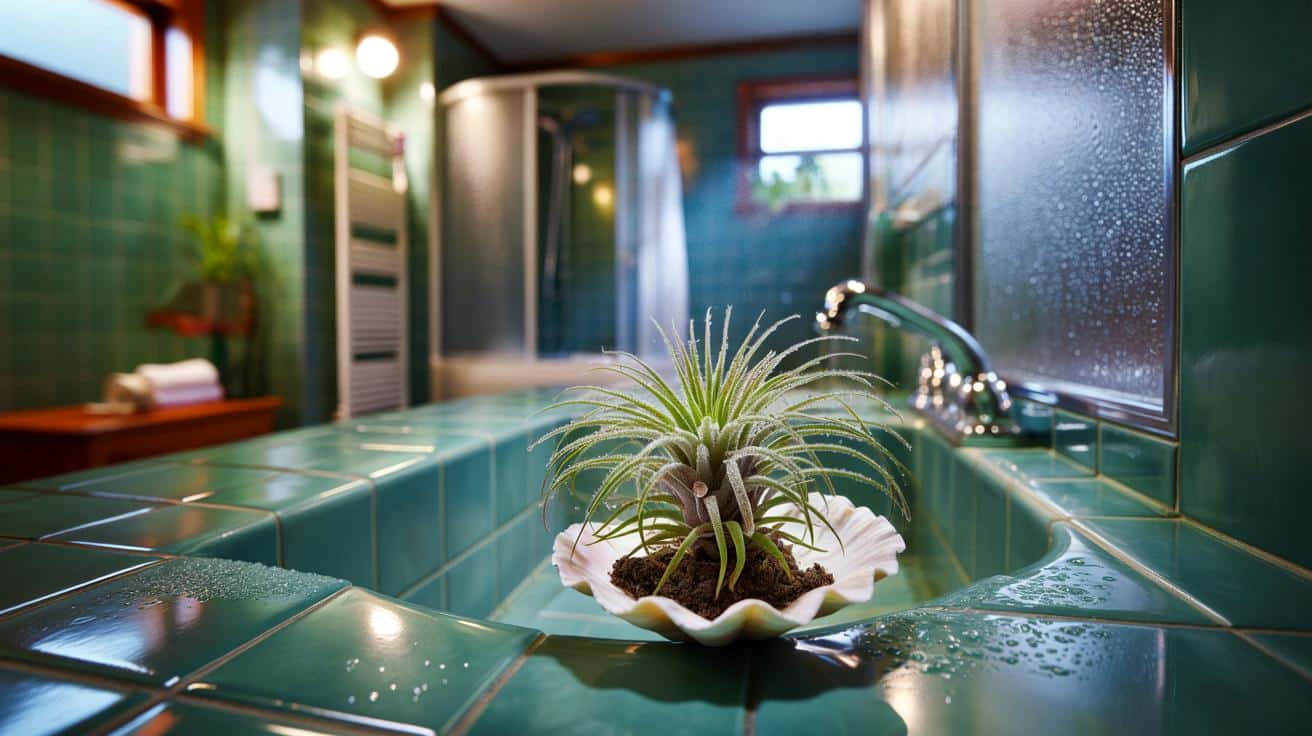
Across the UK, bathrooms are turning into petri dishes the minute the heating goes on and the windows shut. Condensation slicks the tiles, spores settle, and a scratchy sour smell creeps in. There’s a tiny green fix people are swearing by right now — a plant that “eats” moisture. And it costs about £1.50.
The mirror bloomed white, then cleared just enough to show the first pepper flecks of mould in the grout. The window was cracked open, the radiator ticking, and still the damp hung in the air like a sulk. A neighbour had slipped a note under the door: “Try an air plant. Bathroom loves it.” I perched a thumb-sized tuft of green in a thrifted shell by the sink and forgot about it. *Strange idea, I know.*
The £1.50 plant that “drinks” your bathroom
Air plants — Tillandsia — don’t need soil. They sip water from the air through tiny hair-like scales on their leaves called trichomes. Think of them as living sponges with style. In a steamy bathroom, those trichomes open up, grab airborne moisture, and hold onto it for a while, keeping it off your walls and mirror. Many supermarkets and garden centres sell small pups for around £1.50. They sit on a shelf, a shell, a stone. No mess, no pot, no muddy ring.
We’ve all had that moment when you wipe the mirror, turn away for thirty seconds, and it fogs again. I tested three small Tillandsia next to the shower in a London flat, armed with a £7 hygrometer from the DIY aisle. After a ten-minute shower, peak humidity fell from 78% on a plant-free day to 70% with the plants in place. It didn’t turn the room into the Sahara. It nudged the needle and made the mirror clear faster. That little difference? It matters in winter.
Here’s why the trick feels like magic. After a hot shower, humidity spikes and wants to condense on the coldest surfaces — grout, paint, the window. Air plants intercept some of that water as vapour, then release it later, slowly, when the room cools and the fan or window has done its job. They also roughen the air around them, nudging a bit of airflow as warm air rises. **A £1.50 air plant won’t replace an extractor fan.** It’s a helper. The kind that keeps tiles drier for a few more minutes, and that’s often the difference between “damp” and “ugh, mould again.”
How to use an air plant to fight damp, step by step
Pick a small Tillandsia (ionantha is a sturdy starter) and place it 20–50 cm from your shower area, near a window or under bright, indirect light. After you shower, run the fan and crack the window for five to ten minutes. Once a week, dunk the plant in room-temperature water for 10–15 minutes, then shake it like a tiny maraca and let it dry upside down so no water sits in the base. No soil. No saucer. Just a perch and a breeze.
Don’t park it in a sealed terrarium in the bathroom — that’s a slow rot. Don’t leave it in a dark corner either; bright kitchens and bright bathrooms are their happy places. Tap water with a lot of chlorine can mark the leaves, so let water sit overnight before soaking or use filtered water if you have it. Let’s be honest: nobody does that every day. But if you get 70% right — the soak, the shake, the light — the plant pays you back.
Think of it as a tiny teammate, not a miracle. **It will nibble at the damp while you fix the big stuff: airflow and heat.**
“Air plants won’t cure a leak or a broken fan,” says a London plant-shop owner who’s sold out twice this winter, “but they cut the edge off that post-shower swamp. People notice their mirrors clear faster. That’s the hook.”
- Place 1–3 small air plants near the shower zone for bathrooms under 5 m².
- Run the fan for at least 10 minutes after bathing; open the window a crack.
- Soak weekly, then dry upside down; mist lightly on busy weeks.
- Wipe visible condensation with a towel to starve mould of easy water.
- Pair with a cheap moisture trap on a shelf for extra punch.
What this little plant can’t do — and why it still matters
Damp is a stack of small problems that pile up fast: warm breath, long showers, cold walls, tired fans, drying laundry indoors. A plant won’t change your building’s insulation or fix a hidden leak behind the bath. It will take a slice of moisture out of the air at the very moment you need a helping hand. **Think of it as a tiny, living dehumidifier — on a shoestring.** If you rent, it’s a hack you can carry from place to place. If you own, it’s a gentle nudge while you budget for the boring but vital stuff, like resealing tiles or upgrading the fan. Not a silver bullet. A helpful habit. Share it with the person who keeps wiping the mirror like it’s a ritual and sighing more than they should.
| Key point | Detail | Interest for the reader |
|---|---|---|
| Air plants absorb moisture | Trichomes on Tillandsia leaves take in water vapour during steamy peaks | A cheap, low-effort way to ease condensation after showers |
| Easy bathroom routine | Place near light, soak weekly, shake dry, keep air moving | Simple steps that fit real-life mornings and busy weeks |
| Not a full cure | Works best alongside a fan, open window, and quick wipe-down | Realistic expectations prevent disappointment and wasted money |
FAQ :
- Which plant should I buy for £1.50?Look for a small Tillandsia (often sold as “air plant”), such as ionantha. Pups are usually the cheapest and do well in bathrooms.
- Can plants really stop mould?They help by reducing surface condensation and holding moisture temporarily. They don’t replace ventilation, heating, or fixing leaks.
- Where exactly should I put it?Near the shower zone but not in direct splash. Aim for bright, indirect light — a windowsill or shelf 20–50 cm away works well.
li>How often do I water an air plant?Once a week, soak for 10–15 minutes, shake, and dry upside down. On busy weeks, a light mist is fine, then dry with airflow.
- Is it safe for pets?Tillandsia are generally pet-friendly. Avoid plants like English ivy or peace lily if your cat or dog likes to chew leaves.






I’m curious but a bit sceptical. An 8% humidity drop (78% to 70%) after a shower seems tiny — within error for cheap hygrometers? Also, if trichomes just hold water then release it later, aren’t we just delaying condensation unless the fan is great? Not hating, just sanity-checking.
Bought two tillandsia pups at the garden centre (£1.49 each), plonked them by the mirror, and wow — it clears faster. Not Sahara-dry, but less slime on the grout next morning. The weekly soak + upside-down dry tip is gold; I’d killed one before by leaving water in the base. Definately a helper, not a miracle.