
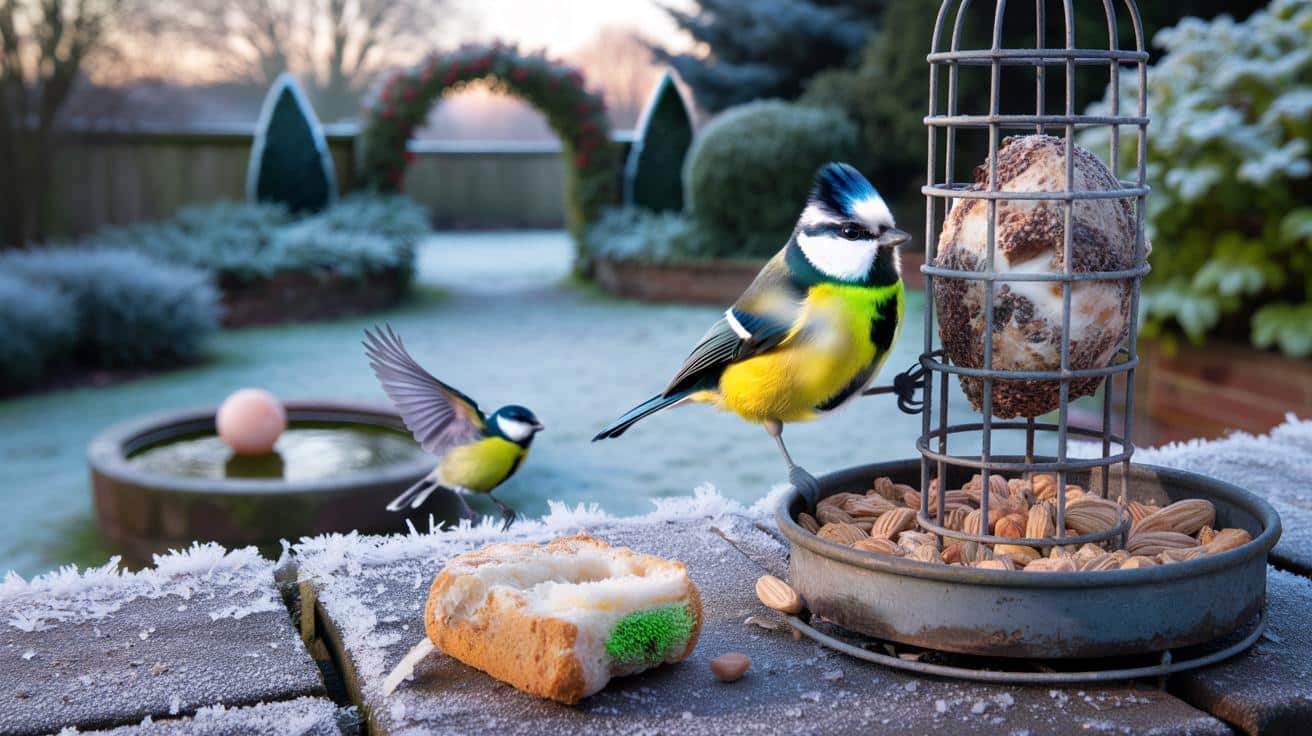
A cold snap is hitting gardens across the UK and blue tits are burning through their reserves. One innocent habit could put them at risk this month: feeding bread. Here’s why that familiar crust is the wrong choice in January—and what to put out instead.
Frost trims the lawn like sugar, and a blue tit lands on the rose arch, neat and bright as a bead. My neighbour scatters crumbs, the old ritual—half a heel of white bread, a handful of crusts—and the birds come in optimistic bursts, pecking, darting, trying.
We’ve all had that moment when we reach for whatever’s on the counter and call it kindness. I watch one bird take a big piece, wrestle it to the hedge, then toss it aside as if it knows better. The light is thin. The day is short. What if that kindness is quietly hurting them?
Why bread in January can put blue tits at risk
Blue tits need dense fuel to survive long, freezing nights. Bread isn’t poison, but it’s poor energy—mostly air and starch, not much fat, little protein. In short days, every beakful counts, and a belly full of fluff leaves them short by dusk. That’s when the cold comes hard.
These birds weigh roughly 11 grams, and a winter night can strip a shocking amount of heat. They must eat soon after first light to top up, then again in the last hour of the afternoon. Give them bread and they fill up fast, yet their tanks run empty too soon. **Blue tits burn calories fast**, especially when the temperature dips below zero.
There’s another snag. Bread pulls in moisture, freezes into useless bricks, and goes mouldy fast when it thaws. Mould spores are no small thing for a tiny respiratory system. Add toppings like salty butter or meat juices and it gets worse. In January, the margin for error is painfully thin. It’s the wrong fuel for the coldest month.
What to feed instead—and how to do it right
Think high energy, small bites, safe presentation. Suet pellets, suet blocks, and good-quality fat balls (without nets) deliver clean fat that keeps them warm. Sunflower hearts are brilliant: soft, easy, calorie-rich. Crushed peanuts in a metal mesh feeder work well. A handful of soaked mealworms can help, too, especially at first light.
Place feeders near cover but not inside it—one quick hop from a shrub, with sightlines to spot a cat. Refresh water daily; a shallow dish is enough, and a ping-pong ball can keep a small hole ice-free. Keep the feeding routine steady so birds can time their visits. Let’s be honest: nobody really does this every day. Aim for most days, and forgive yourself the rest.
Go easy on the well-meant extras. Skip bread, salted fats, and desiccated coconut. Keep peanuts behind mesh. Avoid plastic net bags that can trap feet. Clean feeders weekly with hot water to cut disease. Right now, every crumb counts.
“In the depths of January, fat beats fluff every time. Feed for warmth, not just for fullness.”
- Swap bread for suet and sunflower hearts this week.
- Put food out at dawn and again late afternoon if you can.
- Rinse feeders with hot water once a week; dry before refilling.
The bigger picture—and a small winter promise
January presses hard on small birds. Short days, icy water, silent insects. A garden that offers proper calories becomes a quiet life raft. Change one habit—take bread off the menu—and suddenly the maths of the season tilts in their favour.
I think of that first blue tit, the quick flash of turquoise and lemon, the neat little face at the feeder. Swap out the loaf for real fuel and watch how the visits change. **Choose fat-rich feeds**, add water, tidy the hygiene, and your garden starts to hum with quick, brave colour.
This is not about perfection or fancy kit. It’s about noticing what works for a bird that weighs less than a pound coin and faces a night that feels, to them, like a mountain. Change that one plate on the winter table. Watch who arrives. And tell a neighbour what you’ve seen.
| Key point | Detail | Interest for the reader |
|---|---|---|
| Avoid bread in January | Low fat and protein; mould risk; fills birds without warming them | Stops an easy mistake that can cost birds energy when they need it most |
| Feed high-energy options | Suet, sunflower hearts, crushed peanuts, soaked mealworms | Clear, affordable swaps that boost garden visits and bird survival |
| Serve safely and cleanly | Use mesh or rigid feeders; skip net bags; hot-water clean weekly | Reduces disease and injuries; keeps feeding stations busy and healthy |
FAQ :
- Can I give any bread at all?Small amounts of plain, fresh bread mixed with high-energy foods won’t kill a bird, but in January it’s a poor choice. Better to skip it entirely.
- What’s the single best food for blue tits in a cold snap?Suet pellets or blocks. They’re compact, clean, and deliver the fat that keeps small birds warm overnight.
- Are dried mealworms okay in winter?Yes, in moderation. Soak them briefly in warm water first so birds don’t waste moisture and can swallow them easily.
- Do fat balls harm birds?Good-quality fat balls are fine, but remove plastic nets. Use a metal cage feeder to avoid entanglement and to ration portions.
- Why did blue tits stop visiting my garden?Food quality, feeder hygiene, and predator cover all matter. Switch to suet and sunflower hearts, clean feeders, and keep a safe hop to shelter.







Great write-up! Had no idea bread is a calorie trap for blue tits in a cold snap. I’ll switch to suet and sunflower hearts this week. Quick q: are crushed peanuts still okay if squirrels are around, or better to skip them? Also, do you definitley recommend mesh only?
My gran fed bread for 40 years and the blue tits survived—are we over‑reacting here? What’s the actual mortaility or weight‑loss data behind this advice, esp. in UK cold snaps? Not being snarky, just want evidence before I swap habits.