
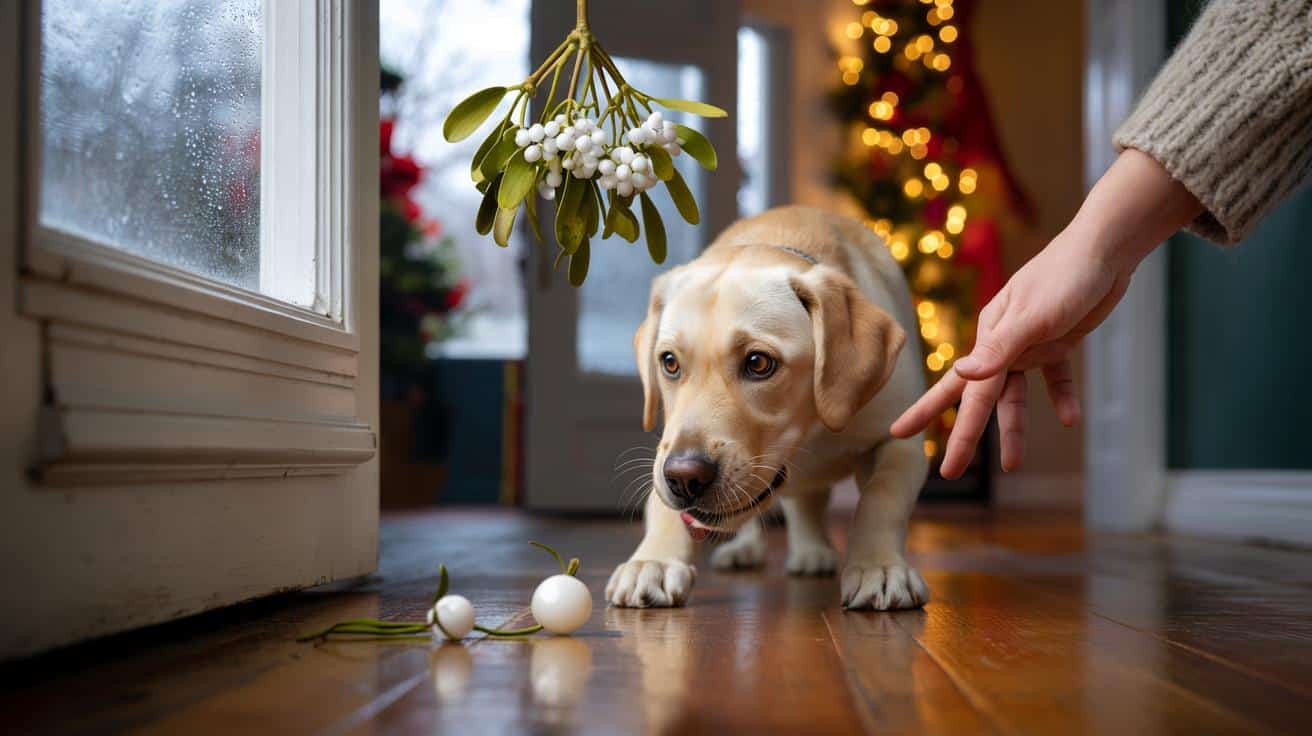
Yet mistletoe can turn a cosy evening into a panicked dash to the vet. Dogs don’t see a Christmas tradition — they see a snack.
It happens on the sort of December afternoon when daylight never quite arrives. In a South London practice, a young Labrador named Molly wobbled in, tail trying to wag but legs not quite obeying. Her owner was pale, clutching a sprig of mistletoe that had been hanging above the kitchen arch. Molly had eaten the berries that dropped during a burst of excited play. The room smelled faintly of damp wool and disinfectant. A nurse set up the ECG while the vet asked the usual questions: How much? When? Was it just the berries or the leaves too? *The danger was hanging above her head.* The mistletoe looked harmless, and that’s the trap. The worst hazards rarely announce themselves.
The quiet hazard above the hallway
Mistletoe is part of the winter picture — a soft focus of white berries, a country lane, a kiss stolen at a party. Dogs don’t read folklore. They jump, sniff and nibble whatever lands within reach. White berries fall silently onto the skirting board, into the hallway, under the chair. **Mistletoe isn’t harmless for dogs.** The plant contains compounds that can upset the gut and slow the heart. That gentle-looking sprig can create a night you’ll remember for all the wrong reasons.
I watched a spaniel called Oakley pant in short bursts, too tired to pace yet too wired to sleep. His owner had swept up the berries, or thought she had, and then the hoover missed the final few by the door. Within hours he was drooling, then vomiting, then oddly subdued. Emergency vets see a seasonal surge of plant mishaps — trees, wreaths, potpourri — and mistletoe sits quietly among the biggest repeat offenders. Oakley was lucky. He came in early, and early usually bends the odds your way.
So what’s going on under the bonnet? European mistletoe contains viscotoxins and lectins; both can irritate the gut and affect the nervous system and heart. Dogs tend to show signs within a few hours: drooling, vomiting, diarrhoea, abdominal pain. In some cases you see wobbliness, a slower heart rate, low temperature, even collapse. Dried sprigs aren’t safe either — toxins don’t care about your wreath’s aesthetic. There isn’t a neat “safe” dose to rely on because dogs vary by size and sensitivity. That’s why vets treat the situation, not the guesswork.
Simple moves that make a big difference
Start with the height. Hang real mistletoe well above jumping reach and away from doorframes where it gets bumped. Snip off the berries before you hang the sprig, or choose berry-free artificial stems for peace of mind. Use florist’s tape rather than brittle twine that snaps without warning. Vacuum the “drop zone” underneath once a day and before bed. Teach a brisk “leave it” cue and rehearse with boring bits of bread first, then graduate to real-world temptations.
Most mistakes are human, not canine. We hang a sprig low because it looks good in photos. We let stems dry by the radiator, then forget that brittle plants shed faster. We tidy at 11 p.m. and miss the two berries that rolled under the boot rack. Let’s be honest: nobody does that every day. So set the scene to make the right action the easy one — keep the dog behind a baby gate during parties, move the wreath to a mantle, switch to faux foliage on busy weeks. We’ve all had that moment when the house looks lovely and then the dog finds the one thing you didn’t think about.
When things slip — because they do — act with calm speed. **Call your vet immediately if your dog swallows the berries.** Bring a bit of the plant or a photo so they can identify it on the spot.
“If your dog eats mistletoe, time helps us,” one emergency vet told me on a rain-soaked night near Clapham. “We can make them sick when it’s still in the stomach, give charcoal, and monitor their heart. Waiting at home rarely makes it better.”
- Keep the number for your local vet and an out‑of‑hours clinic on your phone.
- Note when the plant was eaten and roughly how much.
- Do not try internet remedies like salt or hydrogen peroxide — they can add new problems.
- Transport your dog calmly; bring a towel in case of vomit.
A winter ritual, rethought
Traditions don’t need to be trashed to be made safer. You can keep the soft glow and the ritual of a doorway kiss while changing the materials. Faux mistletoe looks convincing under warm lights; fresh stems can be stripped of berries and wired high for a single evening, then binned. A small tweak in where you hang it can spare you a stressful night and a big bill. And if your dog is a seasoned scavenger, make “leave it” the house’s winter soundtrack. It becomes second nature faster than you think.
What lingers for me isn’t the plant; it’s the look owners wear when romance and panic collide. They apologise to the dog, themselves, the vet. They wonder how they missed the tiny white bead on the mat. The truth? You didn’t miss it — life is busy and these berries look like nothing. **Treatment works best when it starts early.** That one idea reshapes every festive decision, from where you hang the wreath to when you make the call.
There’s a quiet joy in getting through winter with both the magic and the mayhem intact. Share the tip in the group chat, move the sprig up a foot, swap the real berries for silk, and teach the cue that saves the snack thief from himself. The hallway still looks like a postcard. The dog still spins when the doorbell rings. And the sprig above the door stops being a story you tell in a waiting room, and becomes just part of the season — a small thing done with care that keeps the night easy. Maybe that’s the grown-up version of tradition.
| Key point | Detail | Interest for the reader |
|---|---|---|
| — | Mistletoe berries and leaves can upset a dog’s gut and slow the heart. | Know why the “harmless” sprig isn’t harmless at all. |
| — | Most incidents happen when berries drop unnoticed at door height. | Adjust where and how you hang decorations to cut the risk fast. |
| — | Quick action — call, bring a sample, arrive early — changes outcomes. | Clear steps to avoid panic and shorten any emergency visit. |
FAQ :
- Is mistletoe more dangerous than poinsettia for dogs?Generally, yes. Poinsettia tends to cause mild irritation, while mistletoe can trigger vomiting, diarrhoea and in some cases effects on heart rate and blood pressure.
- How much mistletoe can make a dog ill?There’s no reliable “safe” amount. Small dogs can react to a few berries; larger dogs may need more. Any ingestion deserves a call to the vet.
- What symptoms should I watch for after exposure?Drooling, vomiting, diarrhoea, belly pain, wobbliness, lethargy, slow heart rate, low temperature. Signs can appear within a few hours.
- What if my vet is closed at night?Phone the out‑of‑hours number on your vet’s voicemail or check your nearest 24/7 clinic. Many offer telephone triage and can prepare before you arrive.
- Are artificial mistletoe and wreaths safer?Usually, yes. They remove the toxin risk, though small pieces can still be a choking hazard. Place them out of chewing reach.







Wow, I had no idea mistletoe could slow a dog’s heart. This defintely changes how I decorate. I’m going to snip the berries and practice “leave it” with my pup tonight. Appreciate the clear steps (especially the out‑of‑hours tip) — in a panic I always forget phone numbers. Thanks for the calm, practical tone.