
m. when your mind wakes up like a laptop that never really shut down? You try counting breaths, rolling to the colder side of the pillow, promising yourself you’ll stop scrolling in bed tomorrow. The morning arrives on sandpaper eyes and a tight jaw. And still, the cycle repeats. There’s a tiny, oddly cheerful fix sitting in the fruit bowl that might break it. Not a pill. Not a ritual with moon water. Just something you can slice with a teaspoon and eat before the clock hits eight.
I first heard about it in a kitchen that smelled of toast and wet pavement, the kind of British morning where the clouds sit low and bossy. A friend, the sort who buys oat milk and reads the back of seed packets, handed me a fuzzy green orb and said, “Try one before 8 p.m., then tell me about your night.” I laughed, ate one, and forgot about it. That night, I slept like someone had turned down a dimmer switch in my brain. No midnight shuffle. No 4 a.m. maths. Just a calm black stretch. Curious, right?
The 8 p.m. fruit that quietly changes your night
The fruit is the humble kiwi. Not tart cherry juice, not a magnesium powder with a cryptic label. Kiwi, sliced open to a starburst of green, eaten early in the evening. It’s small, bright, and unpretentious. And for many people, it nudges the nervous system toward quiet. I’ve now heard the same story dozens of times: eat a kiwi after dinner, not too late, then drift. It’s not dramatic. It’s stealthy. That’s the charm.
A small clinical trial once tracked adults with sleep troubles over four weeks. They ate two kiwis in the evening. Sleep came faster, total sleep time crept up, and awakenings thinned out. It wasn’t a miracle, just a nudge in the right direction. A London barista I know tried the same thing for a week. She kept a pack in the staff fridge and clocked off with green seeds still in her teeth. “I stopped waking at 3 a.m. to doom-think,” she said. “I actually woke up before my alarm and didn’t hate my life.” That’s data too, in its way.
Why kiwi? It carries naturally occurring serotonin and a mix of antioxidants that seem to support sleep architecture. The fibre steadies blood sugar in the late evening, which can matter when 2 a.m. dips poke the brain awake. There’s also a timing trick. Eating it before 8 p.m. gives your body enough runway to digest, stabilise, and glide into your own melatonin rise later on. Too late, and the stomach is still busy while your head tries to shut down. That mismatch can jolt you awake. Eat early, and the signals sync.
How to do the kiwi-before-8 trick without overthinking it
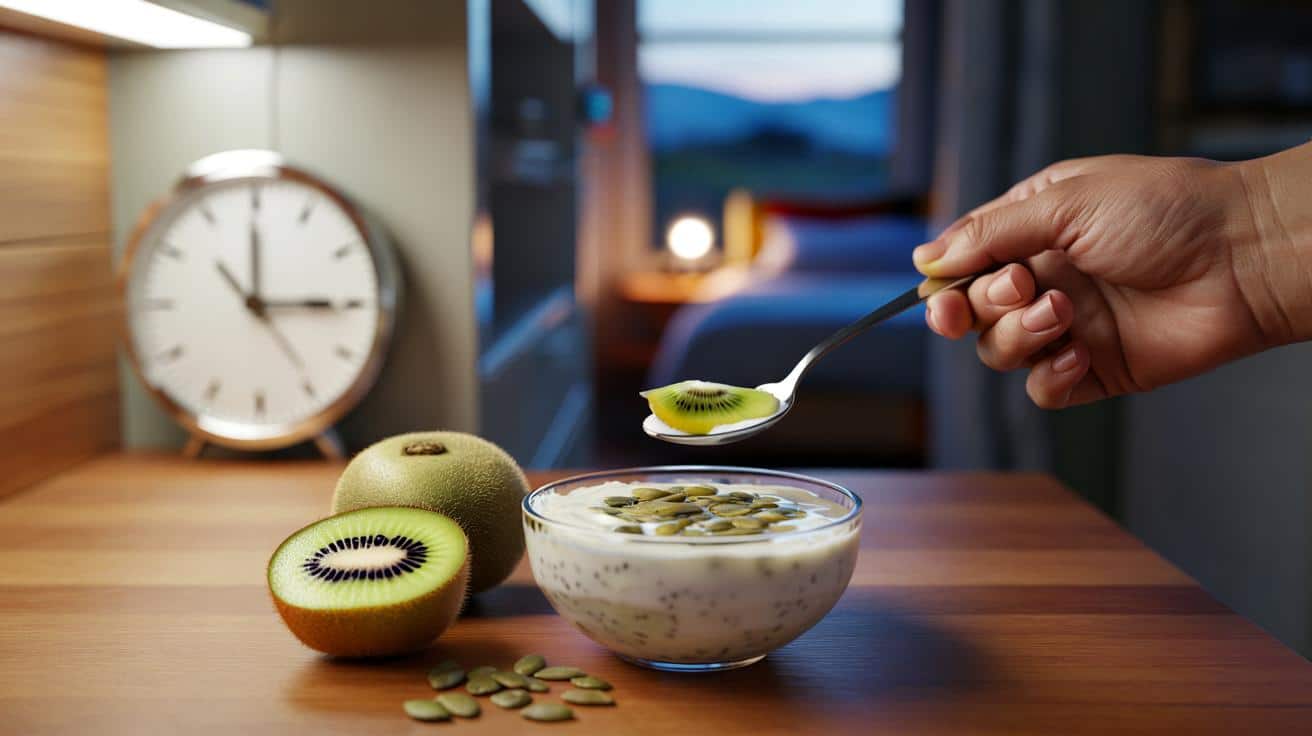
Keep it boring. One to two kiwis, green or gold, between dinner and 8 p.m. Use a spoon to scoop straight from the skin or slice over a small bowl of plain yoghurt. I like a light sprinkle of pumpkin seeds, which slows the sugar release a notch. If you commute, stash a couple in your bag and have them when you walk in the door. Keep it simple, keep it early, and let the clock do the rest. *Small habit, big ripple.*
Watch your own signals. If your stomach gets chatty after fruit, try just one kiwi or pair it with a spoonful of yoghurt or a thin slice of cheddar. People with reflux sometimes prefer the gold variety, which is gentler. If you’re allergic to latex or certain fruits, skip it entirely. We’ve all had that moment when sleep feels like a door that won’t open; this is just one more key to try. Let’s be honest: nobody really does this every day. Aim for most nights, and see what changes.
“I eat my kiwi at 7:45, wash the plate, and treat it like flicking off a bright light in my head. It’s not magic. It’s rhythm.”
- When: Between dinner and 8 p.m., about 60–120 minutes before bed.
- How much: One to two kiwis, most evenings.
- Pairings: Plain yoghurt or a few nuts if you want slower release.
- Travel hack: Spoon + lunchbox. No excuses when you get home late.
- If you dislike kiwi: Try a small serving of tart cherries, but keep the 8 p.m. cut-off.
The deeper reason this tiny change lands
Sleep isn’t just about darkness and silence. It’s timing, chemistry, and the stories your body tells itself after dinner. Kiwi seems to help line up those stories. The gentle serotonin bump, the fibre easing blood sugar sways, the antioxidants tidying up after a long day. Early evening is a conversation with your circadian clock, and this fruit speaks softly but clearly. You can almost feel the volume dial turning down while you wash the spoon.
There’s also the ritual. The promise you make to yourself when the world is still loud. Slice, scoop, chew, and close the kitchen. That ending matters. It draws a line across the day. In a culture of never-off screens and caffeinated afternoons, small lines count. The kiwi becomes less of a “hack” and more of a lighthouse you pass each night on your way to the harbour. When you skip it, the sea feels choppier. When you keep it, the route feels known.
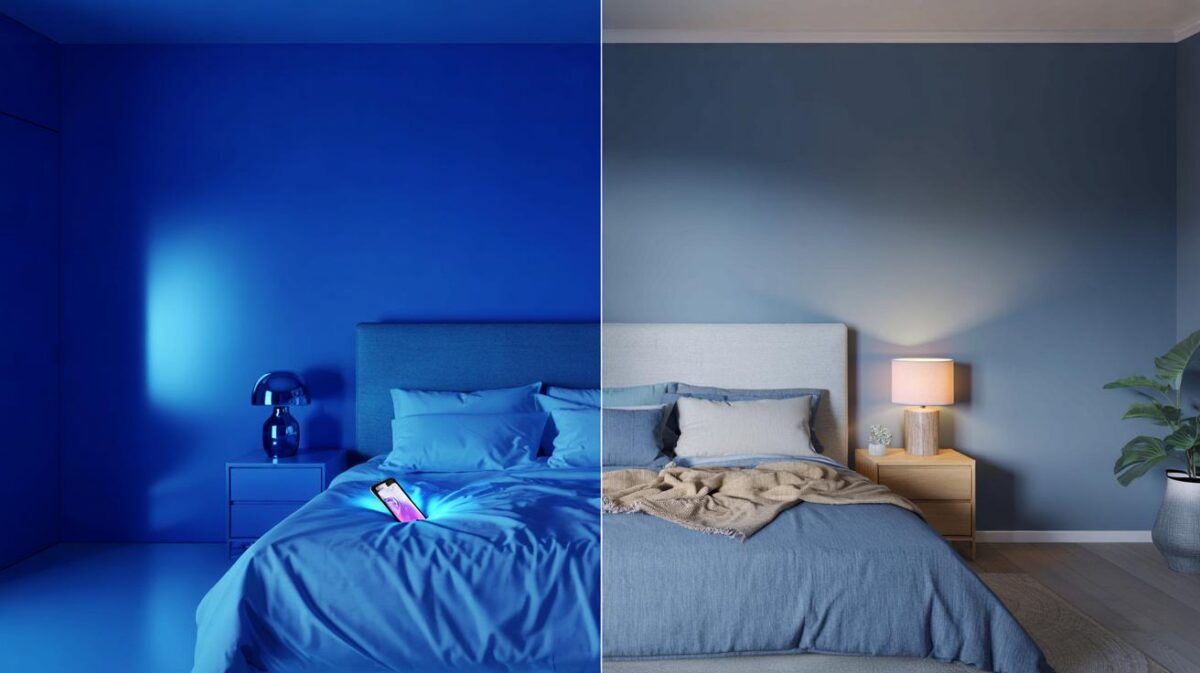
None of this means kiwi will cure insomnia or trump every stress. It’s a gentle ally, not a sledgehammer. Combine it with light in the morning, movement at some point, and fewer blue flashes in your eyes after dusk. Stop eating late when you can. Drink water, but not litres at 10 p.m. If your mind races, jot three sentences in a bedside notebook and put the pen down. Then look at the clock. If it’s before eight, you still have time to slice the green star and let your night begin early.
| Key point | Detail | Interest for the reader |
|---|---|---|
| Kiwi before 8 p.m. | Eat one to two kiwis in the early evening to sync with your natural melatonin rise. | Gives a practical, time-based step for deeper sleep without supplements. |
| Why it works | Serotonin, antioxidants, and fibre help reduce awakenings and smooth blood sugar. | Explains a believable mechanism so it doesn’t feel like a fad. |
| Make it stick | Keep a spoon by the fruit bowl, pair with yoghurt, close the kitchen after. | Turns a tip into a ritual you can actually repeat. |
FAQ :
- Does the kiwi timing really matter?Yes. Early evening gives digestion time to settle and lines up with your internal night signals. Late-night fruit can keep the body busy when your brain wants quiet.
- Green or gold kiwi for sleep?Both are fine. Green has more fibre and a classic tang. Gold is gentler on sensitive stomachs and a touch sweeter.
- Can I do just one kiwi?Absolutely. Many people feel a difference with one. Some prefer two on tougher days. Start small, watch what happens over a week.
- What if I hate kiwi?Try a small portion of tart cherries or a few almonds with yoghurt, still wrapped by that 8 p.m. cut-off. Keep the rhythm even if the fruit changes.
- Is this a cure for insomnia?No. It’s a supportive habit. If sleep stays broken or you snore loudly, pause and speak with a clinician. This is a gentle nudge, not a fix-all.






I tried this last week—one gold kiwi at 7:30—and I actually slept through my 3 a.m. doom-scroll urge. Might be placebo, but I’m definitly doing it again. Thanks!
Do you have a link to the clinical trial you mentioned? Not trying to be snarky; just want to read the methodology, sample size, and whether there was a control.