
Now there’s a quiet shift hiding in plain sight: electricity is meaningfully cheaper at a specific time of day, and it’s changing how people run their homes. The trick isn’t a new gadget. It’s timing.
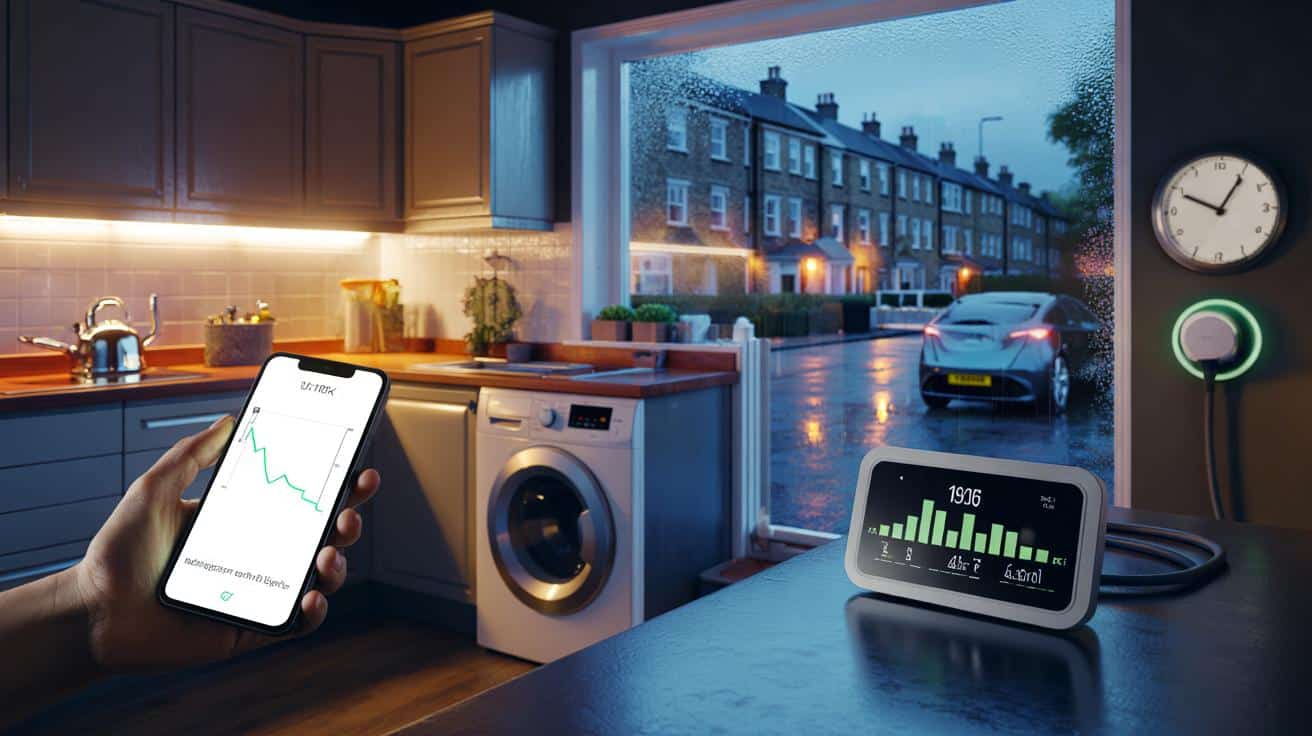
At 1:12am on a damp Tuesday in Leeds, the street was asleep, but the kitchen glowed. A washing machine hummed softly, a little red digital clock blinking in the half-light. I watched the meter on my phone like a stock trader, the unit rate dipping, then holding steady. There’s something strangely calming about paying less just because the world is quiet. Out there, grid demand had settled after the early evening peak. In here, the dishwasher kept time with the kettle’s faint tick as the tariff slid into its low-cost window. One small detail, surprisingly big difference. The clock matters.
When electricity gets cheaper — and how much we’re talking about
Across the UK, the low point for power prices lands overnight. On many time-of-use and Economy-style tariffs, the **11pm–5am** window is where the magic happens. Not a tiny cut either. Rates during these hours are often around a third lower than the busy early evening period when everyone cooks, showers and charges devices at once. That’s the headline: roughly **30% cheaper** electricity when most people are asleep. It’s not universal, and it’s not forever, but the pattern has become consistent enough to plan around. Your kettle doesn’t care what time it boils. Your bill absolutely does.
Take a family in Manchester with a **smart meter** and a flexible tariff. Their evening rate hovers around 28p per kWh between 5pm and 8pm. Past 11pm, it drops closer to 19–21p, sometimes less on calmer nights. They shifted the dishwasher, a batch of tumble-drying, and a two-hour EV top-up to after midnight. Over a month, that tiny schedule shuffle cut roughly £19 off the electricity bill. Not a miracle. But not nothing. We’ve all had that moment when a bill arrives and you’re braced for bad news — then see it’s, somehow, lighter than expected.
Why the dip? It’s demand. UK electricity use spikes early evening when lights, ovens and heaters compete, then falls as night deepens. Lower demand means the grid uses cheaper generators and imports, easing the wholesale price that feeds retail tariffs. Suppliers pass part of that drop to customers with time-based pricing, especially those on smart plans. Old-school Economy 7 follows the same logic with a fixed overnight window, while newer “dynamic” tariffs adjust nightly. The result feels simple at the plug: cheaper power when the city sleeps. The back-end is a dance of supply, demand and timing that rewards anyone willing to wait a few hours.
How to actually catch the cheap window
Start with what you already have. Open your energy app and check your unit rates by hour. If you’re on Economy 7, your off-peak block is typically a seven-hour slice starting around midnight (exact times vary by region and meter). On newer smart plans, look for the lowest band after 11pm. Then set timers: dishwasher delay, washing machine schedule, EV charging window. A simple smart plug on the dehumidifier or immersion heater turns minutes into savings. Small habit, easy win.
Don’t move everything. High-heat cooking at 1am is a non-starter for most homes. Shift the “silent” loads instead: laundry prepped before bed, the battery pack topping up, the car sipping power till dawn. Keep an eye on cycle length — a two-hour wash that ends at 12:30am versus 2:30am can mean a different price. And be kind to your neighbours: a spinning drum at 2am in a thin-walled flat can start wars. Let’s be honest: nobody actually does that every day. Aim for most nights, not perfection.
Think about the traps as much as the wins. Electric heaters can look cheap at night, then wipe out savings if you need a top-up at 7pm. If you use an immersion heater, add a thermostat and timer so it doesn’t keep gulping. Resist the “free-for-all” instinct. That lower rate still costs money.
“We used to treat power like water from a tap — on or off. Now we treat it like rush-hour traffic. Leave later, get there cheaper.” — Ellie, south London
- Set late-night timers once, then forget them.
- Batch chores: laundry and dishwasher in the same window.
- Charge gadgets and power banks overnight for daytime use.
- Avoid noisy cycles in shared buildings after midnight.
- Check rates weekly; smart plans can shift slightly.
The bigger picture — and what it means for your week
The quiet victory here isn’t the number on one bill. It’s how controllable a chunk of energy spend becomes when you let price signal your routine. You don’t need a wall battery or a £60k retrofit to play. You need a clock, a couple of timers and a calm approach. If the cheapest band sits between 11pm and 5am in your area, plan the week around that. Monday night wash, midweek EV top-up, Friday dishwasher catch-up. Tiny rituals, lighter bills.
This shift also changes how we think about “comfort.” A warm kitchen at 6pm is lovely. So is paying less for the same kilowatt-hour when the kids are asleep. Some weeks you’ll nail it; others you’ll shrug and boil on peak. Your life comes first. The grid is happier when we spread demand. Your wallet is happier when you ride the low tide. And if you’re wondering whether the 30% spread will stick, here’s the honest bit: it tends to, because human habits are predictable and night is still night.
There’s a little thrill in making the system work for you. The feeling when the car wakes on 100%, the laundry is done, and the unit rate graph looks like a valley. It’s not flashy. It’s not a hack. It’s just listening to the rhythm that was always there. The cheapest power in Britain often hums while the country sleeps. What would your week look like if you followed that hum?
| Key point | Detail | Interest for the reader |
|---|---|---|
| Overnight window | Many tariffs are cheapest around 11pm–5am, with Economy 7 spanning roughly midnight to early morning | Clear timeframe to plan laundry, EV charging and dishwashers |
| About 30% cheaper | Off-peak unit rates typically sit a third below the early evening peak | Concrete savings for simple schedule shifts |
| Small changes, real money | Timers and smart plugs move “silent” loads without changing your day | Low effort, repeatable gains each month |
FAQ :
- What’s the exact cheapest time to use electricity?On many UK time-of-use plans, the lowest rates land between 11pm and 5am. Economy 7 usually gives a seven-hour overnight window starting around midnight, but exact times vary by region and supplier.
- Is it always 30% cheaper at night?Not always, though a 25–35% gap is common between off-peak and early evening peak. Dynamic tariffs can swing more. Check your app’s unit rates for the current spread.
- Do I need a smart meter to get off-peak rates?You’ll need one for flexible, half-hourly pricing. Economy 7 works on legacy meters with two registers, but most new time-based deals run through smart meters.
li>What should I move to the cheap window first?Dishwasher cycles, washing machine, tumble dryer, EV charging, immersion heater top-ups, dehumidifiers, and charging laptops or power banks.
- Is running appliances at night safe?Use modern machines with good maintenance, clear lint filters, and avoid overloaded sockets. If in doubt, use a delay start so the cycle finishes before you sleep or when you’re waking up.






Great explainer! Switched our EV top-up and dishwasher to after 11pm last month and the bill actually dropped by £17.42. Didn’t buy any fancy gear—just used the delay start and a cheap smart plug. Small habbits, big payoff. Only snag: our tumble dryer is noisy, so we set it to finish before 1am for the neighbours. This approach is simple but it works, and my smart metre graphs finally make sense.