
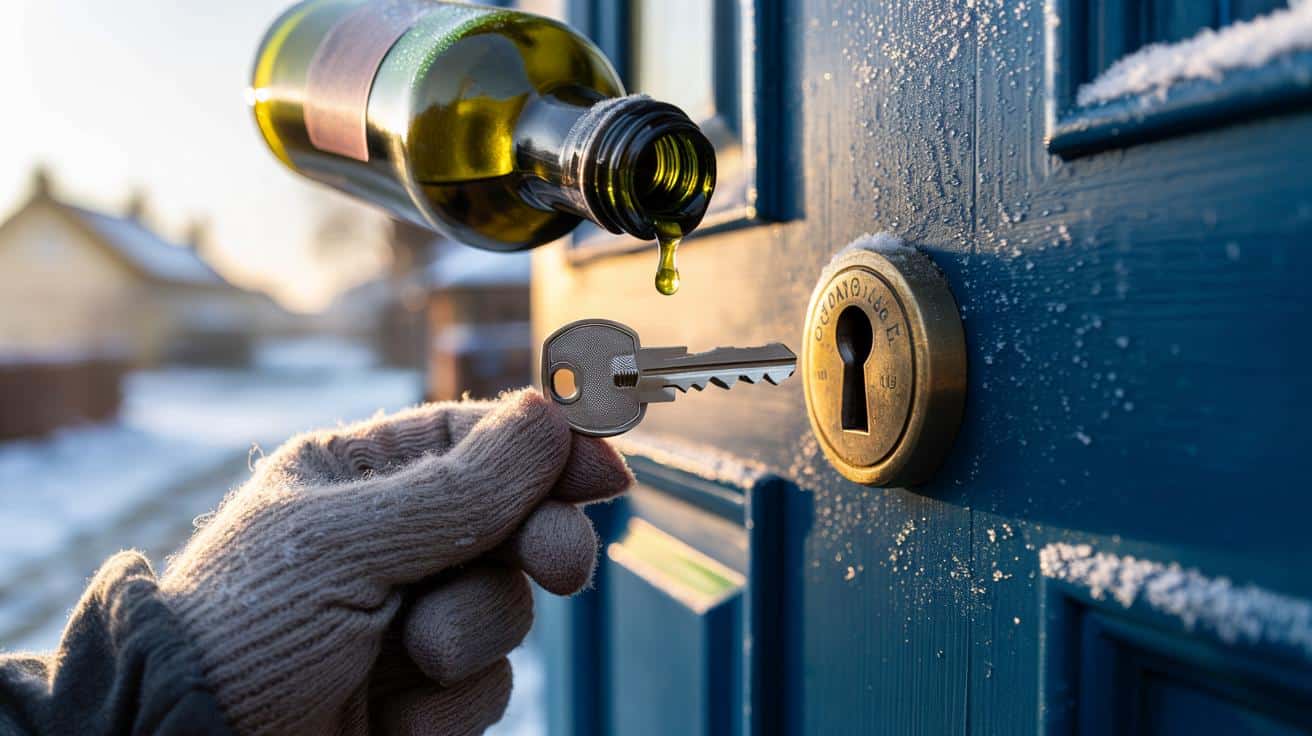
A simple fix sits in the kitchen, not the toolbox. Olive oil. One drop. The difference between getting inside and ringing a locksmith in the snow.
It’s just after 7am on a frost-polished street, the kind that crunches under boots and silences birds. Breath is smoke, the key is metal ice, and the letterbox chatters in the wind. Your lock, usually obedient, refuses to budge and time starts to wobble. You think about kettle steam or a lighter, then remember last winter’s cracked paint and an awkward wait on the doorstep. This time, the fix comes from a green-glass bottle you bought for salads and pasta. A kitchen move for a doorstep problem. Unexpectedly simple.
Why locks freeze—and why a pantry trick works
Frozen locks aren’t drama, they’re physics. Moisture sneaks into the keyway during rainy evenings and condenses overnight, then freezes along pins and springs that need to dance. The tiniest glaze of ice turns smooth metal choreography into a stiff, unwilling tangle. On breezy terraced streets and in flint-cold porches, that glaze arrives faster than you think. A key pressed into frost will stick; a thumb on a metal escutcheon grows numb; the handle scolds your palm. Small weather, big nuisance.
Last January, my neighbour Mina swore she would not miss another train. She stood in a bobble hat, teeth clenched, bag dangling from her elbow as the lock sulked. She dabbed a single drop of olive oil onto her key and worked it in, once, twice, three times. The key turned with a groan, then a sigh, and the door sighed too. It wasn’t magic or myth. It was displacement and a thin, protective film doing quiet work while the wind heckled the hedges.
Oil and water don’t mingle. A light oil coats the metal surfaces inside the cylinder, nudging moisture away from pins and wards, and reducing the contact points where ice likes to grip. Olive oil isn’t a specialist lubricant, and it can thicken in serious cold, yet a trace amounts to a weatherproof jacket for your keyhole in this week’s frost. The film slows flash-freezing and gives you a minute of grace. Think of it as a stopgap sleeve over moving parts, not a forever solution; a pantry umbrella, not a full winter coat.
How to use a drop of olive oil the right way
Use the smallest drop you can manage. Dip just the tip of your key blade into olive oil or touch a cotton bud to the oil, then transfer that whisper-thin sheen onto both sides of the blade. Slide the key in and out a few times, turning gently to spread the film along the pins. Wipe the key with a tissue so you’re not pocketing a slick souvenir. If the weather is biting hard, pop a strip of painter’s tape over the keyhole while you’re home; it blocks wind-driven moisture and pebbled sleet.
Don’t drown the lock. More is not better; it’s just messier and invites dust to move in. Keep the oil away from painted surfaces and door furniture if you care about a clean finish. If the lock has already formed ice, warm the key in your hands or your pocket and try again, slowly, without forcing anything that doesn’t want to move. We’ve all had that moment when panic pushes the hand and the key bends like toffee. Let’s be honest: no one does this every day. That’s why the tiny ritual has to be simple, fast, and forgiving.
Just one drop, not a drizzle. Too much and you’ll gum up a cylinder over time, especially if your door faces a dusty road. The pantry trick is for this cold snap, not for the ages. If your front door uses a modern anti-snap euro cylinder or a heritage mortice lock, the rule still holds: the film needs to be thin and temporary. **Never pour boiling water on a lock.** Thermal shock can crack lacquer and invite even more ice when the steam cools.
“A tiny drop is plenty. Think teaspoon, not ladle. You’re displacing moisture and buying yourself time.”
- Best-in-class: silicone or PTFE lock spray for long-term care.
- Quick win: a micro-drop of olive oil for the week’s freeze.
- Emergency melt: a commercial de-icer or alcohol-based hand gel on the key.
- Big no-no: open flames near paint, seals or glazed units. **Skip the open flame.**
What to do if it’s already frozen—and what to try next time
If your lock is frozen right now, start gentle. Warm the key in your palm or under a sleeve, then press it into the keyway and wait a breath before trying a slow turn. A spritz of de-icer, or a dab of high-alcohol hand sanitiser on the key, helps break the ice film and slides into tight spots. Work the key without anger; pins bruise and keys snap when rushed. After it opens, that’s your moment for the olive oil micro-drop, then a wipe, and a makeshift cover—painter’s tape, a bit of card, even a plaster—to shield the keyhole overnight. Next time a cold spell is forecast, a quick pre-emptive film and a habit of locking the door with the handle lifted firmly keeps parts moving and water out. Small rituals beat big rescues.
| Key point | Detail | Interest for the reader |
|---|---|---|
| Olive oil as a quick fix | A micro-drop on the key displaces moisture and lays a thin film inside the cylinder | Fast, cheap way to stop a frozen lock on the coldest mornings |
| Method matters | Thin layer, no flooding; insert and turn gently, then wipe key and cover the keyway | Prevents mess, protects paintwork, and avoids expensive damage |
| Long-term options | Silicone or PTFE sprays and simple weather shields are better for ongoing care | Fewer winter lockouts, less wear, and smoother locks all season |
FAQ :
- Is olive oil safe for my door lock?Used sparingly, yes for a short-term cold snap. It’s a stopgap; for ongoing care, pick a silicone, PTFE or graphite-based lock lubricant.
- Will olive oil thicken in very low temperatures?It can. That’s why you use the tiniest amount and treat it as a temporary moisture barrier rather than a full-on lubricant.
- Can I use this trick on my car door lock?If your car has a physical key cylinder, a trace can help in a pinch. Car makers generally prefer specialist de-icer or silicone spray for long-term use.
- What if the lock is already frozen solid?Warm the key, use de-icer or alcohol gel on the blade, and work it gently. Avoid boiling water and naked flames, which can damage seals and paint.
- How often should I repeat this?Before and during a cold snap. Once the weather softens, wipe the keyway and switch to a proper lock lubricant for smoother, cleaner internals.







Brilliant tip—defintely saved me today. I dabbed a whisper of olive oil on the key, worked it in, and the door sighed open. Cheap, fast, zero drama. Consider me converted (for this cold snap, anyway).