
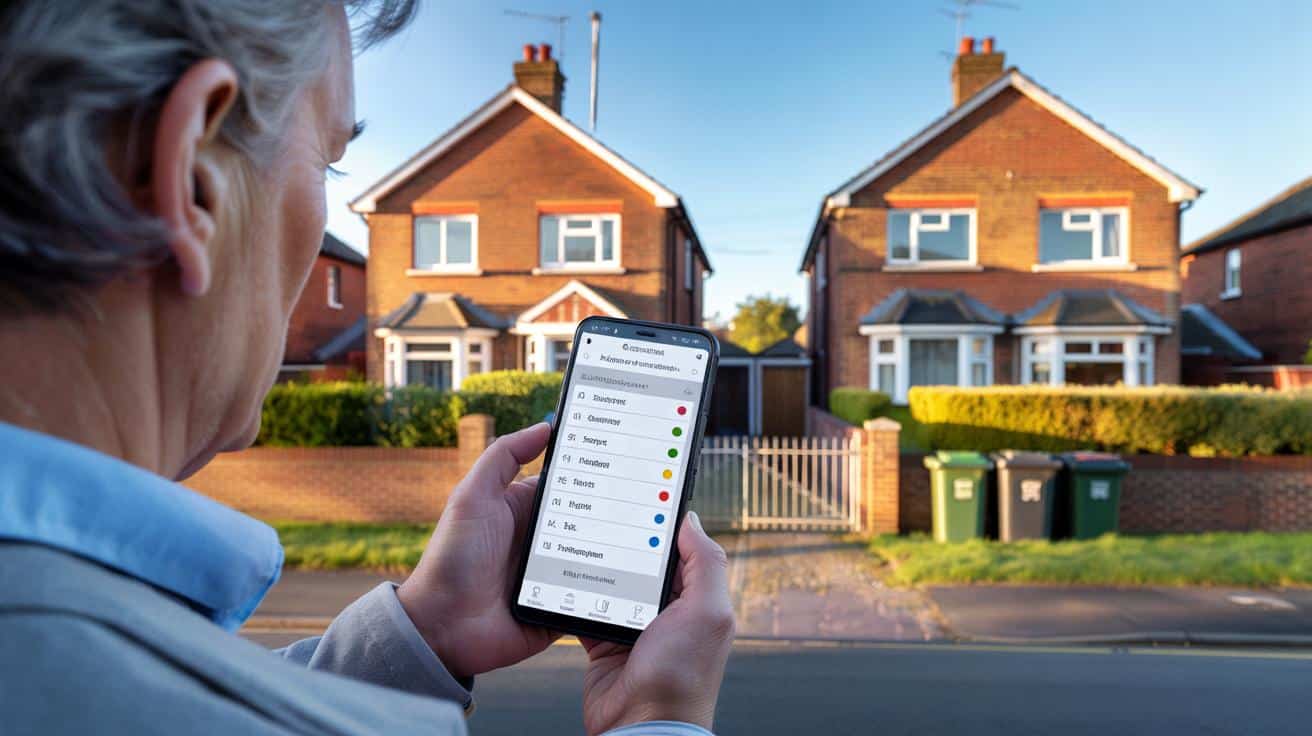
A quick double-take on your bill could be worth hundreds. Council Tax bands were set in a hurry decades ago; plenty were put in the wrong box. Martin Lewis keeps banging the drum for one thing: a simple five‑minute check that flags if yours looks off. It’s quick, free, and surprisingly revealing.
Two near-identical houses face each other. Same bay windows, same postage‑stamp gardens, same cracked paving by the gate. One pays a Band D bill. The one opposite is Band C. No extension, no loft conversion, no secret conservatory with a hot tub.
The owners found out by chance, after a WhatsApp nudge from a neighbour who’d been following Martin Lewis. They pulled out their phones, typed a postcode, and saw the mismatch. The feeling was a mix of disbelief and annoyance. That little search changed their month’s budget. And then their year.
Curious? You should be.
What the five‑minute check actually is
Start with the postcode look‑up. In England and Wales, the Valuation Office Agency (VOA) lists every home’s band. In Scotland, it’s the Scottish Assessors Association (SAA). Tap in your postcode. Scroll your street. Compare like with like: same style, similar size, similar age.
If your Band E semi is surrounded by Band D twins, that’s a red flag. If the entire row of flats is Band B and yours sits in Band C, that’s another. It doesn’t prove you’re wrong, but it hands you a reason to dig deeper. This is the five‑minute check Martin Lewis wants everyone to try, because it instantly shows where things smell odd.
This quick scan matters because Council Tax bands are based on property values from a frozen moment in time. In England and Scotland, it’s 1991 prices. In Wales, it’s 2003. Bands were set fast, without visiting every home. Plenty were mislabelled. Life moved on, neighbourhoods changed, and those sticky labels stayed.
How a tiny look‑up turned into a chunky refund
Take Ellie, a nurse in Stockport, living in a brick‑for‑brick match with her neighbour. Same footprint, mirror‑image layout. Ellie was Band D; next door was Band C. She’d never questioned it. On a late shift break, she did the postcode check on her phone.
She saw the difference, then did a second test: worked back her home’s likely 1991 value using an online house price calculator. The maths suggested her place should have sat in Band C all along. She gathered a couple of Rightmove screenshots, a council‑approved sales history, and filed a challenge.
Eight weeks later, the letter confirmed a rebanding downwards. The council refunded years of overpayments. That lump sum cleared her overdraft and paid for a battered kitchen to be patched up. It didn’t feel like a windfall; it felt like correction.
Why the bands go wrong — and what “right” looks like
Bands aren’t about what your home is worth today. They’re about what it would have sold for at a specific old date. Think of it as time‑travel valuation. The threshold for each band was set long ago. In England, Band A sits at up to £40,000 (1991 values); Band D runs £68,000–£88,000; Band H is anything above £320,000. Scotland and Wales have their own thresholds and reference years.
So you do two things. First, compare with neighbours. Second, estimate your old‑day value. Use current sale prices for similar homes on your street, then apply a house price index tool to roll it back to 1991 (or 2003 in Wales). If your rolled‑back figure puts you below your current band’s threshold, you’ve got a case.
One word of caution: improvements can muddy the water. A big extension completed years ago won’t change your band until the property is sold, then a reassessment can land. If your home is meaningfully larger or upgraded compared to “identical” neighbours, don’t expect a lower band to stick.
The five‑minute move — step by step
Open the VOA (England and Wales) or SAA (Scotland) website. Enter your postcode. Scan your street. Note properties that genuinely match yours: same bed count, layout, and build type. If yours sits higher, take a quick screenshot or jot it down. That’s your five minutes, done.
Got a mismatch? Do the deeper half‑hour. Find recent sale prices for your model of home on Rightmove, Zoopla, or the Land Registry. Use a house price index calculator to rewind the figure to the 1991 baseline (2003 in Wales). Then sit your estimate against the official band thresholds in your nation. It’s a tiny bit geeky, but it’s doable.
If both checks point your way, it’s time to challenge. Contact the VOA or your Scottish Assessor. Keep it polite, factual, and concise. Include address comparisons, sale evidence, and your rolled‑back valuation. Let’s be honest: nobody actually does this every day. That’s why those who do often win back serious cash.
What trips people up — and how to dodge it
Don’t compare across very different properties. A mid‑terrace isn’t a semi. A loft conversion, even if unbanded for now, can create a mismatch with “identical” homes. Get as close a match as you can. Two or three good comparables beat ten fuzzy ones.
Don’t call your local council to argue the toss; they collect the money but don’t set the band. It’s the VOA or Scottish Assessors who decide. Also, be aware a challenge opens the door to a review that could move your band up or down. If your quick checks look shaky, pause. Nobody likes a bill going the wrong way.
“I always tell people to do the two tests: neighbour comparison, then 1991 recalculation. If both line up, you’re on solid ground to challenge.”
- Compare like‑for‑like on the VOA/SAA site.
- Rewind a realistic value to 1991 (or 2003 in Wales).
- Save screenshots and sale evidence as your pack.
- Send a clear, short challenge with your proof.
What this small act can unlock
There’s a quiet power in refusing to shrug off a mismatch. That five‑minute scroll can lead to a new monthly reality and a backdated refund that breathes air into your budget. We’ve all had that moment when a bill lands and your stomach dips a little. Imagine one less dip next month.
Share the check with your street group or family chat. If you’re renting, pass it to your landlord — a reband could ripple through to better value or fairer deals. Sometimes nothing changes. Sometimes a letter comes, and the numbers bend in your favour. And once you’ve seen how to do it, you’ll never look at a row of houses in quite the same way.
| Key point | Detail | Interest for the reader |
|---|---|---|
| Five‑minute postcode check | Use VOA/SAA to compare your band with true neighbours | Quick, free signal you might be overpaying |
| Roll back your home’s value | Estimate 1991 (or 2003 in Wales) price with an index tool | Evidence to support a formal challenge |
| Challenge with proof | Send screenshots, sales data, and your calculation | Potential lower band and backdated refund |
FAQ :
- What if my band ends up going up?You accept the risk before filing. If your evidence is weak, hold off. A solid two‑step check reduces surprises.
- Can I get money back if my band drops?Yes. Refunds are usually backdated to when you became liable at that address, often adding up to hundreds or more.
- Do home improvements change my band?Big upgrades can trigger a higher band, but typically only after the property is sold and reassessed.
- Is the council the right place to complain?No. The band is set by the VOA in England and Wales, and by the Scottish Assessors in Scotland. Your council just bills you.
- How do I know my 1991 estimate is fair?Use multiple comparable sales and a reputable house price index. Document your workings so someone else can follow them.







Just did the five-minute check and spotted my flat is Band C while the near-identical ones opposite are Band B—looks like I’ve been overpaying. Thanks, Martin! 🙂 Gathering Rightmove screenshots and rolling back to 1991 now.