
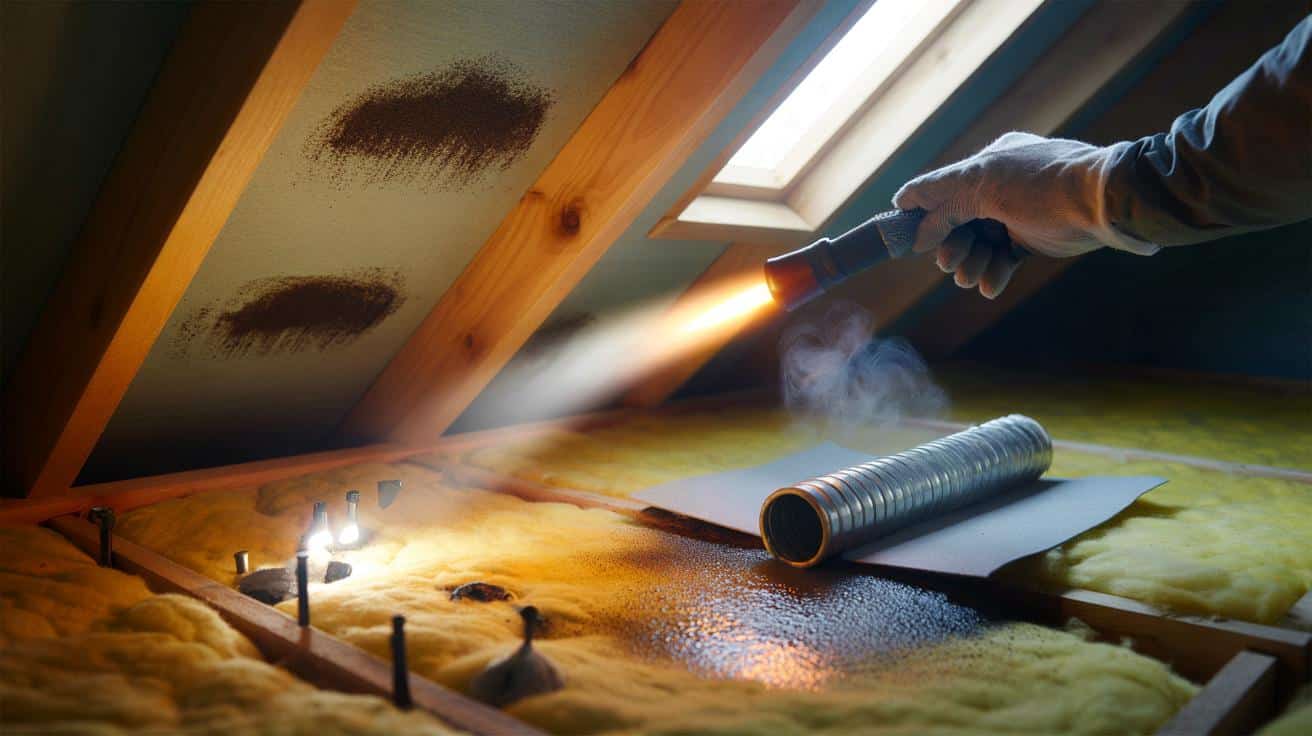
A faint smudge on your loft insulation isn’t just dust. Those “dark patches” often reveal where warm, moist air is slipping into the cold, leaving grime, damp and heat loss in its wake. Ignore it and you could be nudging yourself toward a mould cleanup, new insulation, and even roof repairs — the kind of surprise that adds up to a discreet, nasty, **£1,000 problem**.
You sweep the beam across the rolls of insulation and there they are: smoky halos, streaks at the eaves, a bruise-like patch near the loft hatch. The fibres look tired, matted, a bit grimy where the light catches. You kneel. It smells faintly of cold dust and last winter, and in the quiet you can hear the house breathe as the boiler kicks in below.
You pinch the insulation. It’s cool, slightly claggy. There’s a faint line of soot on your fingers. A droplet winks on the underside of the felt near a pipe. In the moment you think: this is where my heat is going, this is where my money is going. The stains are telling on your house.
Something else nags from the edges of the light — a question you can’t un-hear once it’s asked. What are those dark patches trying to say?
Dark patches: what they mean, and why they cost
Those smudges are usually “filtration” marks — dust sticking to fibres where air is moving through gaps — and a big clue to **dark patches** being a heat- and moisture-leak story. Warm air from kitchens, bathrooms and living rooms rides the stack effect up, hits the cold loft, drops its moisture, and leaves dirt on contact points. Where the air moves, the dust tells on it.
Sometimes the patch isn’t just dust. It’s damp discolouration from roof leaks, or black specks hinting at mould blooming where vapour keeps condensing. The pattern matters: dark bands along eaves often mean wind-washing; smears around downlights and the loft hatch suggest indoor air spilling through. If your bathroom fan dumps into the loft instead of outdoors, the patches will cluster right above it like a map with a flashing red pin.
In one semi in Leeds, a family discovered stains above the main bathroom and along the eaves in January. The bathroom fan duct had slipped and was blowing steam into the loft. Two joist bays of insulation were sodden, the felt was beading, and a mild earthy odour sat in the rafters. The bill for a roofer visit, new ducting, two rolls of insulation and a top-up was £740. Add an electrician for sealed downlight covers and it crept past £1,000. A messy lesson hidden in plain sight.
Think of the physics as a simple chain reaction. Warm, moist air rises, finds cracks — around pipes, cables, downlights, the loft hatch — then collides with cold surfaces and cools. Moisture condenses; dust adheres; fibres matt down; insulation loses loft and performance. At the eaves, cold exterior air can blow through the mineral wool, siphoning heat away and leaving a tell-tale dirty tide mark. *The dark halo isn’t dirt; it’s a story about airflow and moisture.*
There’s also “thermal bridging”: timber or metal parts acting like cooling fins that lower surface temperatures and invite condensation at specific lines or dots. You’ll often see neat, repeated smudges where nails in a cold roof deck telegraph through — a polka-dot of lost heat. Spotting the pattern helps separate a genuine roof leak from a humidity issue. Each pattern points to a different fix.
Why the scary price tag? Because the patch is rarely alone. Air leakage wastes energy every hour the heating runs. Damp invites mould, which means cleaning, sometimes antifungal treatment, and swapping out ruined insulation. If the root cause is a slipped tile or rotten felt at the eaves, there’s a roofer in your future. One mark becomes three jobs, and the arithmetic turns unfriendly fast.
How to check your loft today — and what to do next
Start with a 15-minute torch walk. Photograph the patches so you can see patterns. Pinch-test the insulation: if it feels claggy or heavy, pull back a small section and look for beads of water on the felt or sarking. Trace from each patch to a likely source — a pipe penetration, a cable cluster, the loft hatch, a downlight. Shine towards the eaves: can you see daylight through soffit vents, or is insulation rammed tight against them? Quietly powerful tip: sniff. Damp has a particular cool, earthy note.
If you’ve got a cheap moisture meter, press it into suspect timbers near patches and note readings. Peek at extractor fan ducts: they should run to a proper vent or tile, not end loose in the void. Look at the bathroom side: any gaps around downlights? The loft hatch should sit on a compressible draught strip and carry a rigid insulation board on the lid. Let’s be honest: nobody actually does that every day. But one calm look now beats a scramble later.
We’ve all had that moment when the house teaches us something we wish we’d learned sooner. If you’re staring at stains, you’re getting a free lesson in the invisible currents above your ceiling.
“Dark patches are the fingerprints of **warm‑air leakage**,” says Tom Forde, a building surveyor in Manchester. “They outline the path your heating takes to escape. Fix the path, and you fix the bill.”
- Quick wins: reseat loose ducts to outdoor vents; fit an insulated, draught‑sealed loft hatch; add downlight covers rated for insulation; top up to around 270 mm mineral wool without blocking eaves airflow.
- Red flags for a pro: persistent damp readings, brown/tan water stains (leak likely), sagging or blackened insulation, visible mould on rafters, no daylight at soffits after you clear them.
- Common culprits: bathroom extract vented into loft, squashed insulation, missing eaves baffles, gaps around pipes and cables, poorly sealed top of stud walls.
The £1,000 question: spend now or hope for the best?
The numbers are stubborn. Replacing a few rolls of damaged insulation and topping up a typical three-bed can be £300–£600 in materials, plus labour if you don’t fancy crawling boards. Add sealed downlight covers (£5–£15 each), a proper vent tile or cowl for an extractor (£60–£120 plus roofer time), and a draught-stripped hatch kit (£30–£60). If a roofer has to remedy slipped tiles or rotten felt at the eaves, the bill can tip three figures quickly. Stack those together and that’s where the headline figure comes from.
The flip side is quieter but real: close off the leaks and the heating system breathes easier. Rooms feel steadier. Mould spores don’t get a foothold. Energy Saving Trust data still stands: up to a quarter of heat can leak through the roof in a poorly insulated home, so every gap you calm pays you back each winter. You also unburden future you from a surprise repair on a wet, dark February morning. That’s worth something beyond the spreadsheet.
There’s a social side to this, oddly enough. Once you’ve seen the pattern in your loft, you’ll start spotting it in friends’ photos, estate listings, and the edges of your memory. The next person you mention it to will probably go up the ladder that evening. And they’ll find their own faint smudge that tells a story.
| Key point | Detail | Interest for the reader |
|---|---|---|
| Dark patches decode airflow | Dust sticks where warm, moist air leaks through or where wind‑washing cools fibres | Turn a mystery stain into a clear to‑do list |
| Patterns point to causes | Bands at eaves = blocked vents; clusters near downlights/hatch = indoor air leakage; brown = likely roof leak | Know when to DIY and when to call a pro |
| Costs can cluster to ~£1,000 | Insulation top‑up, sealed hatch, duct fixes, possible roofer time | Budget smartly and cut future heating waste |
FAQ :
- What exactly are the “dark patches” on loft insulation?They’re usually dust filtration marks where air moves through the insulation, sometimes mixed with damp staining or early mould when moisture condenses in cold spots.
- How do I tell a roof leak from condensation marks?Leak stains are often brown/tan with a defined edge and can track from a nail or tile line; condensation patches look sooty/grey and align with vents, downlights or eaves, changing with humidity and season.
- Is it safe to cover downlights with insulation?Only with fire‑rated, ventilated covers designed for the job; they allow a good insulation layer while keeping fittings cool and reducing air leakage around them.
- How much insulation should I have in the loft?As a rule of thumb, around 270 mm of mineral wool laid in two layers (between and across joists). Avoid compressing it and keep eaves airflow open.
- Can I fix this myself or do I need a professional?You can photograph patterns, re‑seat ducts to outside, fit a draught‑sealed hatch, add downlight covers and top up insulation. Call a roofer or surveyor for persistent damp, structural issues, or brown water staining.








Brilliant piece—finally explains why the eaves look like a dirty tide mark. I did the torch walk and found a cluster around the loft hatch and two downlights; pinched the insulation and yep, claggy. Re-seating the bathroom duct and fitting covers is now top of my list. This will definately save me from a mid-winter panic call to a roofer.