
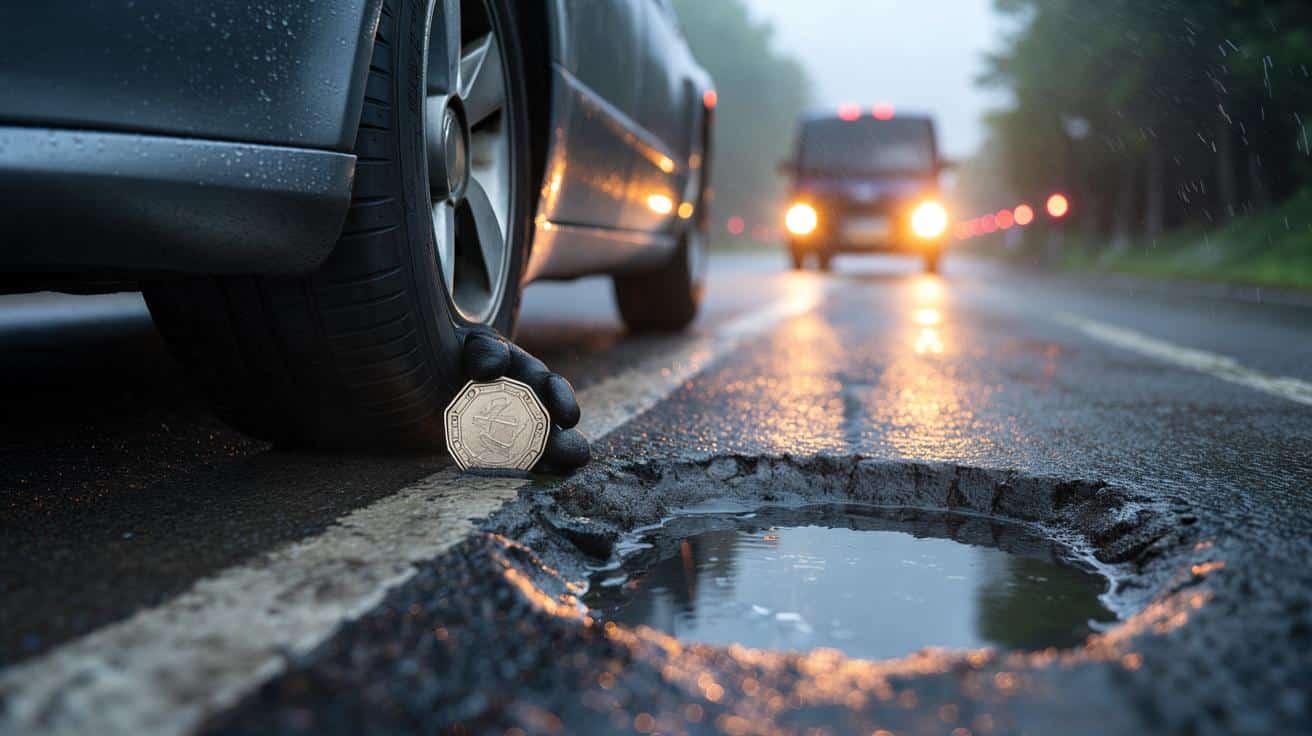
Councils battle a repair backlog while freeze–thaw cycles rip open fresh scars overnight. Breakdown patrols talk about bent rims and shredded sidewalls like it’s flu season. The simplest defence sits under the arches: your tyres. They grip, steer, and stop on surfaces that feel more like glass than asphalt. And right now, they’re taking a pounding.
It’s 7:42am outside a bakery on a B-road that looks fine until it isn’t. A van noses by, headlights pearled with drizzle, and the driver winces at a thud you feel in your teeth. A minute later, a commuter pulls in behind me, kneels by a front wheel, and runs a thumb along the tread like a piano tuner. We share a look that says: that was close. We’ve all had that moment when the road bites back and you start listening for a wobble. Then the traffic moves, and so do we. Still, a question lingers.
Winter is turning roads into traps
Ask any patrol this month and you’ll hear the same thing: potholes are multiplying, and they’re sneaky. Rain pools in old cracks, cold air stiffens the surface, and overnight the road lifts like pastry. The morning rush arrives and the first impact finishes the damage with a dull clap. Tyres take the first blow. They’re the only postcard-sized contact patches you have, and they have to work harder on wet, frayed surfaces. If tread is low, water can’t escape, and grip slides out from under you.
One Tuesday near Wrexham, a teacher named Leah hit a flooded dip on her way to school and felt the steering tug. She thought she’d imagined it until the car hummed at 40mph and the dashboard flashed the tyre symbol. A quick stop showed a neat, wicked bulge on the sidewall. She hadn’t seen the pothole under the water, just the ripple. Stories like hers echo across patrol logs every winter. Recovery crews call it the “invisible hazard”: holes you can’t read until your wheel finds the edge.
The physics are simple and unforgiving. In freezing, water creeps into hairline cracks and expands as ice, prising the surface apart. Passing vehicles turn those gaps into craters. At the same time, cold air drops tyre pressures, shrinking grip and stretching braking distances. A tyre on the edge of legal tread will still pass a roadside glance, yet on a wet January night it behaves like a worn-out trainer on a tiled floor. Good rubber can carry you through a bad road. Poor rubber turns a pothole into a bill.
Your 90-second tyre check, done the simple way
Start when the tyres are cold. Use the 20p test: slide a 20p coin into the grooves across the central band. If you can see the coin’s outer rim, your tread may be below the legal minimum in places. Spin the wheel a quarter turn and try again to catch uneven wear. Next, check pressures against the sticker inside your door or fuel flap, not a guess. Finally, scan sidewalls for cuts, bubbles, or shiny objects wedged in. Three steps. Ninety seconds. A calmer drive.
Your hands are your best tools here. Run fingertips along the tread blocks for stones or glass, and feel for flat spots that suggest a big pothole hit. If the steering now drifts, the wheel might be out of alignment. And yes, do a quick look after parking up at night too. Let’s be honest: nobody does that every day. But the habit pays off most on wet weeks, school runs, and long motorway slogs. *Breathe, and make a quick check before you drive.*
There are classic mistakes that creep in with the cold. Underinflating “for snow” ruins stability on wet tarmac. Ignoring the TPMS light because “it always does that” hides slow punctures that fail on a roundabout. Rotating tyres without fixing alignment only spreads a problem. As one roadside mechanic in Leeds told me:
“Winter doesn’t break cars. Winter finds what’s already weak. Tyres just tell the truth first.”
- Check tread, pressure, and damage once a week in winter, and after any hard hit.
- Slow down and leave space on rutted, flooded, or patchwork surfaces.
- Report potholes early via your council or local app to protect the next driver.
The road ahead, and the choices we make
Road crews will patch what they can between storms. Budgets will flex, then tighten. Drivers will keep swapping dented alloys for winter caution. Somewhere in that mix sits a question about personal margins. Tread depth is a number on paper, yet it’s also the difference between a calm squeeze of the brake and a white-knuckle skid when a van stops short ahead. There’s no glamour in checking tyres on a grey morning. There is a small, private satisfaction in knowing the only parts touching the road are ready for whatever shape that road takes today.
| Key point | Detail | Interest for the reader |
|---|---|---|
| Winter damage is rising | Freeze–thaw and heavy rain create hidden potholes and loose surfaces | Explains why commutes feel rougher and where risks appear |
| Quick tyre checks work | Use the 20p test, correct pressures, and a sidewall scan in 90 seconds | Practical routine you can do before school runs or late shifts |
| Small fixes prevent big bills | Spot bulges, uneven wear, and alignment issues after a hit | Saves money, avoids breakdowns, and keeps you in control |
FAQ :
- How often should I check my tyres in winter?Once a week is a solid rhythm, and again after any harsh pothole hit or pressure warning light.
- What’s the legal tread depth in the UK?1.6mm across the central three-quarters of the tread, all the way round. Many fitters recommend aiming for 3mm in winter for better wet grip.
- Why is my TPMS light on every cold morning?Cold air lowers pressure. Top up to the car’s stated cold pressure, not the tyre sidewall number. If it returns quickly, get the tyre checked for a slow leak.
- Are winter or all-season tyres worth it here?In many parts of the UK, good all-seasons are a strong year-round compromise. In colder, rural or hilly areas, dedicated winter tyres deliver better cold, wet, and slushy grip.
- How do I claim for pothole damage?Photograph the damage and the pothole, note the exact location and time, keep receipts, and submit a claim to the relevant council or National Highways. Reporting the defect helps others too.








Solid advice—did the 20p test this morning and my fronts are borderline. Booking a swap, cheers! 🙂
If councils know freeze–thaw hits every winter, why are we still footing the bill for bent rims and blown sidewalls? Feels like drivers subsidise neglect. Patch after patch isn’t maintainence, it’s a coin toss.