
Forecasters have issued frost warnings as the thermometer dips again, nudging towns and rural lanes into a careful, slower rhythm. It looks quiet, but it bites.
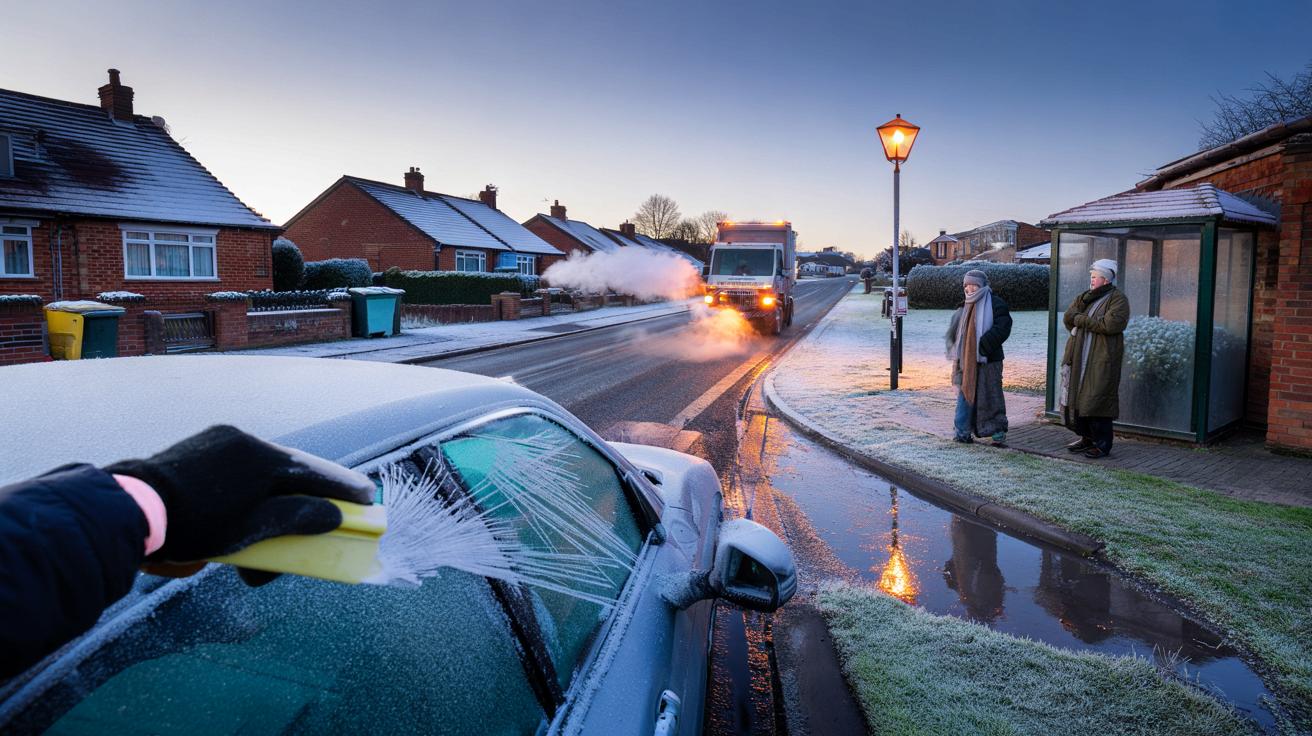
At first light the street is all silver edges and small sounds. A kettle clicks in a dark kitchen, a scraper scuds across a windscreen, and a runner’s breath ghosts in the glow of a lamppost. Somewhere, a gritter rumbles past like a distant freight train, leaving a salted ribbon in its wake that sparkles before the traffic touches it. *The air felt like glass.* People move differently in this weather: smaller steps, longer scarves, a kind of polite patience at the bus stop. A phone buzzes with a fresh ping from the weather app. And the message is simple. It lingers.
Cold that settles in, and why it’s sticking around
The cold snap arriving this week isn’t a flashy, headline-grabbing blizzard. It’s the sort of chill that builds in layers, night after night, as skies clear and heat slips upward into the dark. High pressure parks over the country like a lid on a pot, keeping winds light and nights radiant. That’s when the frost creeps back, reshaping grass blades and glazing shed roofs. You wake, you scrape, you go again. And by mid-morning, the thaw only half-wins.
In a suburban cul-de-sac somewhere in the Midlands, you can hear the morning routine before you see it. Engines idle politely, a glove squeaks across the final stripe of ice, and a neighbour calls out that their side road is “a rink, mind the bend.” Temperatures dip below freezing in the small hours, with **-5C pockets** in the most sheltered spots, and ground frost harsher than the air would suggest. The freeze–thaw cycle paints thin films of **black ice** in shady corners, turning a forgotten puddle into a trap. That’s when slips spike and timetables stretch.
There’s a logic to why this cold won’t budge. With the sun low and days short, the balance never tips far enough for a full daytime reset. Dry air helps frost form fast, and lighter winds reduce mixing, letting colder air pool in hollows, valleys, and the bottom of city streets. Urban heat keeps central areas a whisper milder, yet out on the edges the chill nests in gardens and verges. Think of England as a patchwork of microclimates under one big, quiet dome. The map looks calm. The pavements tell another story.
Getting through frosty mornings without drama
Start the night before with a small ritual. Park facing east if you can to catch any hint of morning light, place a towel over the windscreen, and keep proper de-icer by the door. In the morning, work in stages: start the car, set the fan to the screen, and use a plastic scraper in long, steady pulls. Ten extra minutes buys you safety and a better start than any rushed shortcut.
For walking, think low and slow. Short steps, feet under hips, and eyes on the next two metres, not the horizon. We’ve all had that moment when the pavement looks fine and the foot goes skating. Gloves with grip help if you need a handrail, and a backpack keeps hands free if you do slip. Soyons honnêtes : personne ne fait vraiment ça tous les jours. But on mornings like these, a little awkwardness beats a twisted wrist.
Local services are already responding, and the advice hits a simple note: plan, don’t panic.
“Cold snaps are simple on the map but complicated on the ground,” one forecaster told me. “Clear nights, light winds, and damp surfaces make a cocktail for quick ice. Respect the shine.”
- Keep a small winter kit in the car: scraper, de-icer, torch, blanket, phone charger.
- At home, drip-protect outdoor taps and open loft hatches briefly to let warmer air circulate.
- Check on neighbours who might skip the shop if paths look slick.
- Footwear matters: softer rubber grips better than hard, worn soles.
What this chill says about our winter right now
This is the kind of weather that quietens a place and tests its habits. It brings out the small, unglamorous heroes: the early gritter crews, the bus drivers easing through corners, the person who throws grit on the corner by the postbox because someone fell there last year. Energy choices suddenly feel more real, as radiators click on earlier and kettles run hotter. Households weigh coats over jumpers, draught excluders over fan heaters, all in the calm arithmetic of a long week’s chill.
It’s also a reminder that winter in England is rarely tidy. Snow is showy, but frost is the daily grind, the quiet hazard that turns a normal Tuesday into a slower, kinder thing. People wave drivers across, runners detour around the glossy patch, and the school run takes five more minutes. Weather has a way of teaching us to share the road and the morning. **Met Office yellow alerts** ask for a nudge of caution. We don’t need headlines to listen.
Maybe that’s the takeaway as this cold settles for another run of days. We adjust, we adopt rituals, and we look out for someone else on the way. The frost will lift, as it always does, leaving lawns bruised and bins damp and the odd lost glove on a wall. Until then, the slow lane can be a good lane. It’s where we notice the world again.
| Key point | Detail | Interest for the reader |
|---|---|---|
| — | Cold snap lingering under high pressure with repeated frosty nights | Helps plan commutes, school runs, and outdoor routines |
| — | Risk of ice in shaded spots and minor roads, especially at dawn | Reduces slips and scrapes with smarter route choices |
| — | Simple prep and small habits ease the strain | Saves time, cuts stress, and keeps families safer |
FAQ :
- How long is the cold snap likely to last?Forecasts point to several days of chilly, settled weather, with frosty nights and limited daytime thaw in sheltered spots.
- Which areas of England are most affected?Rural and semi-rural parts of northern and central England face the sharpest frosts, though urban fringes can still see ice in shade.
- What’s the safest way to drive on icy mornings?Leave extra time, accelerate gently, brake early and softly, and keep a greater gap. Clear glass fully before moving.
- Does road salt work in very low temperatures?Grit works best just below freezing. When temperatures drop well below zero, its effect slows, so black ice can still form.
- Can pets go outside safely during a frost?Short, supervised trips are fine. Wipe paws after walks and watch for ice on paths where traction is poor.





Solid guidance here—especially on short steps and clearing glass fully. I’ve seen too many folks driving with a letterbox windscreen. The reminder about salted roads not working well below zero is spot on. I’ll definately stash a scraper and blanket in the boot tonight.