
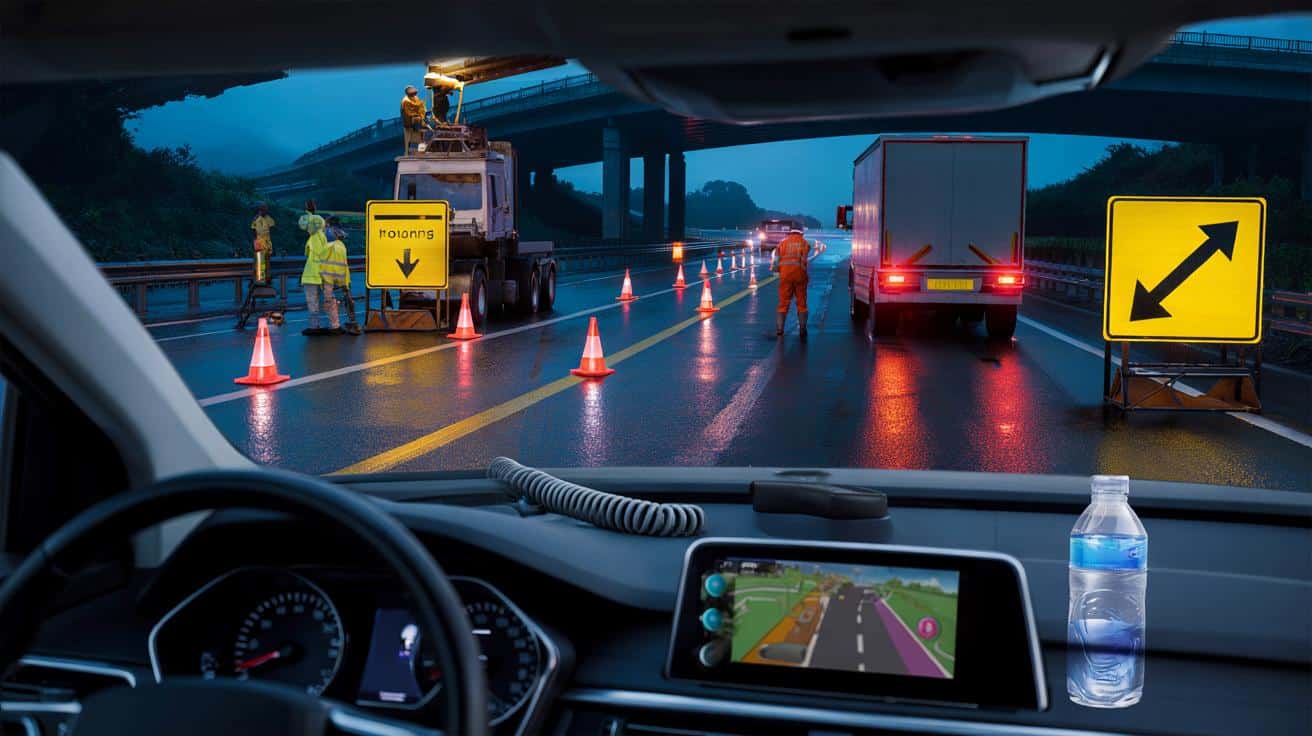
Resurfacing teams, bridge inspectors and line-painting crews will be out after dark, meaning diversions, reduced speeds and the odd unexpected u‑turn for anyone driving late.
It starts with a hazy ripple of amber lights in the distance, then the cones appear like a string of pearls in your headlamps. At 10.45pm on a wet Tuesday, your satnav chirps, recalculates, and sends you off the main drag onto a road you’ve never noticed in daylight. A lorry idles at the junction, indicators ticking, while a night-shift nurse glances at the clock and bites her lip. The digital sign flashes that all-caps verdict: ROAD CLOSED. You slow, sigh, and hunt the yellow squares that promise a way around. Somewhere, an engineer clambers into a cherry picker to check a bridge joint before breakfast. *Tonight might be different.*
What’s changing on the roads after dark
Across the next few weeks, overnight closures will pop up on key stretches of motorway and A‑roads as maintenance teams compress big jobs into short windows. Think 8pm to 6am, rolling closures that shift a mile or two each night, and diversions that snake through retail parks and roundabouts you rarely use. The work ranges from resurfacing and barrier repairs to junction upgrades timed to beat the morning rush.
For drivers, the practical headline is timing. Many closures get confirmed within days, then adjusted again if weather moves in or kit breaks down. A short gap in a concrete barrier, a missing reflective stud, a tired expansion joint — each can trigger a planned night-time shutdown. And when it happens, the official diversion might add twenty to forty-five minutes on a route you thought you knew by heart.
There’s a logic to the nocturnal blitz. Traffic volumes fall after dark, which lowers risk for workers and trims the impact on commutes and school runs. Materials matter too: hot asphalt needs calm conditions to settle, road markings need darkness to cure cleanly, and bridge inspections demand quiet spans. Local noise rules keep hammer drills out of the small hours in some neighbourhoods, so crews juggle shifts and locations like air-traffic controllers. **It’s a careful dance: keep the network safe, keep Britain moving, and do it when fewer eyes are on the road.**
How to plan smart and keep your night drive calm
Think of your trip like a mini mission. Check the official traffic map or your local highways authority about an hour before you leave, then again right as you set off. Save two routes in your satnav — your usual and a “boring but reliable” backup — and download offline maps in case a signal drops on a country lane.
Build in a buffer, even if it’s just fifteen minutes. Keep your petrol above a quarter tank before you hit the cones, and stash a phone charger and a bottle of water where you can grab them without rummaging. Let’s be honest: nobody actually does this every day. But the one night you do, it pays back in calm beats and lower shoulders.
Common slip-ups look small until they cost you sleep. People follow the satnav blindly and miss the big yellow diversion squares; others dive down a tempting side road and end up reversing past bins at midnight. Keep an eye out for temporary speed limits, as average-speed cameras can stay live even when a crew has moved on. **Stick to the signed diversion unless you know the area like the back of your hand.**
“We sign diversions to carry the same vehicle types as the closed road — including HGVs — and we test them before the night starts,” says Mark, a night-works supervisor with two decades on the cones. “If the weather flips, we tweak things fast. The signs are your friend.”
- Check timings again before departure — closures can start earlier if crews get a clear run.
- Save a Plan B route and download offline maps for patchy signal areas.
- Keep a charger, water, and a small torch in the door pocket.
- Watch for yellow diversion squares and repeaters; they form a breadcrumb trail.
- Know the red X: a closed lane on a smart motorway isn’t a suggestion.
What this means in the bigger picture
Our roads are in a long, complicated race: heavy use, hard weather, rising freight, and expectations that everything works all the time. Overnight closures are the unglamorous end of keeping the show on the road. They’re also a clue to where investment flows — the bridges getting a second life, the junctions getting smarter signals, the worn-out surfaces finally renewed so storms don’t carve potholes by the dozen.
We’ve all had that moment when the clock is tight and a flashing arrow sends you the other way. It stings, then it passes. What lingers is the feeling that the system either respects your time or steals it. Planning takes the edge off, yet it also changes the mood: headphones ready for a podcast, headlights clean so the signs pop, a mental map with a safety net. **You can’t control the cones, but you can control the quiet in your cabin.**
There’s a shared etiquette to night driving too. Leave space for works vehicles to swing, dim your full beam when a worker steps into view, and glide through average-speed zones like you meant it. Small courtesies ripple — a cleaner merge, a quicker run, fewer horns in the dark. If you pick up a brilliant back route, tell a friend. If you hit a rough patch, report the snag; sometimes a missing sign on a diversion gets fixed the next night because someone spoke up.
| Key point | Detail | Interest for the reader |
|---|---|---|
| Overnight windows | Closures typically run between 8pm and 6am, with rolling sections that shift night by night. | Helps time your trip and avoid turning up just as the cones go down. |
| Official diversions | Yellow-signed routes are tested for all vehicle types, including HGVs and coaches. | Reduces risk of dead-ends, weight limits, or tight village corners at midnight. |
| Prep that pays off | Two routes saved, offline maps, quarter tank of fuel, and a 15–20 minute buffer. | Turns a stressful detour into a manageable pause rather than a crisis. |
FAQ :
- Will all closures be in place every night?Many are part of a rolling programme, shifting location nightly and sometimes cancelled if weather turns. Check again before you leave.
- Are diversion routes suitable for lorries and coaches?Yes, official diversions are planned for the same vehicle class as the closed road. Look for the yellow squares and follow them.
- What time do closures actually start?Signage often shows the window, but crews may phase traffic off earlier if the network is quiet. Aim to pass before 8pm if timing is tight.
- Can I rely solely on my satnav?Use it, but trust the roadside signs first. Satnavs don’t always update fast enough for pop-up diversions.
- How much extra time should I allow?A realistic buffer is 15–45 minutes, depending on distance and whether your route crosses a known worksite.






Thanks for the clear tips—offline maps and the “boring but reliable” backup route are going into my routine. I do late shifts and often get caught by rolling closures. Will timings be posted earlier than same‑day when weather’s stable? Would definitley make planning less stressful.