
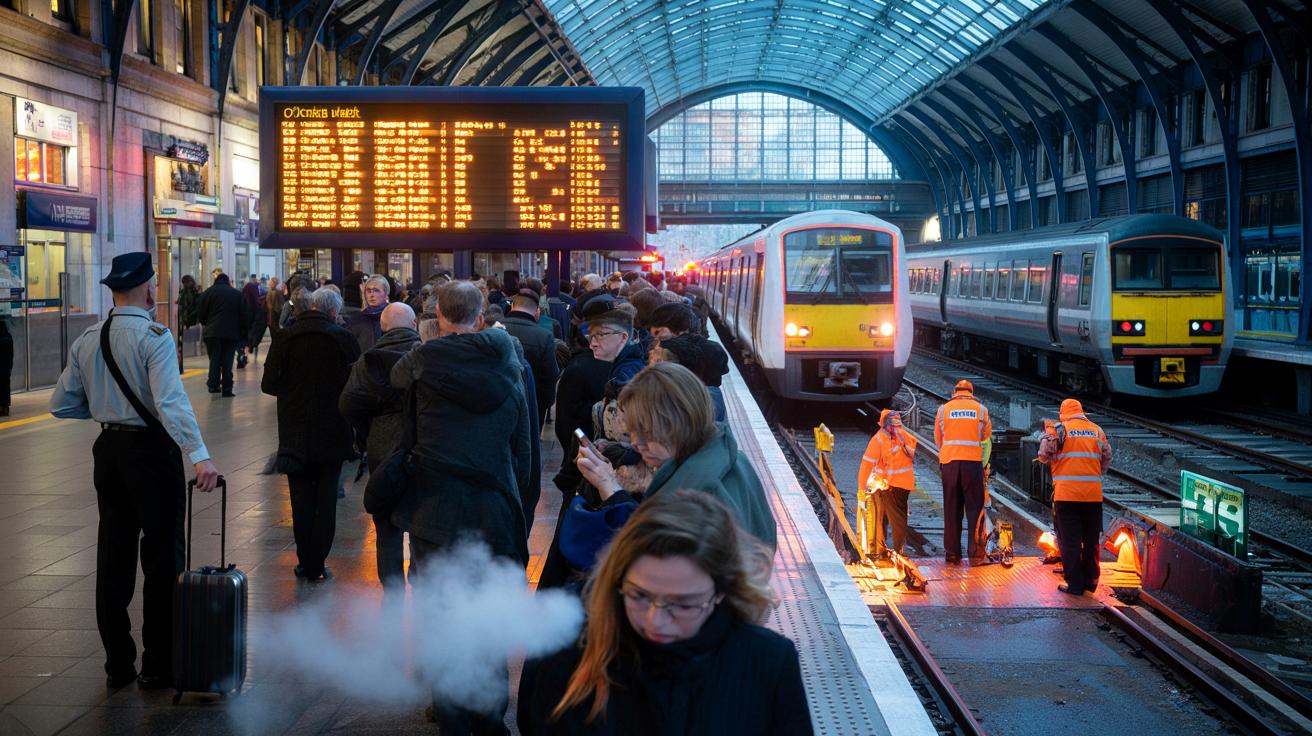
Operators are flagging last‑minute changes, slower running and bus replacements on some long‑distance and commuter lines. For many, the journey won’t look like it does on the timetable.
The concourse at dawn always tells the truth. Coffee steam curls into cold air, the departure board blinks like a nervous eye, and a hundred small plans hold their breath in front of platform 6. A guard walks past with a radio pressed to his shoulder, lips moving, eyes scanning the crowd for a problem not yet visible. You feel it before you see it: a hush, a tilt of heads, a ripple along the line of people waiting to board. The board flips; the word no one wants flashes up in hard, square letters. Someone sighs, someone swears under their breath, someone checks maps they don’t usually open. And the week has only just begun.
What’s behind the disruption — and where it hits most
Britain’s railways are running, but this week they’re running with caveats that matter. Network Rail’s teams are pushing through planned works on overhead lines, points and signalling, which means slower speeds and overnight closures spilling into the morning peak. Routes in the spotlight include the West Coast Main Line from London Euston towards the North West, the Great Western corridor out of Paddington to the South West and South Wales, and the East Coast spine from King’s Cross through Yorkshire and up to Scotland.
Commuters feel the squeeze on the South East’s busy arteries too: Thameslink, Southern, Southeastern and South Western will juggle diversions and platform changes as crews and rolling stock get re‑threaded through bottlenecks. CrossCountry’s cross‑Britain runs can take a wobble around Birmingham New Street when even a single late inbound turns the grid red. Nationally, about one in five trains arrived later than planned last year, and this week’s mix of works and weather nudges that number in the wrong direction for anyone cutting it fine.
Think of the network like a city’s plumbing. A maintenance crew closes one pipe for good reason, and pressure builds elsewhere; a leak adds up the road, and the flow changes again. High winds trigger speed limits on exposed sections, heavy rain can slow trains over older trackbeds, and driver and crew diagrams—intricate, human timetables—don’t always click back into place on command. The result is a series of small, sensible decisions that add up to a big, frustrating picture. **None of that makes your missed meeting easier, but it does explain why it happens fast.**
How to travel smarter this week
Start with a simple A‑B plan and write a C in your head. Check more than one source: your operator’s app, National Rail Enquiries, and a live map like Realtime Trains to see what’s actually moving. Book the train before the one you need, pick a direct service where you can, and screenshot your itinerary in case the signal drops. If Euston looks sticky, consider Marylebone for Chiltern, or angle for King’s Cross rather than Paddington if your destination allows it. *Travel is fragile, and that’s okay to admit.*
We’ve all had that moment when the doors close and your stomach drops because you know you’re not making the connection. Pack a battery pack, water and something small to eat, because being hungry makes delays feel longer. Let’s be honest: nobody does that every day. Keep your ticket type in mind—Advance fares lock you in, but many operators will let you board the next service if disruption is declared. Delay Repay kicks in from 15 minutes on lots of routes now, so keep timestamps and train numbers.
This is the week to make the boring move that saves the day. Take the earlier train, sit near the doors if you’ve got a tight switch, and note the last service home as if it were a birthday. Then give yourself five spare minutes for the unexpected at the other end.
“Plan ahead, check before you travel, and leave more time than you think.”
- Use two apps, not one: operator + National Rail Enquiries.
- Set live alerts for your specific service and station.
- Know a Plan B route (e.g., Tube or bus) between major London termini.
- Keep receipts; claim Delay Repay within the operator’s window.
- If stranded, ask staff about ticket acceptance on alternative lines.
Beyond this week: what these delays are telling us
Disruption is often the visible face of investment, and that’s the awkward truth no one claps for on platform 3. Track renewals, signals modernised, overhead lines fixed—these are the jobs you want done, just not at 07:42 on a Tuesday when you’re juggling childcare and a quarterly review. Climate swings are pushing more weather‑related speed restrictions, while decades‑old pinch points still act like narrow doorways at a crowded party. The network needs more slack in the system and timetables that breathe, not just sprint. **A railway that’s robust in bad hours tends to be brilliant in the good ones.** Maybe this week is a nudge to travel like a realist: early where it matters, flexible where you can be, and loud about what isn’t working. Share what you see, ask for clarity, keep your claims clean and fair. The rails remember our patience—and our pressure.
| Key point | Detail | Interest for the reader |
|---|---|---|
| Routes under pressure | West Coast, Great Western and East Coast corridors, plus London commuter lines | Focus your checks on the lines most likely to change at short notice |
| Smart planning | Two apps, earlier train, Plan B between termini, Delay Repay readiness | Reduces stress and gives you options when the board flips |
| Rights and remedies | Delay Repay often from 15 minutes, ticket acceptance in disruption, alternative transport | Turn a bad hour into compensation or a viable reroute |
FAQ :
- Which routes are most likely to be disrupted this week?Operators are flagging the West Coast Main Line from Euston, the Great Western corridor from Paddington, and the East Coast from King’s Cross, plus busy commuter routes into London. Check live updates before you leave.
- Should I travel earlier than usual?Yes, pick an earlier service if you can. It gives you margin for a missed connection or a last‑minute platform change, and it often turns a stressful sprint into a steady walk.
- Can I get a refund if I decide not to travel?Refund rules depend on your ticket. Advance fares are limited, but if the operator declares disruption, flexible options and ticket acceptance often expand. Read the specific policy on the operator’s site.
- What if I miss my connection because of a delay?Speak to staff and keep your ticket. Through‑tickets usually protect you, and many operators will endorse the next available service. Keep notes so you can claim Delay Repay.
- Are weekends any safer right now?Weekends often carry heavier engineering work. Services can be thinner, with buses replacing trains on some stretches, so check timings carefully and allow extra time.








Is the West Coast Main Line from Euston affected all week or just the morning peak? Trying to plan a late‑evening run to Manchester and don’t want to get caught by last‑minute bus replacements.