
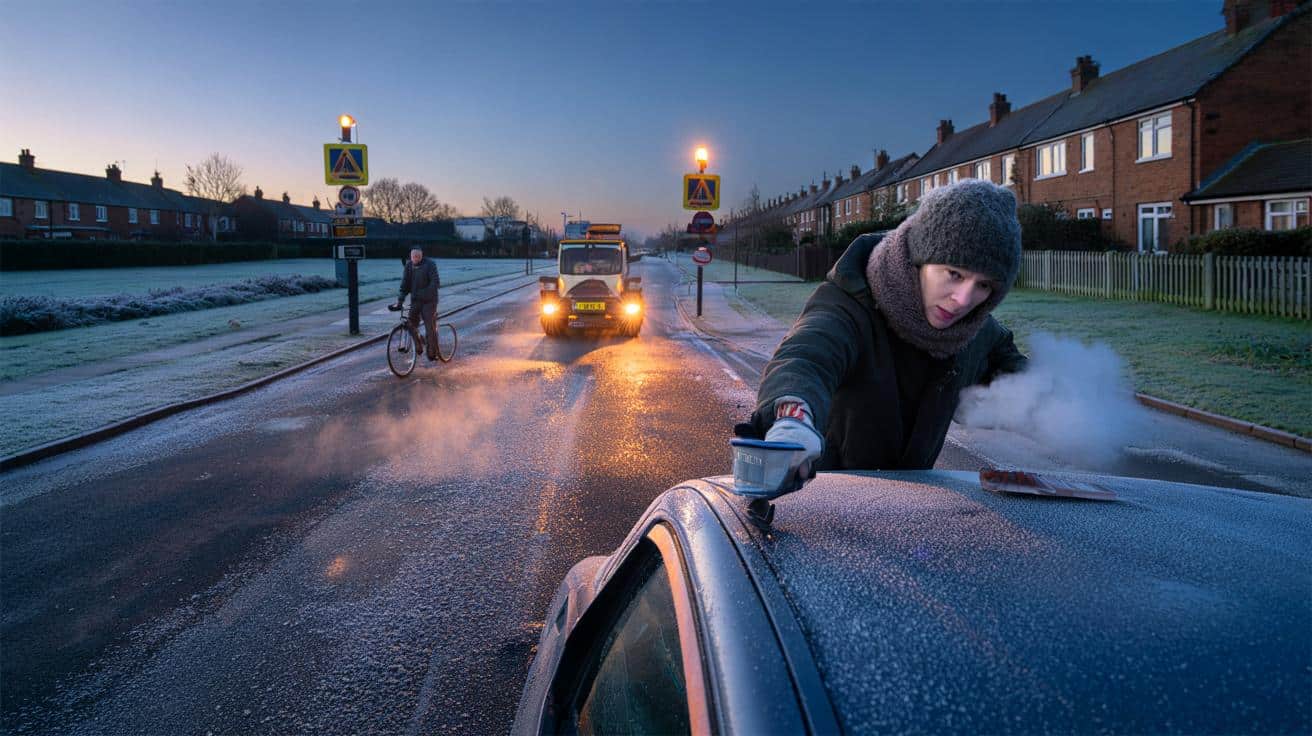
Commuters face slick pavements and crisp, glittering verges by first light, with gritting teams racing the clock and boilers groaning back into life. Energy use will jump, travel could stutter, and that squeak of boots on ice will return to the morning soundtrack.
The frost arrived quietly, almost politely. Street by street, it crept down from the North, iced up puddles into coins of glass and turned garden fences sugar-white. In London’s side streets and Devon’s lanes, the day began with the soft rasp of plastic scrapers and the low hum of engines warming through the dark. A cyclist tested the curb with a cautious foot, changed their mind, and hopped onto the pavement where the grit had held. We’ve all had that moment when your key bites the lock and a little cloud of breath curls up like a ghost. The cold changes your pace. It makes you look twice at the ground. And it can surprise you.
The frost line is on the move
Overnight, the freeze has been sliding steadily south, tugged along by a light northerly and clear skies that let heat pour away into space. Towns that woke to damp tarmac yesterday are waking to crunch underfoot today, from the Midlands to the Home Counties and the far West Country. **Roads will be at their slickest just before dawn.** Radiative cooling is doing the heavy lifting here: the drier the air and the clearer the sky, the faster the ground chills, and the more likely grass frost leaps onto hard surfaces like pavements and bridges.
Early risers have been sending small dispatches from their doorsteps. A dog walker in Leicester filmed breath fogging in the beam of a headtorch; a bus depot in Oxfordshire delayed the first run while staff tackled a patch of black ice at the exit; a garden in Surrey looked dusted with icing sugar next to a birdbath frozen solid. Weather stations from Yorkshire down into Somerset switched from barely-above-zero readings to -3C in under an hour as the wind eased and the sky cleared again after midnight. **Frost has a habit of arriving fastest in those final, silent hours.**
What’s driving it sits high and wide: a blocking high to the west is diverting mild Atlantic air, while a pool of cold, Arctic-sourced air is parked over the UK. That set‑up encourages light winds and breaks in the cloud, the perfect mix for sharp night frosts. The Met Office has hinted at patchy ice risks on untreated roads and a small chance of wintry flurries near North Sea coasts where air picks up moisture over colder waters. *The cold has a way of slowing time.* For the south, the headline is simple: frost is spreading, nights will bite, and mornings will demand careful steps.
Staying ahead of the snap
If you’re driving at first light, think like a pilot doing pre‑flight. Clear the glass right to the edges, not just a peephole. Use a proper scraper and a de‑icer rated to -10C or below, then wipe the inside to banish mist before you roll. Keep acceleration soft, braking earlier and lighter than feels natural. Bridges and shaded bends freeze first, so read the road for dark, glossy patches. **Tyres with decent tread and pressure turn a white-knuckle drive into a normal commute.** A folded tarp or old yoga mat over the windscreen overnight is a small, life‑lifting trick.
Inside the house, small tweaks make big differences. Bleed radiators so heat spreads evenly, drop a towel at draughty thresholds, and set the thermostat to reach a gentle background heat before you wake rather than blasting at 7am. Lag exposed pipes in lofts and outbuildings, open the kitchen cabinet under the sink at night so warm air can circulate, and keep a torch, spare batteries and a charged power bank on the hall table. Let’s be honest: nobody does that every day. On a night like this, it’s worth it.
Cold snaps highlight simple things we often skip. Keep a grab‑bag by the door: hat, gloves, scarf, lip balm, a small de‑icer, and a microfibre cloth. Check on neighbours who might find icy steps a barrier to getting milk or collecting a prescription. Energy bills are tight; a quick conversation can help someone choose smart, low‑cost heat.
“Frost is beautiful until it’s on the pavement outside your front door at 6am,” said a gritter driver in Northumberland. “We aim to beat the clock, but timing and surface temperature can still catch people out.”
- Lay salt or grit on paths before bed, not after breakfast.
- Set a slow, steady heating schedule, not peaks and troughs.
- Top up screenwash with winter mix and keep it in the boot.
- Charge phones overnight in case travel plans change.
Why this one feels different
The south doesn’t get every cold surge with equal force, yet this one coincides with long nights and clear breaks that magnify the sting. Commuters heading early to rail stations will feel it in their face and see it on platform edges, where damp sleepers can become slick. Parents doing the nursery run may find prams skitter on brick paths that stayed wet after yesterday’s shower. Radios will mention “patchy ice” as if it’s scattered confetti; in reality, one metre of the wrong patch is all it takes. **Vulnerable neighbours may need a quick check‑in today.**
For all the drama, this isn’t deep winter chaos. It’s the kind of low, quiet cold that tests routines. That’s why it ambushes: the sky looks kind, the wind barely moves, and you think the worst is past because the headline snow never came. Then your boots hit a shaded stretch and your balance gently disappears. Salt stocks are fine, gritters are rolling, trains are cautious rather than cancelled. The bigger adjustment is mental, and it starts the moment you open the door and your cheeks tighten.
There’s a weather nerd’s answer to the “why now” question too. Clear skies overnight allow the ground to radiate heat upwards, faster where grass or bare soil is exposed, slower where concrete holds a little warmth. As air in contact with those surfaces cools, it drops, pooling in dips and hollows. That’s why frost gathers at the bottom of your garden while the step by your back door stays just damp. Towns with more brick and less green stay milder a touch longer, but once the air mass itself is cold enough, even city corners surrender that last degree. And that’s the degree that decides your footing.
What people are doing right now
Around the country, small winter routines are waking up. Kettles are being filled for hot water bottles, running shoes swapped for boots with a thicker tread, pet owners putting down old towels by the door to catch the soggy thaw when the dog charges back in. Park-keepers sprinkle grit ahead of a school run, then tuck bags under benches to keep them dry for tomorrow. On job sites, foremen are moving the first task of the day indoors to let ladders and scaffolding shed their skin of frost.
There are habits that trip us up. Pouring hot water on a frozen windscreen can crack the glass. Leaving car heaters on full blast steams up the inside and wastes fuel. Skipping gloves because “it’s just round the corner” ends with hands so cold you drop your keys on the ice. An extra minute is dull, but it beats an extra hour at A&E. Parents might want to swap slick-soled school shoes for trainers until mid‑morning, when frost softens. Runners: shorten your stride and aim for gritted pavements or rougher ground where grip is better.
Clear, kind advice wins days like this. Keep your mobile charged, tell someone if you’re driving a rural route before dawn, and give yourself five more minutes than you think you need. A little preparation is cheaper than a big repair.
“Think of frost like spilled olive oil on a kitchen floor,” says a winter maintenance supervisor in the Midlands. “Looks fine, feels invisible, and then you’re down.”
- Lay a bag of grit by the front door tonight.
- Switch screenwash to winter grade, not water.
- Bleed radiators and close doors to heat rooms, not hallways.
- Leave a lamp on a timer to make late returns feel safer.
The days ahead
The pattern looks stubborn, even if it shifts in small ways. Nights will stay cold, frost will form where skies clear, and the south will see more of that diamond‑bright grass that crunches underfoot at breakfast. With air this dry, fog is less likely to thicken and sit, though shallow banks can drift in dips and cling to river paths. If you’re weighing costs, the smart play is steady warmth and targeted effort: seal the draught, dry the steps, think about journeys at the coldest hour. And remember that the first thaw can be trickier than the freeze, as meltwater refreezes in the same old shade. The map keeps changing shade by shade, but the theme is the same: calm skies, quiet danger, and that crisp, clean light that makes a leaf look like a sculpture.
| Key point | Detail | Interest for the reader |
|---|---|---|
| — | — | — |
| — | — | — |
| — | — | — |
FAQ :
- How long will the frost stick around?As long as nights stay clear and winds stay light, expect repeated frosts for several mornings, with a slow ease‑off once cloud or milder air returns.
- Will it snow in the south?Broadly, snowfall risks are low for the far south, with any flurries more likely near North Sea coasts or on higher ground if a shower line drifts inland.
- What time is the road most icy?Typically just before dawn, when temperatures bottom out and untreated surfaces hit their coldest point.
- Is leaving the heating on low all night cheaper?For well‑insulated homes, timed bursts can be efficient; in draughty places, a low, steady setting can prevent pipe freezes and big morning spikes.
- How do I stop my windscreen from freezing?Use a cover overnight, park facing east if you can, and switch to winter‑grade screenwash and a proper de‑icer for quick, safe morning clears.






Brrr—here we go again.
Thanks for the practical tips—especially the tarp/yoga mat windsceen trick. It actually worked this morning and saved me scraping for ages.