
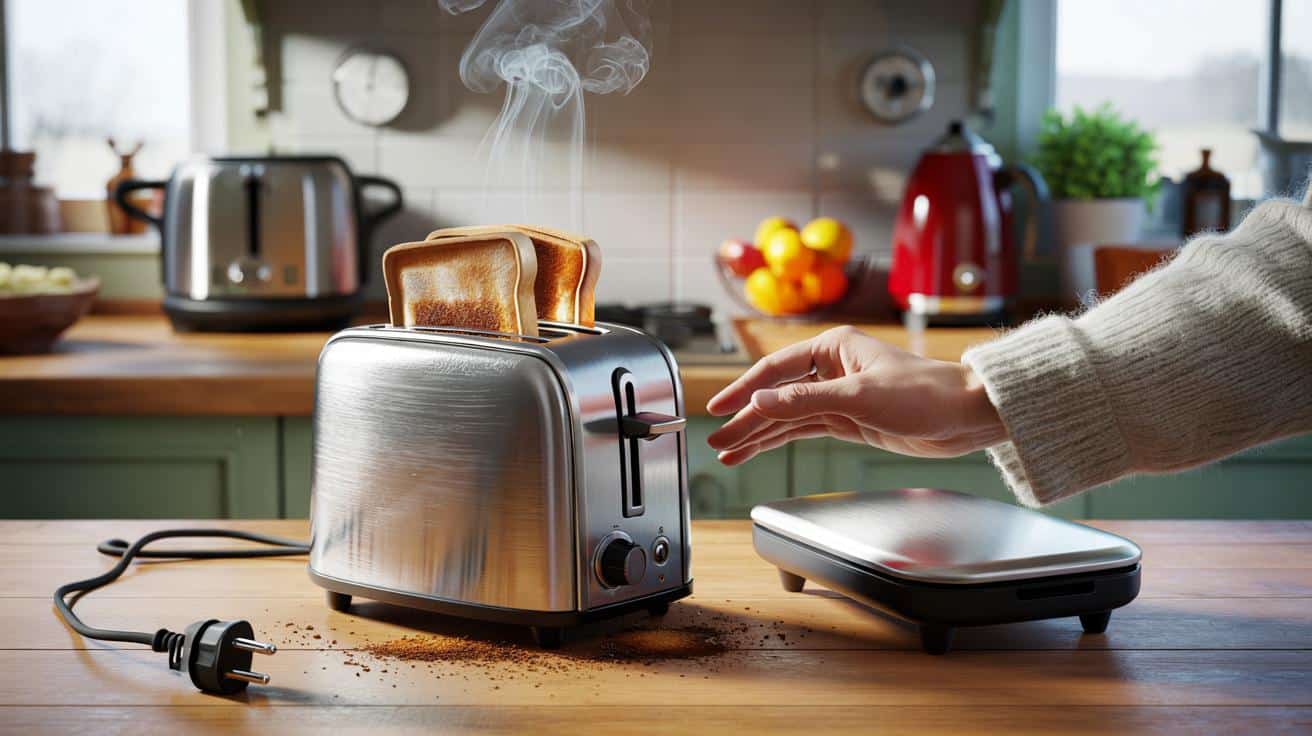
It still works, more or less. But a quiet shift in **safety rules** is landing mid-month, and that innocuous toaster may be the weak link. If you rent, if you host, if your building has a noticeboard that fills up after the holidays, there’s a good chance the timeline is **January 15**.
The other night, I stood in a friend’s kitchen, waiting for toast that never quite popped. The metal sides were warm long before the bread was, the cord stiff and a little shiny where it had once bent too far. On the cork board by the door, a printout from the building manager: updated fire cover terms, high‑risk heat appliances, checks commencing mid‑January. No drama, just bureaucracy. But every fire investigator I’ve ever interviewed says the same thing—risk doesn’t announce itself with flashing lights. It creeps in looking familiar. The notice ended with a line in bold: replace non‑compliant units by January 15. So I opened the crumb tray.
Why the toaster is suddenly everyone’s problem
In kitchens, risk tends to hide in plain sight. A toaster is simple, cheap, and common enough to feel invisible. Which is exactly why it gets overlooked when rules tighten. Across letting agents, student halls, short‑term rentals, and insurer addendums, mid‑January is the moment many of them roll over their safety terms for the new year. The language differs by city or provider, but the pivot is similar: older heat‑producing countertop appliances—especially **older toasters**—are being scrutinised or phased out unless they meet modern cut‑offs like UKCA/CE compliance, auto shut‑off, stable bases, and intact cords.
We’ve all had that moment when the toast smells a shade too hot and you tap the cancel button with your heart in your mouth. Multiply that across thousands of kitchens, and you see why building managers and insurers care. Fire services routinely report that kitchens are the number one origin of home fires, with “heat from appliances” a recurring trigger. Toasters aren’t the only culprits—air fryers, sandwich presses, and deep‑fat fryers are in the mix—but the toaster is the one most likely to be old, dirty, and ignored. Mid‑January checks catch people after the holidays, when temporary setups and spare‑room appliances are still out on the counters.
The logic is simple. The older the toaster, the more likely its thermal cut‑off has drifted, its crumb tray is packed, or its cord is worn. That’s a perfect recipe for arcs, trips, or smoulder. Newer models add redundant protections—better thermal fuses, tip stability, cool‑touch sides—that weren’t standard a decade ago. Rules starting around January 15 give households a buffer after peak season, and give managers a date to schedule inspections. No, there isn’t one giant national law flicking on everywhere at once. But if you rent, host guests, or live in managed housing, the practical deadline is real where you are. The letter on your fridge will tell you.
What to do before January 15 without overthinking it
Do a three‑minute check. Unplug your toaster. Run your fingers along the cord; if you feel stiffness, shiny bends, or heat discolouration, that’s a red flag. Pop the crumb tray and shake it into the bin—crumb piles near a heating element are tiny bonfires waiting for oxygen. Stand the toaster on a flat surface and nudge it; wobble is a cue for a wider base. Look for the UKCA/CE or UL/ETL mark and a legible model label. If it’s missing, faded, or you can’t find the make online, replace it. Finally, smell the inside: a sharp, hot‑dust odour that returns every time is a sign of stubborn build‑up or failing insulation.
Let’s be honest: nobody cleans the crumb tray every day. That’s not the job. The job is noticing when a cheap appliance is past its safe window. If yours is seven to ten years old, lived through a move, or has been relegated to a damp shed at least once, it’s done its duty. Don’t run it under cupboards, never fish toast with a metal knife, and don’t piggy‑back it on a multi‑way adaptor with the kettle. If your place has an RCD test button at the consumer unit, press it when the kitchen is quiet to make sure trips behave the way they should. Small habits, low drama, higher odds you never need to think about this again.
There’s a human layer here too. Tenants worry about fees, hosts fear bad reviews, and families stretch budgets after the holidays. One replacement that removes a recurring hazard is a sane trade.
“If your toaster smells like hot dust or trips the breaker, it’s trying to tell you something,” a veteran fire investigator told me on a cold January morning. “Listen to it before it shouts.”
*Take a breath and look at the cord.* And because a fast checklist helps, here’s what to tackle this week:
- Check the cord, plug, and fuse rating (13A for kettle, lower for most toasters).
- Empty and wipe the crumb tray; don’t turn the toaster upside down and shake it.
- Look for a compliance mark and a model number you can verify online.
- Run the toaster once empty in a clear space; note any smell or smoke.
- If it’s damaged, very old, or unknown origin, replace and recycle.
The fine print no one reads, and how to make it work for you
Here’s the awkward truth about the **January 15** deadline: it’s not a magic law that hits every kitchen at midnight. It’s an administrative hinge for groups that manage risk—insurers, housing providers, campuses, and some building managers. They update terms, and those terms can ripple into your kitchen: no older toasters without auto shut‑off, no deep‑fat fryers, no cracked casings, proof of compliance label on request. The specifics vary, and they should be in plain English in your renewal email or pinned in the lobby. If you can’t find a clear rule, call the number on the letterhead. Five minutes can save a last‑minute dash to buy whatever’s left on the shelf.
If you do need a replacement, pick smart. Look for a wide, stable base, a cool‑touch body, an accessible crumb tray, and a manual cancel button that feels solid. Check for a visible UKCA/CE or UL/ETL mark, not just printed on a cardboard box. Read two negative reviews before you read a positive one; you’ll learn what fails under real‑world use. Budget models can be perfectly safe if they’re certified and you treat them kindly. And while we’re here, give air fryers and sandwich presses the same once‑over. Hot surfaces, quick mornings, distracted minds—this is where risk lives.
What about the appliance you read was recalled last year? That matters more than any calendar. Search your model on your country’s official recall database or the manufacturer’s site. If it’s on the list, follow the replacement or repair process immediately—don’t wait for building rules to catch up. Electronics retailers often run take‑back and recycling schemes in early January, and local councils provide WEEE collection points year‑round. Bag the old plug, tape the cord, and keep it out of charity shops. Safety upgrades are not hand‑me‑downs. When a £30 purchase stands between your family and a smoky kitchen, it stops being “just a toaster” awfully fast.
There’s a wider conversation humming underneath this timing. Rules land mid‑January because people are resetting routines, hosts are updating listings, students are returning, and administrators are… administrating. It’s not glamorous, but it’s how cities quietly reduce the risk we’re too busy to spot. If you hear that date and think “does this even apply to me?”, the answer is: maybe. Read your renewal note, check your communal kitchen notice, scan your recall list. Then tell the group chat what you found. Knowledge moves fastest sideways, through neighbours and friends who share the same toaster habits and shortcuts. The goal isn’t fear. It’s fewer sirens at 3 a.m., and a kitchen that feels a tiny bit calmer.
| Key point | Detail | Interest for the reader |
|---|---|---|
| Why January 15 keeps coming up | Many insurers, landlords, and managed buildings roll over kitchen safety terms mid‑January | Know whether the date actually applies to your home before you panic—or procrastinate |
| How to spot a risky toaster | Damaged cords, packed crumb trays, missing UKCA/CE mark, drifting cut‑off, wobble | Quick, practical signs you can check in minutes without tools |
| What a safer replacement looks like | Stable base, cool‑touch sides, clear compliance mark, solid cancel button, accessible tray | Buy once, reduce headaches, and meet building rules without overspending |
FAQ :
- Does the January 15 deadline apply everywhere?Not universally. It often appears in renewal notices from insurers, landlords, campuses, or building managers. Check your own documents—if there’s no written rule for your property, treat January 15 as a useful prompt, not a mandate.
- Which “common appliance” are we talking about?Primarily toasters, because they’re old, cheap, and frequently neglected. The same checks apply to air fryers, sandwich presses, and deep‑fat fryers in shared or managed kitchens.
- How old is too old for a toaster?There’s no legal age cut‑off, but many technicians suggest replacing at around 7–10 years, or sooner if there’s cord damage, missing labels, repeated tripping, or scorch smells.
- What should I look for on a compliant model?A clear UKCA/CE (or UL/ETL) mark, a stable base, cool‑touch sides, a robust cancel button, and an easy‑to‑clean crumb tray. Avoid unknown brands with no traceable model information.
- How do I dispose of an old or recalled toaster?Use your council’s WEEE recycling scheme, a retailer take‑back, or the manufacturer’s recall process. Tape the plug, wrap the cord, and don’t donate recalled or damaged appliances.







Does the January 15 deadline actually apply in the US, or is this mostly a UK/managed‑housing thing? My building posted a notice, but my lease is silent. What would count as proof of compliance?
January 15? Guess I’ll retire the toast relic.