
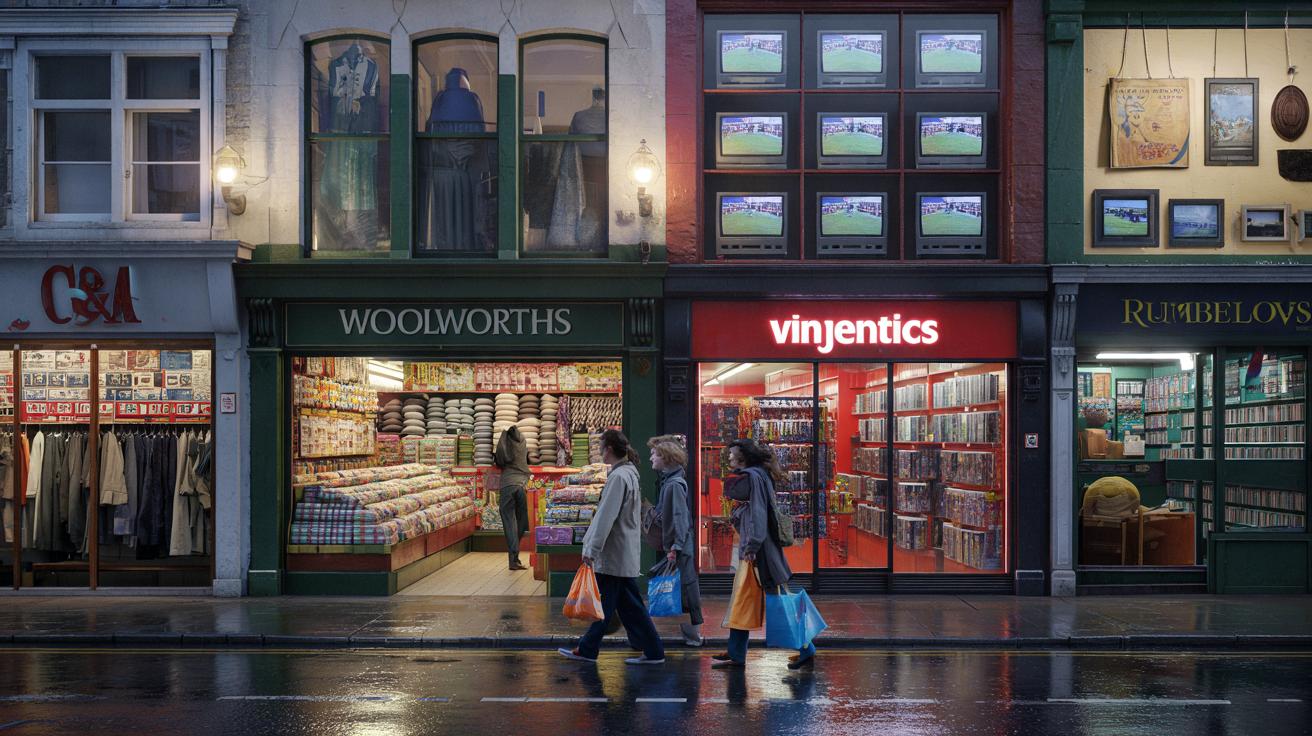
You can measure a childhood by the shops you once knew without thinking — the logos, the carpet smell, the way a carrier bag could rustle like a promise.
Your mum anchors the day with BHS lighting, your dad “just popping into Dixons”, and you orbit Woolworths like a planet with a £2 coin burning a hole in your sleeve. The air is busy with chips from the café, fresh plastic from boxed tellies in Comet, and the muffled thump of a top-40 hook spilling from Our Price. You stretch for Pick ’n’ Mix, staring at the red scoops like relics, then walk to C&A where new term coats all feel like someone else’s life. We’ve all had that moment when a shopfront you haven’t seen in years pops up in a photo and you feel time tilt. Ten names, one era.
The shops that shaped a Saturday
The high street was a stage where families rehearsed who they were becoming. Woolworths was the beating heart, a democratic treasure chest where a postcard, a frying pan and a packet of Top Trumps could share a basket. **These were places where you learned how to want.**
Think of queueing at Our Price to buy a cassette single with the sticker still warm, then running your thumb along the spines at Virgin Megastore like a librarian of dreams. Your gran compared towels in BHS while you pressed your nose to the glass at Rumbelows, the TVs all tuned to the same football highlight. At its peak, Woolies counted hundreds of stores from coastal towns to suburban parades, and you could feel that reach in your bones.
What made this feel like a ‘Golden Era’ wasn’t just stock; it was pace, ritual, and friction. Choice lived on shelves, not in tabs, and it asked you to walk, to touch, to decide. **Nostalgia isn’t about the shops; it’s about who we were between their aisles.**
How to time‑travel with your own memories
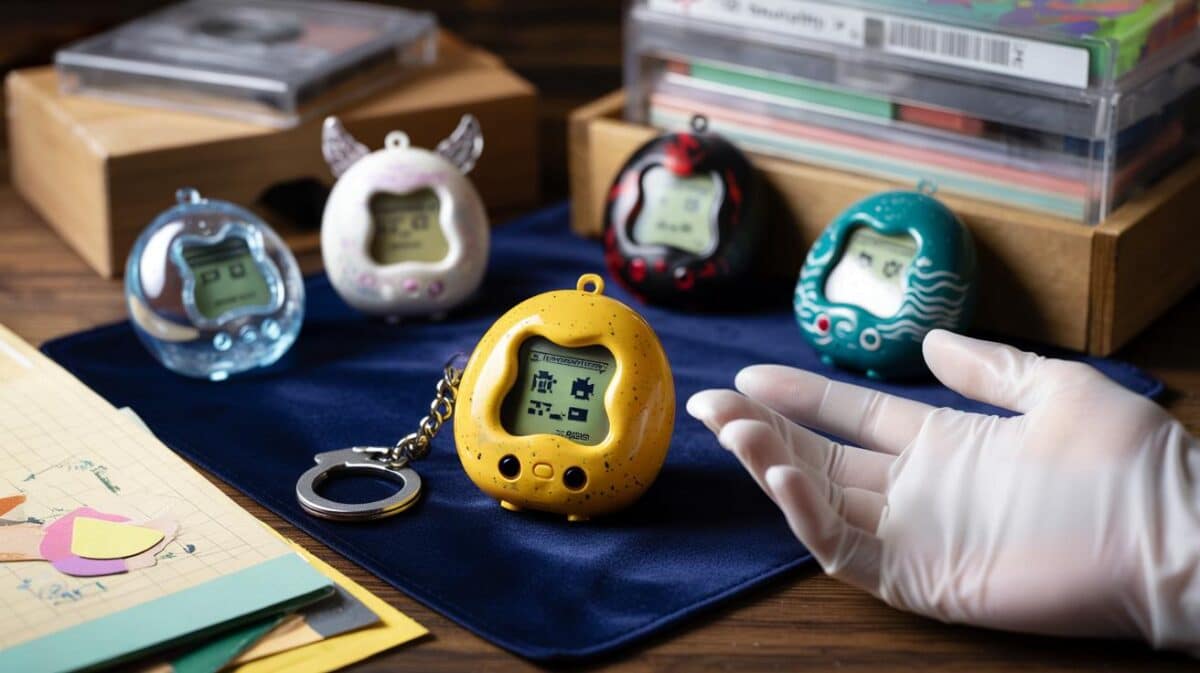
Start with smell and sound. Build a tiny “Saturday kit”: a paper bag, a handful of jelly beans, a playlist of 90s chart shows and the beep of a chip-and-pin. Then add texture: glossy catalogue pages from Littlewoods sourced second-hand, a plastic price tag on string, a till receipt found in an old coat pocket.
Tell someone the story of one purchase in one shop, in detail you haven’t said out loud before. Which track was playing in Virgin Megastore when you picked your first CD? Who stood behind the glass in Dixons while you pretended to know the difference between SCART and S-Video? Let’s be honest: nobody does that every day, but when you do, the past turns up on time.
What helps most is a short list of anchors—names you can actually picture, not just remember.
“I still stack towels the BHS way at home,” said a former Saturday girl, laughing. “Straight edges, soft corners, and the label hidden—like a secret only we were taught.”
- Woolworths
- BHS (British Home Stores)
- C&A
- Littlewoods
- Our Price
- Virgin Megastore
- Dixons
- Comet
- Rumbelows
- Past Times
Why those names still hum in your head
Brands become biographies when they gatekeep firsts: first Walkman, first school coat, first poster from Past Times that made your bedroom feel like a thought. The loss hits because those shops choreographed small freedoms—linger here, compare that, spend slowly—and because families used them as calendars in public. *You can almost taste the sugar on your tongue again.* Today’s kids will have different totems, and that’s fine. The point is continuity: streets where people meet stuff and, by accident, meet each other too.
| Key point | Detail | Interest for the reader |
|---|---|---|
| Sensory recall is a shortcut | Smell, sound and touch rebuild context faster than dates or lists | Practical way to revive vivid memories on demand |
| Shops were social scripts | Rituals like browsing, queuing, and comparing taught patience and taste | Explains why the loss feels bigger than retail |
| Ten names, one era | Woolworths to Past Times map a shared British childhood | Gives readers a checklist to spark conversation |
FAQ :
- Which years count as Britain’s ‘Golden Era’ of shopping?The mid‑80s to the early 2000s for most people—before smartphones, when browsing meant feet on pavements.
- Are any of these shops still around in some form?Dixons lives on as part of Currys; Virgin Megastores became Zavvi and faded; Littlewoods shifted online; Woolworths survives in memory and family jars of old Pick ’n’ Mix.
- Why do these names feel more personal than today’s brands?They organised time in public and asked you to touch the future before you bought it. That creates stickier memories.
- Where can I find memorabilia without spending a fortune?Charity shops, car boot sales, and local Facebook groups—old bags, receipts, staff badges pop up for pennies.
- Isn’t this nostalgia ignoring the bad bits?Fair point. Wages were low, shifts were long, and returns queues were no fun. Remembering the warmth doesn’t erase the graft.






Could practically smell the Comet plastic and the café chips reading this. My mum did the BHS lighting shuffle while I orbited Woolies with a £2 coin, bargaining with myself over Pick ’n’ Mix. C&A coats always felt like trying on somebody else’s September. This hits.
‘Golden Era’ is doing alot of heavy lifting here. For some of us, wages were rubbish and the returns desk was a nightmare. Nostalgia’s fine, just don’t polish it till it squeeks. Still, the social bit—browsing, comparing, touching—yeah, that mattered.