
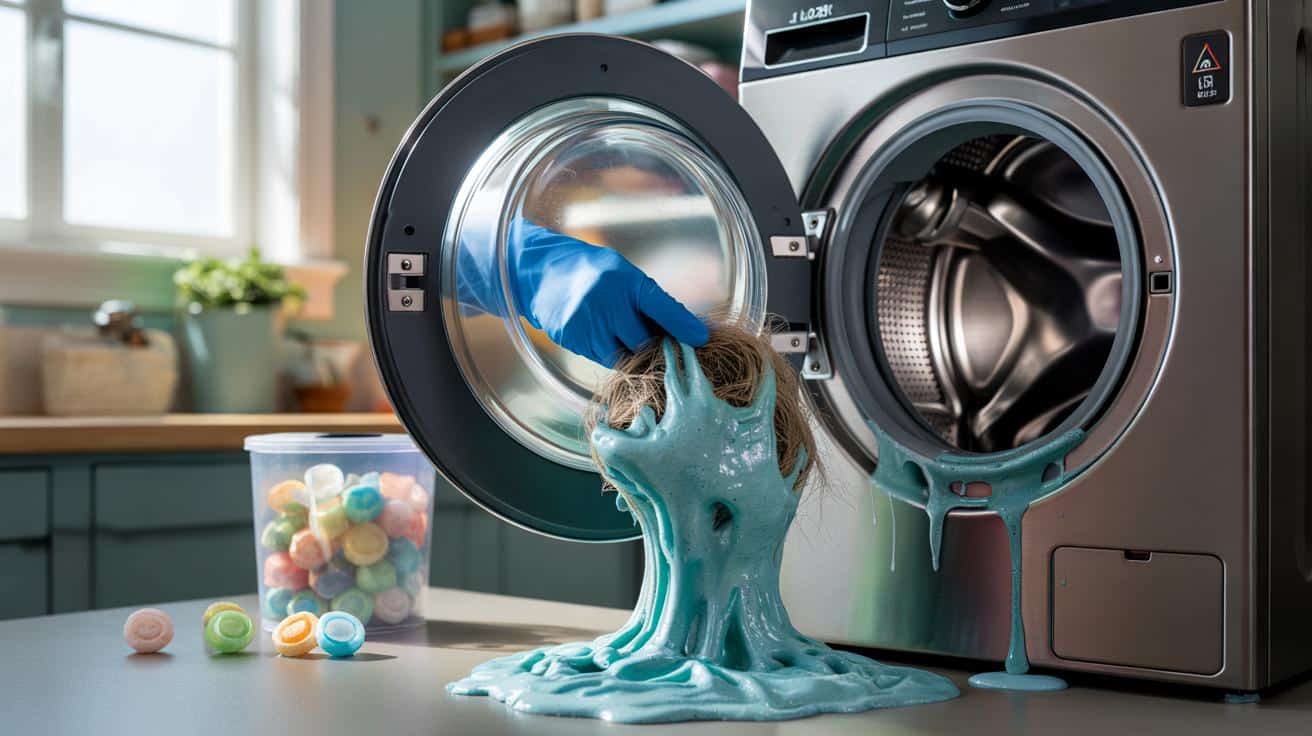
Toss, wash, done. Now engineers say that easy button is choking the very machines designed to sip water and save energy in 2026. **The warning is blunt: pods plus newer washing machines make a messy, expensive pair.** Experts say the fix starts in your shopping basket.
I’m standing in a neat London utility room, watching a shiny 2026 washer flash an error no one wants on a Tuesday night: drain blocked. The owner swears they clean the filter. They show me a pristine drawer and a tidy shelf of pods, all pastel swirls and promise. The door seal looks fine. The drum looks fine. Then I pull the pump cover and meet a handful of jelly-like gunk that smells like “mountain breeze”. *I could smell the lemon blossom before I saw the suds.*
The engineer crouches, shakes his head and says he’s seeing this every week now. The fix isn’t pricey this time. The advice is. And the pod never truly vanished.
Why 2026 washers and pods don’t mix
Today’s machines use less water, cooler programmes and clever sensors to trim energy bills. That thrift means your detergent must dissolve fast, spread evenly and rinse clean. Pods weren’t built with that in mind. The film needs time and turbulence. The gel inside is highly concentrated. In low-water drums, pieces of film can slip into the door boot, nestle in the sump, or melt into a tacky paste that clings to hair and lint. **The culprit isn’t your machine—it’s your pod.**
Take a family in Leeds who bought a slim 2026 heat‑pump washer to save space and money. They ran quick 20°C cycles back-to-back through the winter. Whites turned a touch grey. Then the washer began to struggle. A small, sticky ribbon sat on the filter like chewed gum. The pod had half dissolved, half migrated, and the residue became a dam for fluff. One rinse later, the error went. Two weeks after, it was back, only worse. That’s the cycle many homes are stuck in.
There’s simple physics here. Pods need enough water heat and drum action to break, dilute and rinse. High‑efficiency machines deliberately starve the drum of water. Short eco programmes cut agitation. Colder washes dull the solvents that help pods disperse. The result is over‑rich detergent near the door and under‑washed corners near the pump. Sensors see too much foam, extend the rinse, then leave a soapy film that feeds smells. In time, that cocktail coats the pressure hose and tricks the machine into thinking it’s full when it’s not.
What to do now: clean washes without the drama
Switch to a measured liquid or powder and dose small. Aim for 40°C on your regular mixed load, with a once‑a‑month hot maintenance cycle at 60°C using a scoop of biological powder. Put detergent deep into the drum, right at the back, not on top of the clothes. If you love cold washes, pre‑dissolve a tablespoon of powder in a mug of warm water and pour it in. Wipe the door seal weekly and pull out the drawer to rinse the channels.
We’ve all had that moment where a fresh wash smells… not fresh. It’s not you. It’s residue. Common mistakes stack up fast: pods perched at the front of the drum, stuffing the washer to the brim, living on 20‑minute cycles, shutting the door tight between loads. Crack the door and drawer open to air the tub. Clean the pump filter each quarter. Let’s be honest: nobody really does that every day. Start with one change this week and build from there.
Think of it as a small reset, not a lecture. A veteran UK engineer put it in plain terms:
“Pods are perfect for adverts, not for low‑water machines. If you can measure, you can wash cleaner, and your pump will thank you.”
- Use HE‑rated liquid or powder and go light on dosage.
- Run a 60°C maintenance wash monthly with powder, no clothes.
- Clean the filter, gasket and drawer channels on a simple rotation.
- Choose 40°C and a standard cotton/synthetics programme for most loads.
The bigger picture
Pods promised convenience and pretty packaging. New washers promised thrift and whisper‑quiet efficiency. Those promises clash at the drain pump. What looks like a minor mismatch becomes a bigger household story: wasted time, wasted water on repeat rinses, and call‑outs that could buy a month of groceries. There’s also the question of what dissolves where. PVA films aren’t magic. In fast, cold cycles, parts can linger, then bond with lint and oils and stick around.
Brands will argue pods are fine if used as directed. Engineers say real life is messier. **Small habit changes beat big repair bills.** You don’t need a spreadsheet of wash rituals. You need a scoop, a bit of patience, and a hot cycle now and then. Your 2026 machine was built to run light and long. Feed it right, and it’ll run sweet. Ignore the warning signs, and the jelly comes back.
| Key point | Detail | Interest for the reader |
|---|---|---|
| Pods clash with low‑water 2026 machines | Film and concentrated gel under‑dissolve on cold, quick cycles | Explains mystery smells, blockages and greyed laundry |
| Simple swaps work | Measured liquid/powder, 40°C washes, monthly 60°C maintenance | Prevents repairs and saves time without new gear |
| Maintenance is light and regular | Clean filter, gasket, drawer; leave door ajar between loads | Keeps sensors honest and the drum fresh |
FAQ :
- Are laundry pods bad for new washing machines?They’re not evil, just mismatched. High‑efficiency 2026 models use less water and shorter cycles. Pods often struggle to dissolve and rinse in those conditions, which leads to residue, odours and blockages.
- Will using pods void my warranty?Most warranties cover defects, not misuse or clogs from detergent build‑up. If a technician finds residue‑related blockages, you may pay for the visit. Check your manual for detergent guidance and recommended maintenance.
- Can I still use pods safely if I have a stash?If you must, pierce the pod film and dissolve it in warm water first, then pour the liquid into the drum and run a longer 40°C programme. Don’t stack pods for big loads. This is a stopgap, not a long‑term plan.
- What detergent works best in 2026 HE washers?Go for a low‑foam liquid or powder marked HE/for modern machines. Dose lightly based on soil, not drum size. Hard water may need a touch more powder. Soft water needs less. Overdosing causes more problems than under‑dosing.
- How do I deep‑clean a gunked machine safely?Clean the filter, pull lint from the sump area, wipe the seal, then run a 60°C maintenance wash with biological powder. You can use a machine cleaner if you prefer. Avoid vinegar on modern rubber seals and never mix bleach with acids.








Is this really about pods or about people overloading machines? My 2024 HE washer + pods = no issues. This feels like a water-temp/program problem more than a product failure. Any data beyond anecdotes? Defnitely curious.