
Winter driving is a small battle before you even turn the key. There’s a tiny, oddly old‑fashioned tool that can tip the balance.
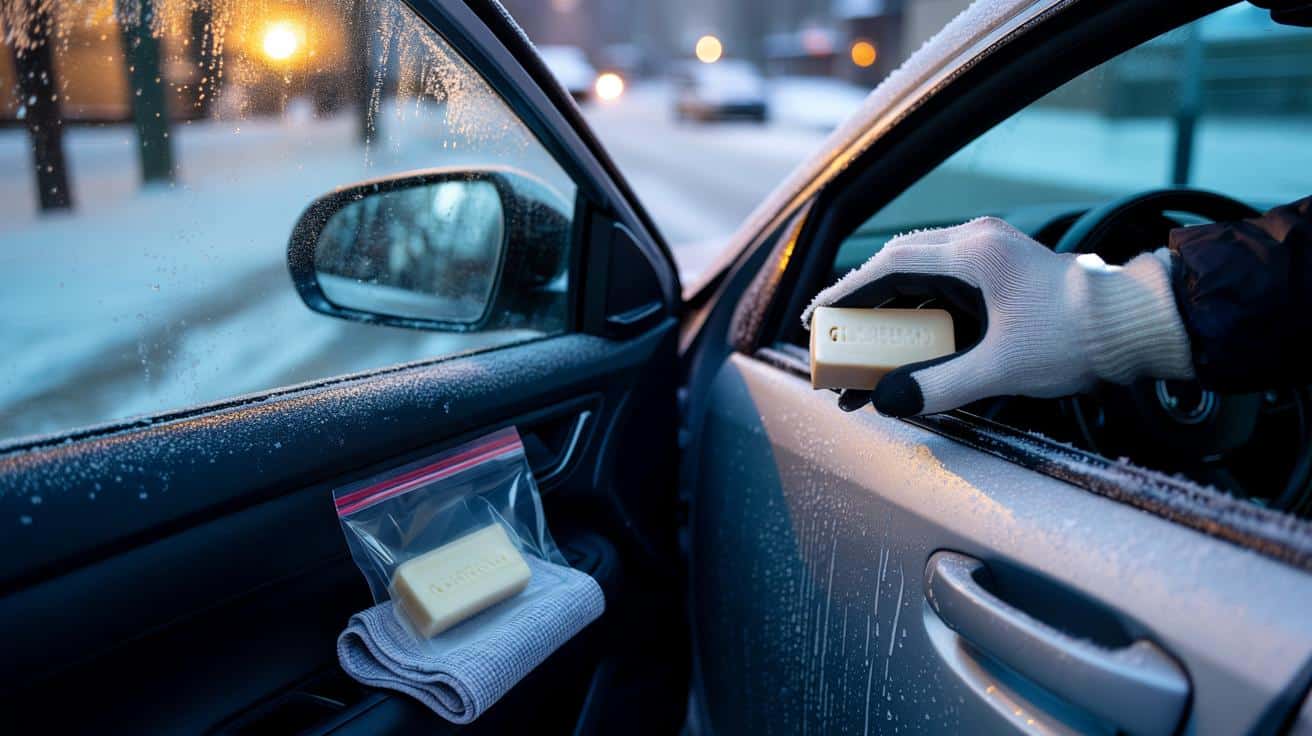
I’m standing under a sodium streetlight at 6.42am, fingers numb, breath fogging the glass from the inside and the out. The driver’s door is welded shut by a slick ribbon of ice along the rubber seal, and the neighbours are already scraping like violinists in a frosty orchestra. In the glovebox I find a battered bar of soap, the hotel kind you forget to throw away. I rub it round the door seal, buff the side mirror, dot a little on the inside corner of the windscreen, and wait. The door opens with a soft sigh, the mirror beads water instead of frosting, and the glass doesn’t bloom with mist when the heater kicks in. It feels like cheating.
Why a bar of soap earns its spot in your glovebox
Winter problems are rarely big, they’re just relentless. Frozen door seals, fogged mirrors, a wiper that squeaks like a mouse on espresso. A bar of soap is small enough to forget, yet capable of quiet wonders.
We’ve all had that moment when the car door won’t budge and time is sprinting ahead without us. A neighbour of mine, a paramedic on early shift, keeps a small unscented bar tucked beside his torch. He swipes it along the rubber seals the night before a frost, then buffs his mirrors before driving off into the dark.
Here’s the simple science. Soap leaves a thin film of fatty acids and salts that behaves like a dry lubricant. On rubber seals it reduces water’s grip, so ice bonds less eagerly. On mirrors and interior glass, a microscopically thin layer disrupts the surface where condensation forms, so fog is slower and patchier, buying you precious minutes. It’s low‑tech, but that’s the charm.
How to use it without making a mess
For frozen doors: take a dry bar and glide it lightly along the rubber seals where the door meets the frame. One pass is enough. If frost is forecast, do it the evening before, then give it a quick touch‑up in the morning on the latch and striker plate. The door tends to let go with less drama.
For clearer vision: rub a whisper of soap on the side mirrors, then polish with a dry cloth until the glass looks clean. Inside the car, dab a tiny amount on the lower corner of the windscreen and buff until invisible. Start small. Let’s be honest: nobody does that every day.
For troubleshooting and peace of mind, keep it simple and kind. This takes thirty seconds and might save your morning.
“It’s not magic, it’s just a little insurance,” says a veteran driving instructor I met on a bitter Tuesday. “You don’t need half a bottle of spray if a bar of soap is in your glovebox.”
- Pick plain, unscented soap for the least residue.
- Buff thoroughly on glass to avoid smears.
- Test a small area first if your car has special coatings.
- Top up the seals after heavy rain or a wash.
- Store the bar in a small zip bag to keep things tidy.
The practical extras no one tells you
Soap shines beyond ice and fog. Mix a sliver with a splash of water in the cap of a bottle and brush it over a suspect tyre valve or sidewall; bubbles mean a slow puncture. That same slip of soap calms a squeaky hinge on a door or boot latch, and it’ll coax a sticky seatbelt tongue to slide true.
If the wipers chatter and judder, run the dampened bar down the rubber edge, then wipe with a cloth; it can settle the vibration enough for a quieter sweep. Got road grime ground into your hands after fitting snow chains or swapping a wheel in the sleet? A quick lather in cold water from your bottle does the trick. **It’s ordinary kit doing unordinary work.**
There are lines not to cross. Don’t cake the inside of the windscreen; a ghostly smear at night is worse than a fogged patch. Buff as if you’re cleaning a lens. If your car has hydrophobic coatings on mirrors or glass, try a tiny test first. **If in doubt, keep soap to the seals, the mirrors, and the small corners you can polish perfectly.** **Your eyes, not the hack, make the final call.**
Small bar, calmer winter
Once you start carrying soap, it stops being a hack and becomes a habit. It’s not an all‑singing cure; it’s a friction reducer for a season built on friction. You still warm the engine gently, still carry a scraper, still knock snow from the arches with the side of your boot.
What changes is the mood. The lock yields, the mirror stays useful, the air clears. Your morning regains five unhurried minutes that you can spend on a better coffee or just watching your breath fade in the cold. Sometimes the smallest thing in the glovebox is the one that gives you back your day.
| Key point | Detail | Interest for the reader |
|---|---|---|
| Soap stops seals sticking | Dry film reduces ice bonding on rubber | Faster, gentler door openings on frosty mornings |
| Anti‑fog on mirrors and corners of glass | Thin layer disrupts condensation, then buffed clear | Improved visibility when every second counts |
| Handy for quick fixes | Spot tyre leaks, quiet hinges, clean hands | One cheap item covering multiple winter niggles |
FAQ :
- Does soap really stop frozen car doors?Yes. A light swipe along the rubber seals leaves a dry, slippery film that makes ice less able to grip. Apply before a frost for best results.
- Is it safe on the windscreen?Use only the tiniest amount on the inside corner and polish until crystal clear. It’s brilliant on side mirrors; for the main screen, keep it minimal and test first.
- What kind of soap should I use?Plain, unscented bar soap works well. Skip exfoliating bars or anything with gritty bits, and avoid very oily soaps that can smear.
- Will it damage rubber seals?Normal bar soap is generally gentle. You’re applying a whisper‑thin layer, not a paste. If your seals are exotic or coated, test a small section first.
- Can I use liquid soap instead?You can, though bars are tidier and easier to control. A tiny dab of liquid on a cloth works in a pinch, then buff thoroughly.





Tried this after last night’s frost—door opened without a fight and the side mirror stayed clearer on my pre‑dawn commute. I only used a tiny dab and buffed hard like you said. Honestly didn’t think a cheap bar of soap could make that much difference. Defnitely adding one to every glove box.
Question: isn’t soap mildly hygroscopic? If I overapply on the inside corner of the windscreen, could it trap moisture and smear at night? Any data on how long a single application lasts in real‑world cold?