
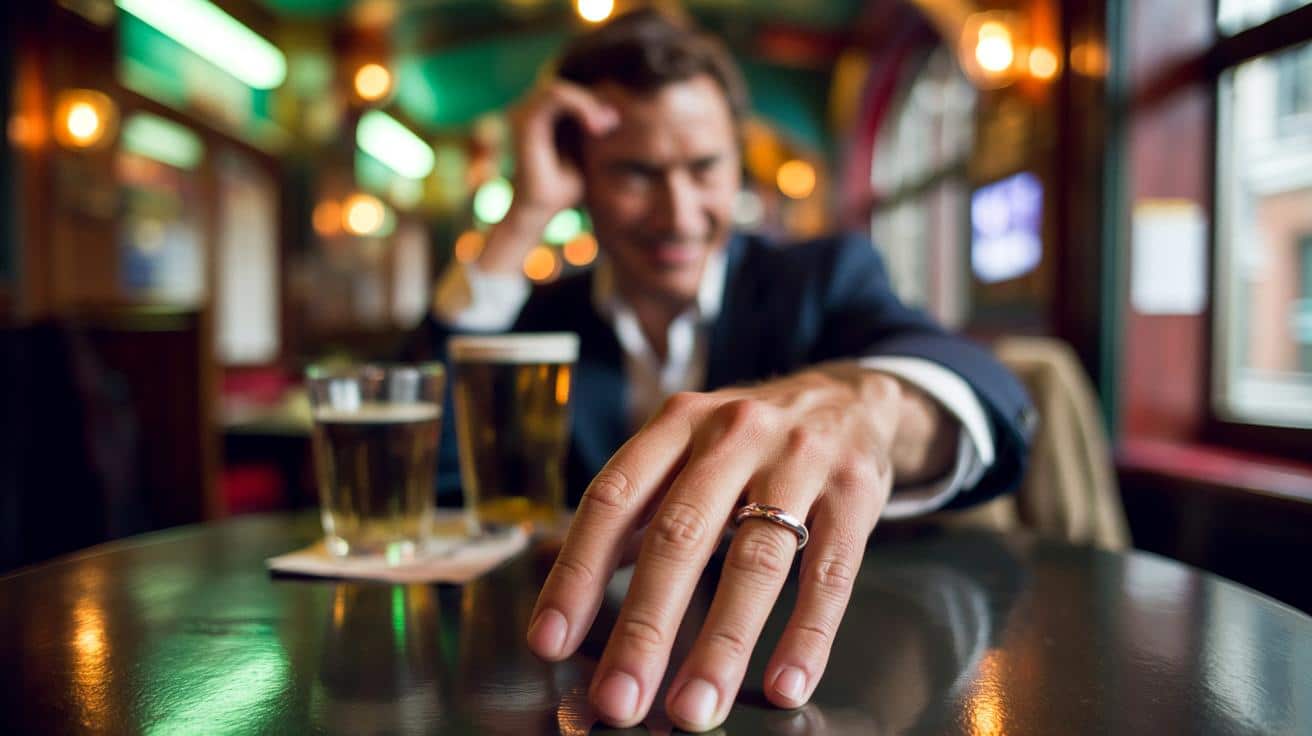
You feel it before you can name it. If you want a quick, human way to test that gut feeling, stop staring at the face and look at their left hand.
We’re in a crowded pub off Brick Lane, 6pm hum, coats crumpled on chairs. My friend tells me she “totally emailed the client last night,” eyes bright, voice smooth. Under the table, her left hand worries her ring, then pats her thigh like she’s tamping down a secret. Her story flows, but the hand keeps slipping away, ferrying nervous energy to her wrist, her cuticles, her pocket. I watch in silence, letting the room blur. The pint glasses clink. The football murmurs from a corner TV. Her mouth says action taken. *Her left hand says wait a second.*
Why the left hand gives the game away
Faces can rehearse, but hands are clumsy improvisers. The left hand, especially, tends to leak emotion because it’s wired into the right hemisphere, the bit more tuned to feelings and threat. When stress rises, that hand often steps out of character. It hides. It fidgets. It builds tiny barriers. **The left hand leaks what the lips edit.**
You see it on first dates and in staff kitchens. A person tells a neat story, yet their left fingers hitch at a sleeve, pick a nail, or press the palm as if kneading clay. A London recruiter told me she spots “ring spinners” within seconds; they swear they’re not considering other roles, and their left thumb is spinning the band like a roulette wheel. Lab studies echo the anecdote: under social stress, self-touch behaviours climb, while smooth, rhythmic gestures drop.
Lying loads the brain like a laptop with too many tabs open. Craft the sentence, remember the facts, watch the reaction, keep the face friendly. That cognitive traffic often reduces natural “illustrators” — those easy gestures that ride along with speech. So the left hand either freezes to stay out of trouble, or overworks as a self-soother. That oscillation — rigid then restless — is a classic tell. Left-handers show the pattern too, though dominance shifts the details; context matters more than which hand holds a pen.
Three left-hand tells to spot a lie
First, the vanishing act. Watch for the left hand ducking out of view when the heat rises: tucked under a thigh, wedged in a pocket, pinned to the chair. People do it just as the tricky part of a story arrives. Baseline them first during small talk, then clock the moment it disappears. When truth flows, hands tend to join the conversation; when a fib lands, the left hand often goes missing.
Second, the self-soother. That’s the left hand fussing with a watch strap, rolling a ring, rubbing the palm centre, pinching the skin between thumb and index finger. It might scratch the wrist near the pulse point, a quick rub like striking a match. These moves aren’t proof of lies, they’re proof of pressure. If they cluster precisely when the person insists on a doubtful detail, your alarm bell earns its keep. Let’s be honest: nobody does this perfectly in real life.
Third, the micro-shield. That left hand floats up to touch the face — mouth, nose edge, cheek, ear lobe — forming brief barriers between you and the words. The move is tiny, sometimes just a fingertip at the lip corner, then gone. These barriers pop up right before or after the dodgy line, as if the body edits the sentence mid-air. **Clusters beat single cues.** Look for two or three left-hand tells around the same claim, not one lonely scratch.
“Think of the left hand as the margin note in the body’s book — the unfiltered comment the author forgot to delete.”
- The Vanish: left hand hides at the sticky part of a story.
- The Soother: left hand fidgets with ring, wrist, palm.
- The Shield: left hand touches mouth/face right near a contested claim.
What to do with what you see
Don’t pounce. Read the hand, then read the room. If the office is freezing, people tuck hands away. If the person always fiddles, it might be habit, not hazard. Ask a gentle follow-up and watch the left hand through the answer. Does it calm when you remove pressure? Or does that hand keep building barriers? **Context beats any single cue, every time.**
| Key point | Detail | Interest for the reader |
|---|---|---|
| Left-hand vanishing | Hand hides in pocket, under table, or clamps thigh at crunch moments | Quick way to time your follow-up question to the exact stress peak |
| Left-hand self-soothing | Ring spins, wrist rubs, palm presses rise when pressure hits | Helps you sense when a claim needs a calm, clarifying prompt |
| Left-hand micro-shields | Brief touches to mouth, nose, cheek act like tiny barriers | Lets you spot where the story wobbles without turning it into a fight |
FAQ :
- Does this work on left-handed people?Yes, though patterns can flip or blur. Dominant hands gesture more by default; the “leaky” side still tends to show stress, but baseline them first and look for changes, not absolutes.
- Is a single fidget proof of lying?No. One cue is noise. Look for clusters of two or three left-hand tells near a specific claim, plus changes from that person’s normal behaviour.
- What if someone is just anxious?Anxiety can mimic deception. The key is timing. If left-hand tells spike exactly when the story reaches the doubtful part, that’s meaningful. Otherwise, it’s likely general nerves.
- How do I respond without accusing?Use soft probes: “Walk me through that bit again,” or “What happened just before?” Keep your tone warm. When pressure drops, deceptive details often change or crumble.
- Can people train their hands not to leak?Some try, by sitting on hands or clasping them tight. That often creates the “vanish” tell. The more they clamp down, the more other cues — voice, breathing — take over. Humans leak somewhere.





Defintely bookmarking this.