
You stood up for a reason, you were certain of it, and then the handle turns and — nothing. Rooms don’t just hold furniture; they hold contexts, cues and unspoken scripts. When the script flips, memory can fall through the gap. The question isn’t “What’s wrong with me?” The real mystery is why a strip of wood and space can topple a thought mid‑stride.
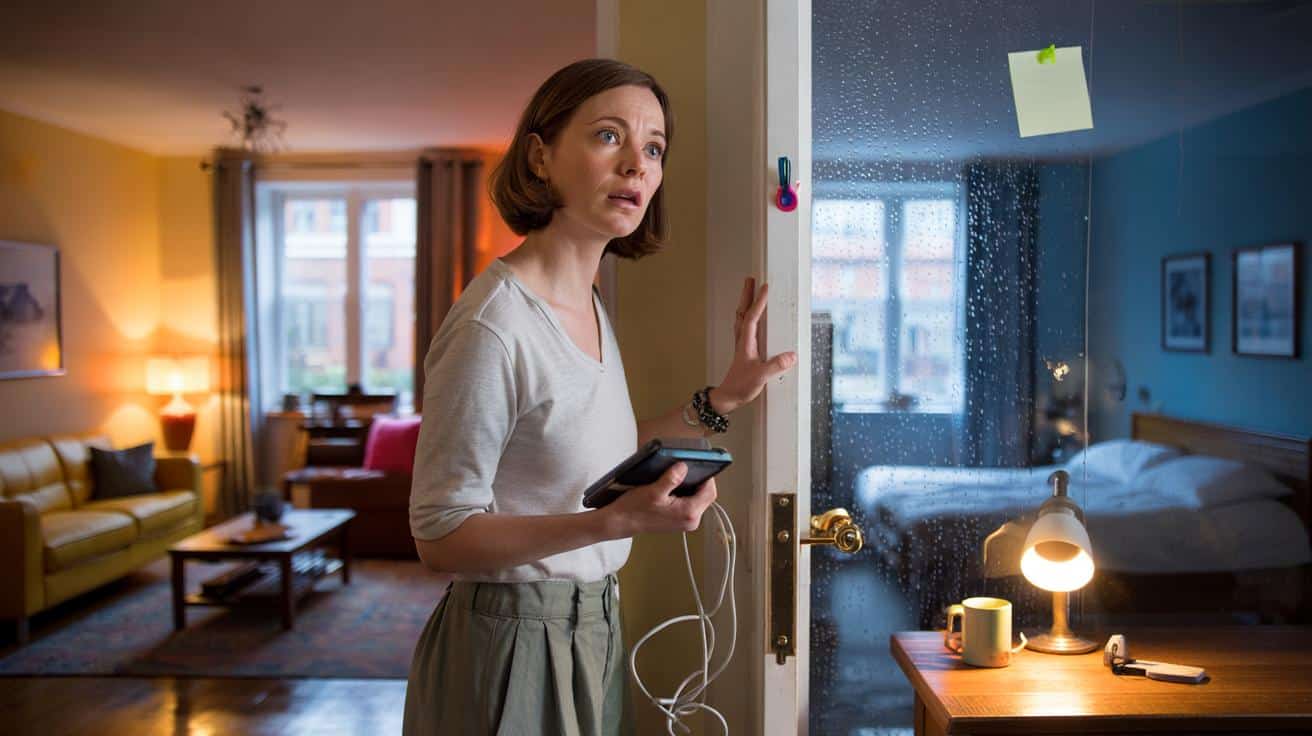
I watched a friend do it in a small London flat on a rainy Tuesday. She rose from the sofa, muttered “Right, charger,” walked into the hallway, crossed into the bedroom and stopped as if a remote had paused her. She scanned the floor, the bed, the window, searching not for the cable but for the thought she’d lost. We’ve all had that moment when a door feels like a memory trap. She laughed, then frowned. Something vanished the instant the frame brushed her shoulder. The door did it.
The doorway effect, decoded
Psychologists have a name for this blanking: the doorway effect. Your brain slices life into chapters, and doorways often mark a chapter break. The scene changes, the props change, and so your mental “to do” tag loses its place. In the milliseconds after you cross, your hippocampus shifts gears, readying you to deal with the new room’s possibilities. The old intention isn’t gone; it’s just no longer on the top of the mental stack. Blink, and the stack has reshuffled.
Experiments back the feeling. In a classic lab study, people carried objects through a virtual building and were more likely to forget what they were holding right after walking through a doorway than after travelling the same distance in an open corridor. In another setup using real rooms, the same drop appeared as participants moved from one space to another. A nurse told me she keeps a pen behind her ear on ward rounds for this reason: the pen is her thread through the maze. She trusts the prop more than the hallway.
What’s going on is called event segmentation. The brain carves experience into units — new room, new event — and updates its model of what matters. Context‑dependent memory also plays a role; we recall better where we encoded the thought. Once the scene changes, the cues that sparked “Get the charger” drop away, replaced by new cues like “Is the bed made?” or “Where’s the window latch?”. Your brain isn’t failing; it’s being efficient. The trade‑off is speed for stability. And a door is a nudge to move on.
How to remember what you came for
Give your intention a hook before you move. Form a tiny plan — psychologists call them implementation intentions: “When I enter the kitchen, I will pick up the charger by the toaster.” Say it out loud, or mouth the words. Add a physical anchor: hold the plug you’re replacing, keep a note in your hand, or touch the item’s home as you set off. You can also use an if‑then in reverse: “If I touch the handle, I’ll repeat ‘charger’.” It’s like preloading a cue that the door can’t rub off.
Trim the noise as you cross. Don’t check your phone mid‑stride, don’t swap your goal for a quick tidy, don’t greet the cat with a new plan. Those micro‑detours reset the scene again. Let’s be honest: nobody really does this every day, but even a two‑second pause at the threshold helps. Stop, name the verb — “get, fetch, bring” — then step. If you still blank, walk back to the original spot and stand as you were. The posture and light often jog the memory faster than force.
Give yourself permission to make prompts visible and easy. A post‑it on the frame, a coloured clip around the handle, a silly rhyme you repeat as you go all create a bridge between rooms. Behaviour follows scaffolding, not willpower alone.
“A doorway isn’t just wood and paint; it’s a line our brain draws between ‘what was’ and ‘what’s next.’ Build a handrail across that line.”
- Pause at the frame and whisper the action once.
- Carry a prop linked to the task — an empty mug to refill, the dead battery to replace.
- Touch an anchor in both rooms (switch, knob, rail) to stitch the scenes together.
- Use a single word on a sticky note at eye level: “Keys”, “USB”, “Folders”.
- If you blank, retrace three steps and look where you first had the thought.
What this quirk says about being human
The doorway effect isn’t a flaw to fix; it’s a glimpse into how fluid memory really is. Our minds save energy by tagging goals to places, people, light and sound. When those change, the tag loosens, and the next thing muscled into view shoves its way to the front. That’s why smells yank us back years, and why an open‑plan office can feel like one long room with fewer hiccups while a Victorian terrace turns your morning into a relay race.
There’s also comfort in its ordinariness. Your brain is ruthless about the present, which keeps you safe in a world of moving parts. You can work with that ruthlessness by making your intentions louder than the room. A line on a handle, a phrase on your lips, a prop in your palm. Small, slightly silly gestures that stop a door from editing your day. And if you do forget, smile and step back through. The thought often waits where you left it.
| Key point | Detail | Interest for the reader |
|---|---|---|
| Doorways mark event boundaries | Your brain segments experience at scene changes, which can shuffle working memory | Explains the “why did I come in here?” moment without blaming willpower |
| Pre‑cued plans reduce lapses | If‑then phrases and props create a bridge across rooms | Gives simple tools you can use today at home or at work |
| Context can be recreated | Returning, mimicking posture, or re‑exposing cues revives the intention | Offers a quick recovery move when you’ve already forgotten |
FAQ :
- Is the doorway effect real or just a meme?It shows up reliably in controlled studies where context shifts are clear, though results vary in noisy real‑world settings.
- Does age make it worse?It happens to all ages. Fatigue, stress and multitasking tend to amplify it more than birthdays do.
- Will open‑plan spaces stop it?They can reduce context switches, but boundaries aren’t only walls: a busy desk or new conversation can trigger the same reset.
- Can I train my brain out of it?You can’t delete event boundaries, but you can stack cues — brief plans, props, labels — so your intention survives the crossing.
- What should I do the moment I blank?Say the last verb you remember, take two steps back, scan where the thought began, and let the scene refill the gap.





Not just me then—doorways mark event boundaries and my brain reshuffles the stack. Great explaner, thanks!