
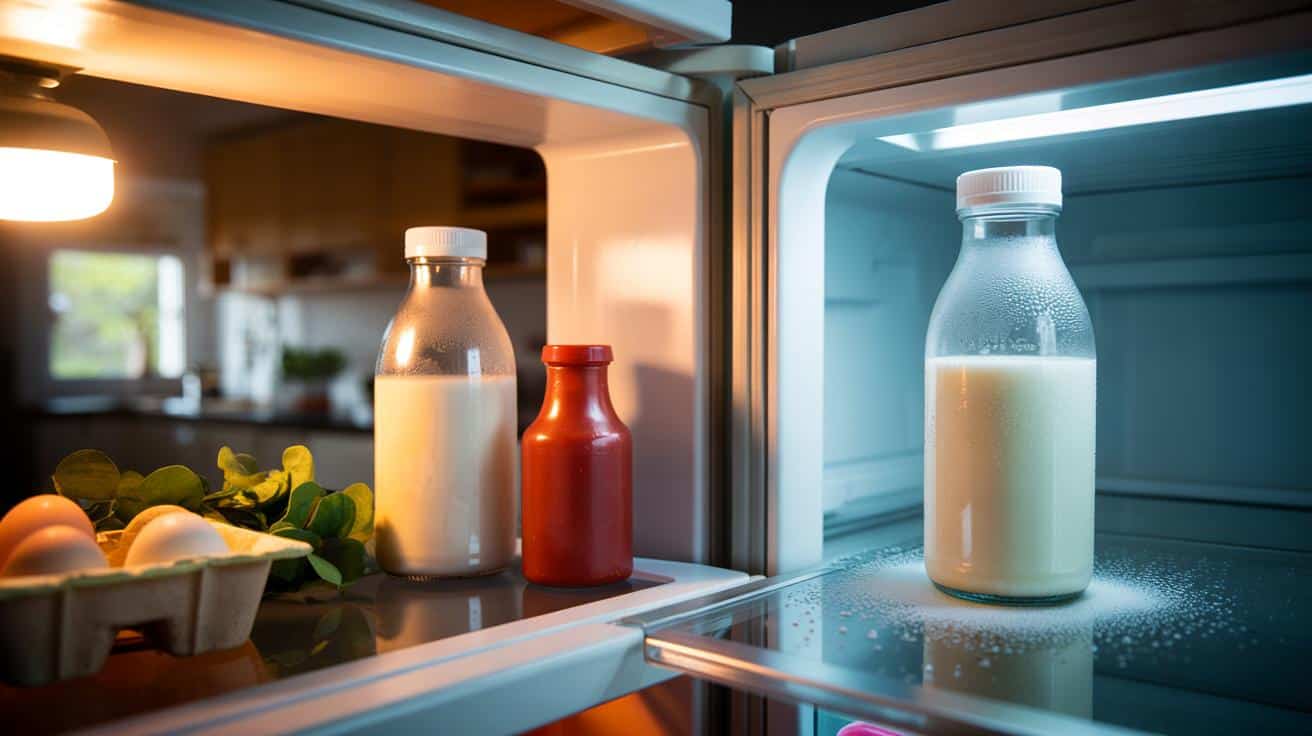
The culprit often isn’t the dairy itself, but where you park it after the supermarket dash. One shelf in your fridge quietly hurries milk along to sourness like a bad influence at a party.
It was a Tuesday that started with a clink, a sigh, and a spoon suspended over a bowl of cornflakes. I opened the fridge, poured, and watched a few suspicious flecks curl into the milk as a faint whiff rolled up, too tangy for this early. My partner leaned over my shoulder and pointed, not at the date on the bottle, but at the door shelf where I’d stashed it last night, right next to the ketchup. The penny dropped as a cold draught met warmth from the kitchen and the fridge hummed into a new cycle. I stared at the top of the door rack, then at the inner shelf at the back, and realised I’d been sabotaging my own breakfast. The wrong shelf is doing it.
Where milk actually spoils fastest in your fridge
Milk spoils fastest on the fridge door, especially the upper rack. Every time the door swings open, warm room air rushes over those bottles and the temperature jumps. The upper door shelf gets hit hardest, thanks to all that heat arriving high and falling slowly inside the open doorway.
We’ve all had that moment when you sniff the bottle and second-guess your entire meal plan. A simple home check over one week told a blunt story: two identical bottles, one sitting on the top door rack, one tucked at the back of the lower shelf. The door milk tasted “off” two days sooner and registered warmer on a cheap fridge thermometer during busy evenings when the door was opened a lot.
There’s a boring bit of physics behind the drama. Cold air sinks, warm air rises, and the door acts like a bellows that pushes warm air onto whatever sits there. Thermostats read the cabinet’s average, not the door’s extremes, so fluctuations hit the door milk hard while the rear shelves stay steadier. The back of a mid-to-lower shelf rides closer to the evaporator’s chill, and those few degrees make a big difference to bacterial growth.
How to store milk so it lasts longer
Park milk at the back of a middle or lower shelf, not on the door. That spot is the most stable and the coldest consistently. Slide it into the rear corner, cap tight, with a little airflow around it so the cold can circulate.
Keep your fridge at 3–4°C and use a small thermometer you can actually read without squinting. Move milk forward during cooking, then return it to the back when you’re done. Let’s be honest: nobody actually does that every day. Even shifting milk from the door to the interior shelf buys you time and better flavour.
Think in tiny habits that stick. Bring the milk out last, put it back first. Avoid keeping it on the counter while you chat or scroll; minutes matter. The fridge door is the warmest spot, no matter how handy it feels.
“Milk doesn’t just ‘go bad’; it’s nudged there by small temperature swings. Your storage spot sets the clock.”
- Back of the lower shelf wins: It’s cold and calm.
- Aim for 3–4°C: Use a simple clip-on thermometer.
- Keep the cap clean: Wipe drips that invite odours and microbes.
- Don’t decant into open jugs: Original bottles protect better.
- Rotate new behind old: So you grab the oldest first.
The little choices that decide taste, waste, and money
This isn’t just about avoiding sour cereal. It’s the taste in your tea, the quiet savings over a month, and fewer rushed dashes to the shop. Move milk off the door and you’ll likely gain an extra day or two of sweetness, which is a small victory that feels bigger at 7am.
There’s also the rhythm of your fridge. Doors open more in the evening when everyone grazes, so the bottle sitting there rides a bumpy temperature rollercoaster. Move it to the back and its world calms down. Your nose will notice before your calendar does.
Patterns spread. Once the milk moves, yoghurts and leftovers follow into calmer zones, the door gets lighter, and the whole cabinet works less hard. That’s quieter, cheaper, kinder on the planet, and oddly satisfying. A few centimetres to the left, and the week tastes better.
| Key point | Detail | Interest for the reader |
|---|---|---|
| Door shelf speeds spoilage | Frequent openings cause temperature swings, worst on the top door rack | Explains why milk turns early even before the date |
| Back of lower/middle shelf is best | Colder, steadier air near the evaporator and away from drafts | Simple placement change that adds days of freshness |
| Keep fridge at 3–4°C | Use a basic thermometer to check the real cabinet temperature | More reliable than guessing, saves money and waste |
FAQ :
- Is the fridge door really that warm?Yes. It’s the most temperature-unstable area, especially the upper rack, because warm air hits it first when you open the door.
- Where exactly should I put milk?At the back of a middle or lower shelf. That zone stays cold and steady even during busy kitchen hours.
- What temperature should my fridge be?3–4°C. A small fridge thermometer gives you the real number, not just the dial guess.
- Does fat content change how fast milk spoils?Slightly, but storage temperature and fluctuations matter far more than skim vs whole.
- Should I decant milk into glass for freshness?Keep it in the original, capped container. It’s designed to limit light, odours, and contamination.





This is the tiny habit I needed. Moving the milk fixed my 7am grumps—thx!
Is the door realy that much warmer? I’ve got a newer fridge and never noticed swings. Any data beyond a one-week test, like logger temps or studies? Not trying to nitpick, just curious.