
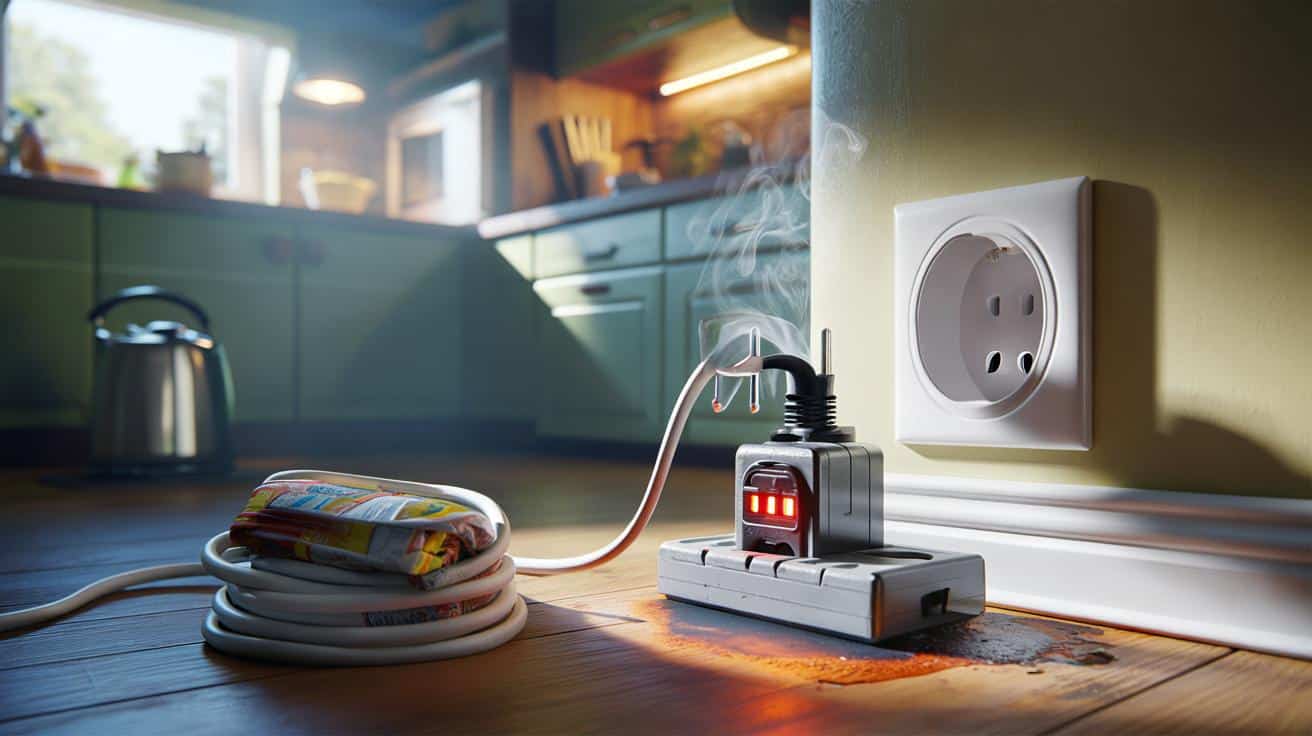
Then you glance behind the fridge: a single power strip doing the heavy lifting, stuffed between a skirting board and a pile of reusable bags. It feels harmless, even clever. A neat fix in a tight kitchen. Yet that tidy strip is quietly doing a job it was never meant for, and the stakes are higher than a flat phone battery. Melted plastic, tripped protection, spoiled food, insurance wrangles — it all starts with one overloaded bar. A fridge belongs on a wall socket, not a power strip. This isn’t scaremongering. It’s physics, heat, and a story many fire investigators know by heart.
The house was awake the way British kitchens wake: kettle hissing, toast popping, a toddler hunting cereal like treasure. The fridge gave its soft thrum and the radio filled the room. I noticed a faint warm smell near the floor, like sun on vinyl. The power strip’s little red LED winked, apologetic, as the compressor kicked in again. The lights dipped a fraction and the radio cracked. Then everything went quiet.
The quiet power hog in your kitchen
Fridges feel gentle because they hum. They’re not. The compressor draws a chunky surge every time it starts, many times its normal running current, and that punch passes through thin copper tracks, cheap switches, and loose sockets on a power strip. Each start-up is a tiny stress test. Contacts arc, resistance rises, heat climbs. It’s fine until it suddenly isn’t. In a UK kitchen, the plug has a fuse, which helps, but the weak link is often the strip’s sockets and wiring, not the fuse. The strip knows lamps and chargers. It doesn’t know motors that stall, kick, and demand.
Fire crews will tell you: electrical distribution causes thousands of home fires in the UK each year, and overloaded extension leads are a regular suspect. I once visited a terrace where the freezer sat on a gang lead looped behind paint tins. It worked for months. One warm July evening the compressor cycled harder, the lead softened, the plug top browned, and the RCD tripped for good. By morning, thirty quid of pizza was a soggy crime scene. We’ve all had that moment when the kitchen goes suspiciously quiet and you pretend you didn’t hear it.
There’s a second, sneakier risk. Every metre of thin flex adds voltage drop. Your compressor wants a clean kick; starve it and it struggles to start, tries again, and runs hot. That’s mechanical wear and heat right where you don’t want them — inside the motor windings and at every high-resistance point in the chain. Surge-protected strips bring metal-oxide varistors into the party, which can degrade with repeated spikes and heat, leaving you with false confidence and a tired component. A fridge is not a TV. Each cycle is torque, inertia and inrush, not a steady sip of electrons.
What to do instead (and what actually works)
Keep your fridge on a dedicated wall socket, ideally on a properly wired ring final or radial circuit. If you’re rearranging the kitchen and need a temporary fix, use a heavy-duty single-outlet extension lead with 1.5 mm² flex, the shortest you can find. Fully unwind any cable reel so it can shed heat. Check the plug top fuse matches the appliance rating, and seat the plug squarely with no wobble. If you want smarts, choose a wall socket with built-in monitoring or place a clamp-on energy monitor at the consumer unit, not between the fridge and the wall.
Don’t daisy-chain power strips. Don’t tuck leads under rugs, behind kickboards, or under a heap of cleaning cloths where heat can’t go anywhere. Keep the fridge’s ventilation clear so the compressor isn’t working overtime. If you must move the appliance, inspect the flex for kinks and nicks, then push the plug in fully — half-out means half-contact and double heat. Let’s be honest: nobody checks plug temperatures every day. Make it easy on yourself by doing the safe thing once and then forgetting about it.
If you’re craving the data, get it without becoming the weak link between the wall and the motor.
“A power strip is a convenience device, not life support for a motor,” says Ben Khan, a London electrician who audits rental kitchens for landlords. “Give fridges a proper socket, keep leads visible, and never hide heat behind cupboards.”
Here’s a quick, no-drama checklist you can do in two minutes:
- Plug the fridge directly into a wall socket — no multiway adaptors.
- If you see browning or smell warmth at a plug, stop and investigate.
- Keep cable runs short, visible, and free from compression.
- Pick sockets with RCD protection at the board or at the outlet.
- If something trips repeatedly, find the fault — don’t upsize fuses.
The bigger smart-home lesson
Smart homes aren’t about gadgets. They’re about resilience. Every time you remove a weak link, you win back quiet. A fridge on a proper socket means fewer mystery outages, no night-time beeps, no Sunday panic defrost. It also means your clever sensors and routines aren’t fighting basic electrics. *The smartest home is the one that stays boringly safe.* You can still get your graphs and notifications — just pull them from the right place, upstream of the load, where data doesn’t compromise safety.
Kitchens are tight, life is busy, and it’s tempting to “solve” a plug problem with a strip. That’s fair. You wanted dinner, not a wiring seminar. Still, the cost of a proper outlet is tiny compared to a spoiled fridge-freezer, a scorched skirting, or a tricky chat with an insurer wondering why a permanent appliance sat on a portable lead. If in doubt, call a qualified electrician. The fix is usually simple, and the peace of mind is addictive.
| Key point | Detail | Interest for the reader |
|---|---|---|
| Startup surge isn’t strip-friendly | Compressor inrush hammers thin contacts and switches, causing heat and wear | Fewer trips, no mysterious blackouts, longer appliance life |
| Heat and voltage drop are silent risks | Long, light-gauge leads and poor connections raise resistance and lower voltage | Lower fire risk and proper cooling performance |
| Go direct to the wall | Use a dedicated socket; avoid multiway adaptors, reels and surge strips for fridges | Simple, robust setup that works with smart monitoring safely |
FAQ :
- Can I plug my fridge into a surge-protected power strip?Better not. Surge strips add components and connections that run hot under motor loads. They don’t help the compressor and can mask problems.
- Is a smart plug safe for a fridge?Only if it’s specifically rated for inductive loads at the fridge’s current and inrush, which many aren’t. Prefer a direct wall socket and use upstream monitoring instead.
- What kind of extension lead is acceptable in a pinch?A short, heavy-duty single-outlet lead with 1.5 mm² flex, fully unwound, and a correctly rated fuse. Treat it as temporary and keep it visible.
- Why do my lights dip when the fridge starts?That’s the compressor’s inrush current causing a brief voltage sag. It’s normal to a point, but long cable runs and weak connections exaggerate it.
- Will a power strip void my appliance warranty or affect insurance?Manufacturers and insurers expect permanent appliances to use fixed sockets. A strip or multiway adaptor can be grounds for refusal after an incident.








Moving my fridge off the strip today—didn’t realise the start-up surge was that brutal.
Ok but if UK plugs have fuses and the circuit has an RCD, why would the strip melt first? Isn’t that what the protections are for? Sounds like scare mongering unless you show actuall numbers (inrush vs contact ratings). I’ve had a freezer on a decent surge strip for 3+ years with no issues. Are certain heavy-duty strips with 1.5 mm² flex acceptable, or is the advice literally ‘never, ever’ regardless of spec?