
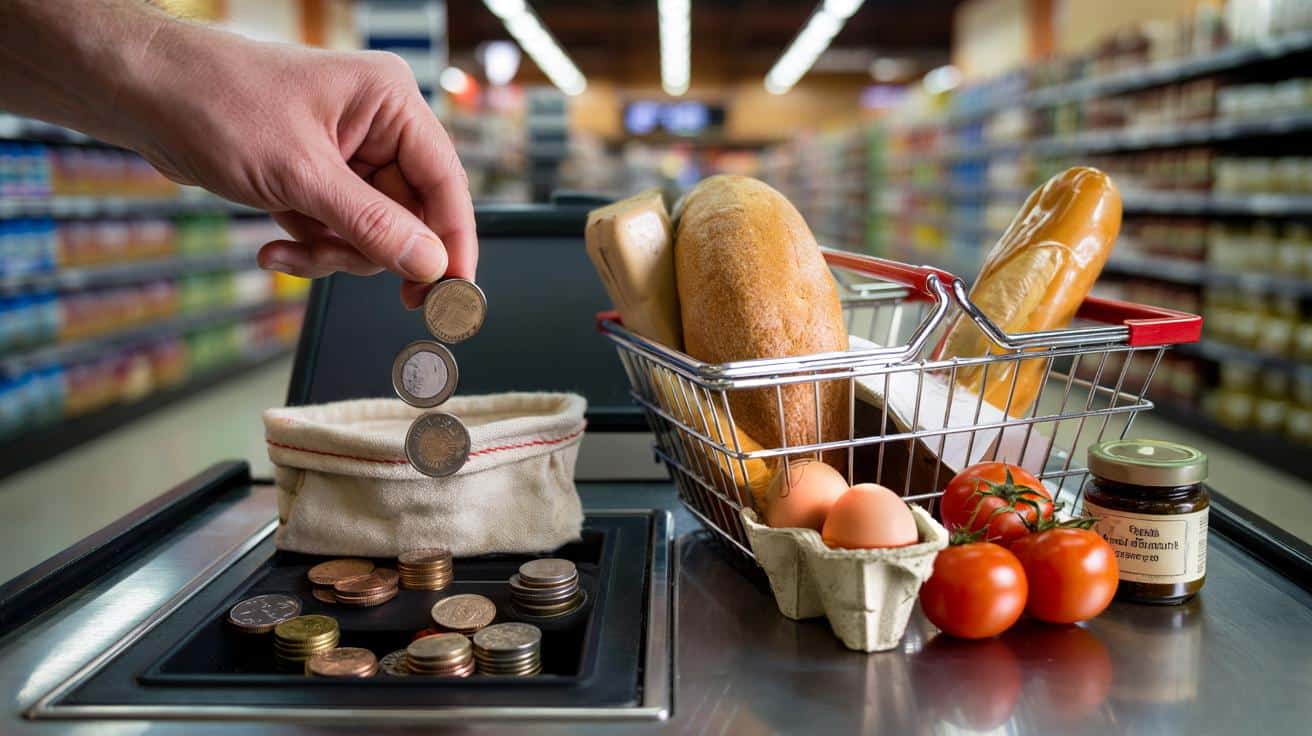
A week of shopping with nothing but coins. No card, no phone, no safety net. The result surprised me and slightly embarrassed me at the till — I spent less, learned more, and felt weirdly lighter walking home.
Copper, silver, and the odd chunky two‑pound piece, all the lazy leftovers from months of tapping my way through life. I poured it into a canvas pouch and went to the corner shop. The bag pulled on my wrist like a small anchor.
The first checkout was awkward. I counted out 73p for milk, fumbled, and felt the queue behind me inhale. The cashier smiled, patient. That little win — a proper exchange — felt different. I could hear the clink of my small decisions.
By Friday, something had shifted. I wasn’t gliding, I was choosing. The card stayed home. My phone stayed pocketed. And with nothing but coins between me and temptation, my bill shrank in plain sight. Something shifted.
The week I shopped with coins — and spent 20% less
The core discovery hit like a penny dropping: friction changes behaviour. Counting coins slowed me down just enough to notice prices and ask “Do I really need this?” That tiny pause kept stacking up. A chocolate bar went back. So did the fancy yogurt on promo that wasn’t really a promo. By the weekend, my till receipts showed fewer lines and smaller totals. The little drag of paying in metal did something my thumb on a screen never does — it made me feel the spend.
On Tuesday, I walked to the supermarket with £12 in coins and a clear list: bread, tomatoes, eggs, coffee. At the aisle, I weighed two brands of coffee and picked the smaller jar. At the self‑checkout, the machine clanked and blinked as I fed it fifty‑pence pieces. It took time, which strangely felt like respect. The numbers are simple: compared with my regular week, my grocery spend dropped by around 20% less. No spreadsheet, no app. Just coins, choices, and fewer “why not” treats.
What’s going on is straightforward psychology. Tapping is abstract; coins are tactile. When money becomes texture and sound, it activates a quiet cost–benefit conversation you can’t easily mute. Economists call it the “pain of paying,” yet it’s less pain and more presence. Contactless turns spending into a gesture; cash turns it into a moment. And moments are sticky. They make you remember. The result is not deprivation, which people fear, but curation. Fewer impulses, more intention, and a shopping basket that looks honest.
How to try the coins-only reset without going mad
Set a clear frame. Pick seven days. Decide a realistic budget and break it into daily pouches — £10 for weekdays, a bit more for Saturday. Load each pouch with small coins and a couple of pound coins for speed. Leave the card at home. Keep one small notebook or use receipts as a running log. Shops will take your money; they’ll also take your time. Aim for quiet hours and small baskets. Buying less each trip makes counting less of a circus.
Expect some friction and plan for it. Big shops? Split the trip or stick to essentials. Long queues? Step aside to count, then return. Embarrassment? It fades after the second till. Carry a tenner for emergencies in a separate pocket and call it out of bounds. Let’s be honest: nobody really does this every day. The point is a reset, not a lifestyle. If a purchase needs speed — bus fare, pharmacy — go exact change or that emergency note, then log it and move on.
Stories help make the rules stick.
“When people pay with coins, they buy what they came for,” a cashier told me, stacking change with the ease of a pianist. “They talk to the prices.”
- Start with a fixed pot — the jar, the tin, the envelope — and label the week.
- Use a small coin purse, not your pocket, so every spend is a deliberate unzip.
- Shop with a list and one wildcard slot for joy. Choice, not guilt.
- Track only totals at the end of the day. No judgement, just a number.
- Protect one meal as sacred and cheap — beans on toast, big salad, soup night.
What this says about money, attention, and choice
Modern life encourages smooth, invisible spending. The speed is seductive; the aftermath is murkier. A week with coins made the outgoings visible again. It shrank the space for autopilot and inflated the space for “Nah, not today.” In a way, I wasn’t saving money; I was buying attention at face value. And that attention lingered when the week ended. I still tap. I also now glance at the shelf and ask the little question the coins taught me.
We’ve all had that moment when the receipt feels longer than the walk home. The coin week interrupts that moment before it’s printed. It works not by discipline but by design: a small inconvenience that shields you from bigger regrets. No lectures, no perfect budgets, just a fresh angle on a familiar shop. Try it for a few days. Keep what helps. Leave the rest to the jar.
| Key point | Detail | Interest for the reader |
|---|---|---|
| Friction creates clarity | Counting coins slows decisions and brings prices into focus at the shelf | Quick way to trim waste without spreadsheets or strict diets |
| Visible limits curb impulse | A finite pouch makes trade‑offs obvious and nudges smarter swaps | Spend less while keeping comfort buys you truly value |
| Ritual beats willpower | The routine of unzipping, counting, and logging becomes its own cue | Build a calm money habit that lasts after the experiment |
FAQ :
- Does a coins‑only week work if you’ve got kids and a busy schedule?Yes, with smaller goals. Use coins for groceries and snacks, not transport or emergencies. Pre‑split pouches for each day, and keep one “kid wildcard” coin for surprises.
- What about online shopping and bills — do I pause everything?No need to freeze life. Keep essentials on autopay. The experiment targets in‑person, discretionary buys where friction helps most. Note any online extras so you aren’t shifting spend.
- Is it safe to carry lots of change around town?Don’t lug a brick of metal. Carry only the day’s pouch and keep heavier reserves at home. A small purse or zipped pocket is quieter, lighter, and draws less attention.
- How do I handle exact change without holding up the queue?Group coins by type in your purse and practice a quick count at the shelf. If the queue grows, hand over a pound coin and adjust with smaller change from the cashier’s return.
- Will the spending drop last after I go back to tapping?Usually some of it sticks. The week trains a pause before you pay. Reinforce it by keeping a tiny coin pouch for small daily spends, or by setting a “tap threshold” you won’t cross.







Loved this—friction as a feature, not a bug. I’m trying a coins-only week starting Monday. Any tips for cafes that hate cash?
20% less sounds great, but could it be selection bias? Maybe you just skipped the pricier shops. How would you control for that?