
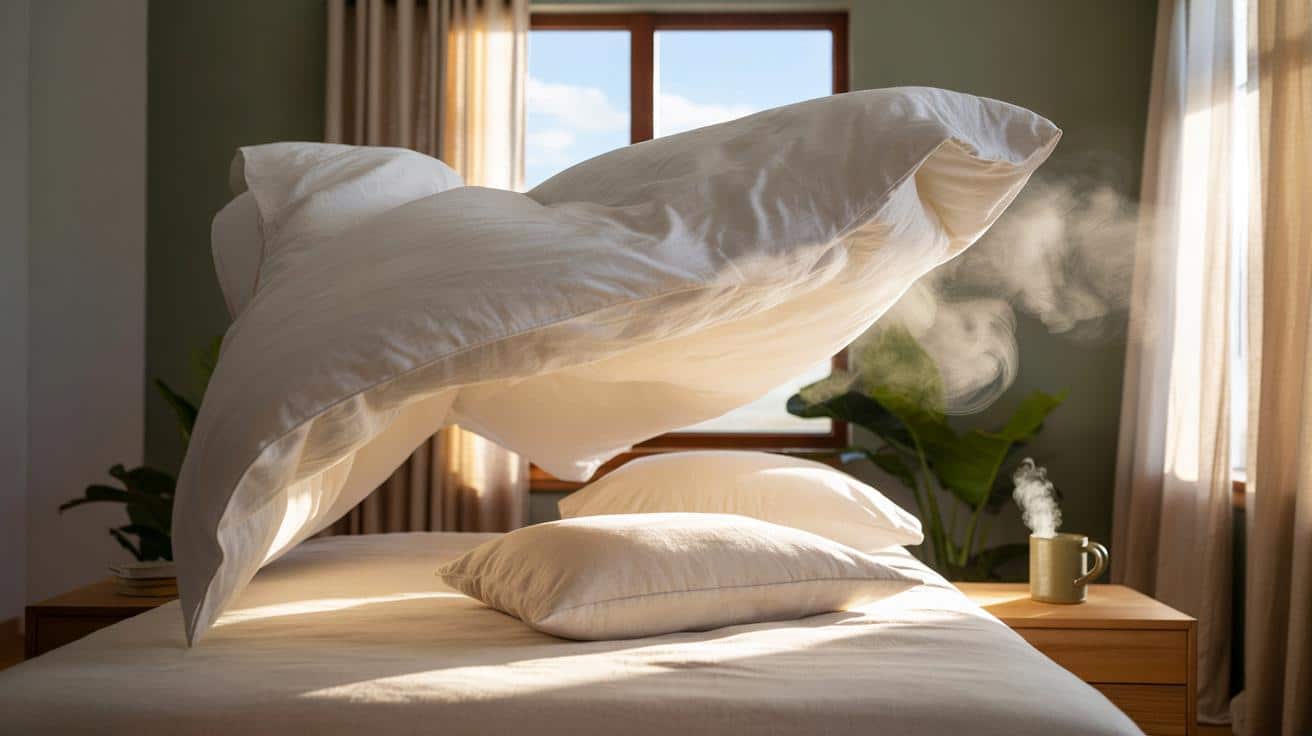
What if that neat rectangle is a tiny greenhouse for things you don’t want near your face?
The sun broke through the blinds like a late train—loud, unapologetic—and landed on a heap of linen I’d usually smooth into submission. Mug in hand, I watched steam rise off the duvet where my shoulder had been, the cotton faintly warm, the night still clinging to it. Habit twitched in my fingers. But I left it open, a yawning sail of fabric that caught the light and breathed out the dark. The room felt oddly active, like a window had been opened in my head as well as the wall. I walked out without tugging a single corner. The bed breathed.
Why leaving your duvet open can make you healthier
Most beds are little weather systems. You climb in, add heat, humidity and a supply of skin cells, then cap it all with a duvet before sunrise. That cosy microclimate is exactly what dust mites love—warmth and moisture—and it’s why a made bed can act like a terrarium after you’ve left for work.
There’s a reason building scientists and allergy specialists talk about airing. In one widely cited British study, researchers noted that dust mites struggle when moisture drops, especially after sheets are exposed to dry air and daylight. It’s not about killing off an invisible army in a day; it’s about making the habitat less inviting. Think of it like cracking the greenhouse door. The humidity falls, the party fizzles, your nose notices.
The logic is simple. Overnight, the average person releases hundreds of millilitres of water through breath and sweat. Seal that damp into a neatly made bed at 7am, and it hangs around, feeding mites and getting friendly with mould spores. Leave the duvet flung back for 30–60 minutes and you let vapour escape, sunlight warm the weave, and air pass through the fibres. **An open duvet is not laziness; it’s ventilation.**
How to “air” your bed like a pro
Flip the duvet right back so the mattress and sheets are exposed. Prop the pillows on their sides to open their seams. Crack a window for cross-breeze—even a narrow tilt helps—and leave the bed to breathe for 30 minutes in spring and summer, 45–60 in cooler months. If there’s winter drizzle, use a dehumidifier on a low setting. A quick shake of the duvet before you leave the room encourages trapped moisture to go somewhere that isn’t your lungs.
Common mistakes start with speed. Don’t make the bed the moment you stand up; give it time. Fabric sprays can mask smells and add damp, so go easy on those. Wash sheets weekly or at least every 10–14 days, hotter if allergies flare, and rotate your mattress head-to-foot every season. We’ve all had that moment when you strip the bed and promise a better routine next month. Let’s be honest: nobody actually does that every day. Aim for progress, not perfection.
Allergies aren’t solved by a single gesture, but small habits compound, and an airy bed is a quiet win. It sounds almost too simple, which is why it works so well.
“Bedding needs to exhale before you seal it for the day. Think airflow first, tidiness second.”
- Timing: 30 minutes in warm weather; up to 60 in cold or humid rooms.
- Airflow: one window ajar or a fan on low to keep air moving.
- Light: let sunlight hit the sheets when possible.
- Laundry: sheets weekly; duvet cover every 2–3 weeks; pillows and duvet every 3–6 months.
- Allergy boost: vacuum the mattress surface monthly with a clean upholstery tool.
What changed when I stopped making my bed
I noticed the difference on a Wednesday that didn’t feel special. Less stuffiness, fewer sneezes before coffee, a room that smelt like air rather than sleep. The shift wasn’t cinematic. It was the quiet sort you only register when it’s gone—mornings not ruled by a rush to fold corners, nights that started on sheets that felt lighter. **Your sheets are a climate, not a sculpture.** Once you see it that way, tidiness becomes something you do later, when the weather has cleared.
| Key point | Detail | Interest for the reader |
|---|---|---|
| Airing disrupts dust mites | Moist, warm beds are ideal habitats; open duvets lower humidity and temperature | Fewer morning sniffles and less irritation |
| Timing beats tidiness | Leave sheets exposed 30–60 minutes before making the bed | A simple routine you can fit into busy mornings |
| Light and airflow matter | Sunlight and cross-breeze help fabric dry and freshen | A fresher, cleaner-feeling bedroom without extra products |
FAQ :
- How long should I leave my bed unmade?Thirty minutes in warm, dry weather; up to an hour in cooler or humid rooms. Aim for drier fabric, not a stopwatch win.
- What if I prefer a tidy bed for my mood?Make it later. Air first, smooth later. You still get the mental lift without trapping the night’s moisture.
- Does this work in winter?Yes. Crack a window briefly or run a dehumidifier on low. Even a few minutes of airflow helps a lot.
- Will this reduce allergies?It can help by lowering mite-friendly moisture. Pair it with regular hot washes and periodic mattress vacuuming for better results.
- Is sunlight necessary?Nice to have, not essential. Airflow is the main act; daylight is the supporting cast when you can get it.







Finally, a science-backed excuse for my messy bed. My duvet is now a health device, not clutter.