
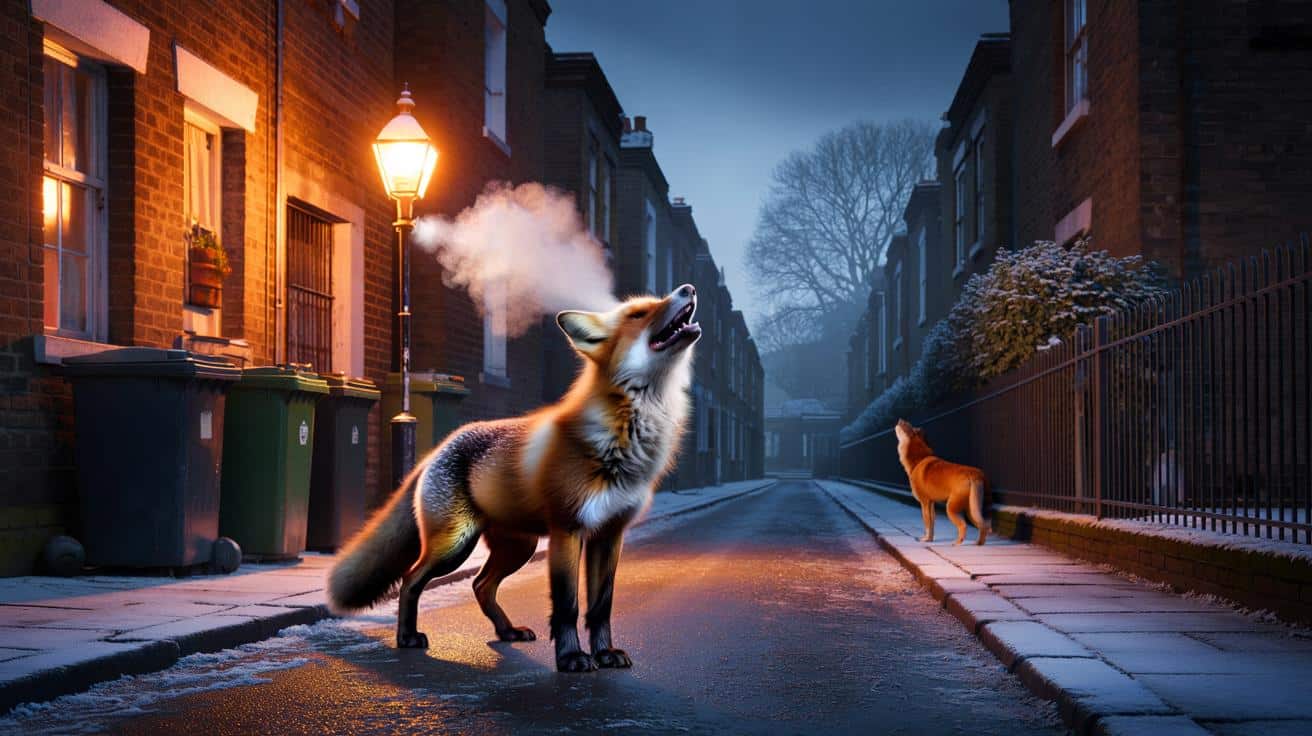
A raw, high note slicing through the cold. It sounds like someone in danger. It’s a fox.
I first heard it this year on a still, icy night in North London, the kind where your breath hangs in the streetlight. The scream rose from the railway embankment, bounced off a terrace of brick, and someone’s bedroom lamp snapped on like a flare. Curtains twitched, a dog whined, and the WhatsApp pinged: “Did anyone else hear that?” I leaned out, the city holding its breath, and a second cry tore down the alley, longer this time, almost theatrical. It felt ancient and modern at once, as if a woodland ritual had strayed into Zone 2. It isn’t what you think.
Why UK foxes are “screaming” right now
That spine-prickling noise is the soundtrack of **mating season**. Red foxes breed in mid-winter, and the vixen’s call is meant to carry. She’s advertising, plain and fierce, drawing in a dog fox from streets away. *Yes, that blood-curdling shriek is normal.*
Look closely and you’ll see a pattern. Most reports land between midnight and 4 a.m., often on calm, frosty nights when the city has finally gone quiet. Doorbell cams catch a russet shape lifting its nose, calling like a siren, then slipping under a hedge as if nothing happened. There are hundreds of thousands of foxes in the UK, and on nights like these, the suburbs become a chorus.
Biologically, it’s simple. A vixen comes into oestrus for a narrow window, and **the vixen’s scream** is her beacon. Dog foxes respond with choppy barks, then there’s pursuit, posturing, and the occasional scuffle as rivals cross paths. Sound carries further in cold, dense air, and open streets act like corridors, so the drama travels. What sounds like panic is communication, loud and clear.
What the scream is saying, and when it stops
The main story is courtship, but there’s a sub-plot. Young foxes disperse in late autumn, searching for territories. By January, some are still settling, which can trigger sharp, angry calls that read as fights. It’s not pretty to our ears. To theirs, it’s admin.
If you’ve ever wondered why it feels louder this year, check the weather and your street. Brick terraces, narrow lanes, and bare winter trees create perfect **urban acoustics**. A single call can ricochet between façades like a ping-pong ball. Many of us are also sleeping with windows cracked for fresh air or working from home near the kerb. We’ve all had that moment when a sound seems to be inside the room.
There’s a timeline to all this. The seasonal peak is December through February; cubs arrive around March; by spring, the screaming drops and you start hearing softer yips near dens. Later, in late summer, there’s a brief, noisy rush as teenagers push boundaries. Then quiet. Then winter resets the dial. These aren’t random outbursts. They’re a calendar you can hear.
How to keep your nights calm, without harming wildlife
Start with the basics. Lock food away, shut bin lids, and clear up windfall fruit or spilled bird seed. If your garden is a fox corridor, shift the route with a motion-activated light or sprinkler, placing it where the animal enters. Small changes in routine can dial down midnight visits fast.
Don’t feed foxes, even when they look hungry. It increases boldness and footfall, which means more noise, more mess, more late-night drama. If a den forms under your shed, wait until after breeding season to block access, and do it kindly with one-way gates and solid fencing. Let’s be honest: nobody actually does that every day.
When the calls kick off, most nights the best response is patience and a cup of tea. If you’re worried about a genuine distress call, observe first from a distance. Then speak to a local rescue if you see injury or entanglement.
“To human ears, a vixen’s scream can sound like violence. In fox terms, it’s just a love song turned up to 11,” says a London-based urban wildlife ecologist. “Give it a few weeks, and the city’s soundtrack changes.”
- Close gaps under sheds only when no cubs are present.
- Use humane deterrents; avoid chemicals or traps.
- Secure bins and feed birds tidily to cut scavenging.
- Record suspicious noises before calling for help.
- Speak to neighbours so you’re all on the same page.
What this winter chorus tells us about our cities
Listen long enough and a story emerges. Foxes have threaded themselves through our estates and cul-de-sacs, finding the little margins we ignore: railway verges, alleyways, the triangular scrap behind the garages. The scream is a reminder that wildness isn’t far away. It’s at the edge of the lamplight, making do with what we spill and what we leave.
There’s a choice in how we react. You can treat the noise as an invasion, a soundtrack imposed on your sleep. Or you can hear it as a seasonal marker, like frost on the car or the first daffodils. Neither is wrong. One might feel better at 2 a.m.
What changes everything is talking about it. Share a clip with the street group, explain what it is, and the fear drops out of the room. Curiosity enters. Someone mentions a cub they saw last spring. Someone else starts putting their bin out earlier. The scream stops sounding like panic. It starts sounding like the city being honest with itself.
| Key point | Detail | Interest for the reader |
|---|---|---|
| Winter “screams” are mating calls | Vixens advertise briefly in mid-winter; dog foxes answer with barks | Explains the eerie noise and why it peaks now |
| Street design amplifies sound | Terraces and cold, still air carry calls further than you expect | Why it sounds closer and scarier at night |
| Simple steps reduce visits | Secure food, manage access, use humane deterrents | Practical ways to sleep easier without harming wildlife |
FAQ :
- Why are foxes screaming right now?It’s breeding season, and that high-pitched call is a vixen attracting a mate. You’ll also hear territory disputes as young foxes settle.
- When will the screaming stop?Peak noise runs from December to February. It eases by spring when cubs arrive and calls soften.
- Is someone being attacked?It rarely signals danger to humans. The sound is dramatic, but it’s usually courtship or a fox-to-fox argument.
- What can I do tonight?Shut windows, pop in earplugs, and make sure bins are closed. If you see an injured fox, call a local wildlife rescue.
- Should I feed the fox to calm it?No. Feeding draws foxes back and can increase noise and conflicts. Keep it wild, keep it moving.








This explains so much—heard the midnight shrieks and thought it was a fight. Loved the bit about cold air and brick terraces acting like amplifiers. Definately sharing this with the street WhatsApp.