
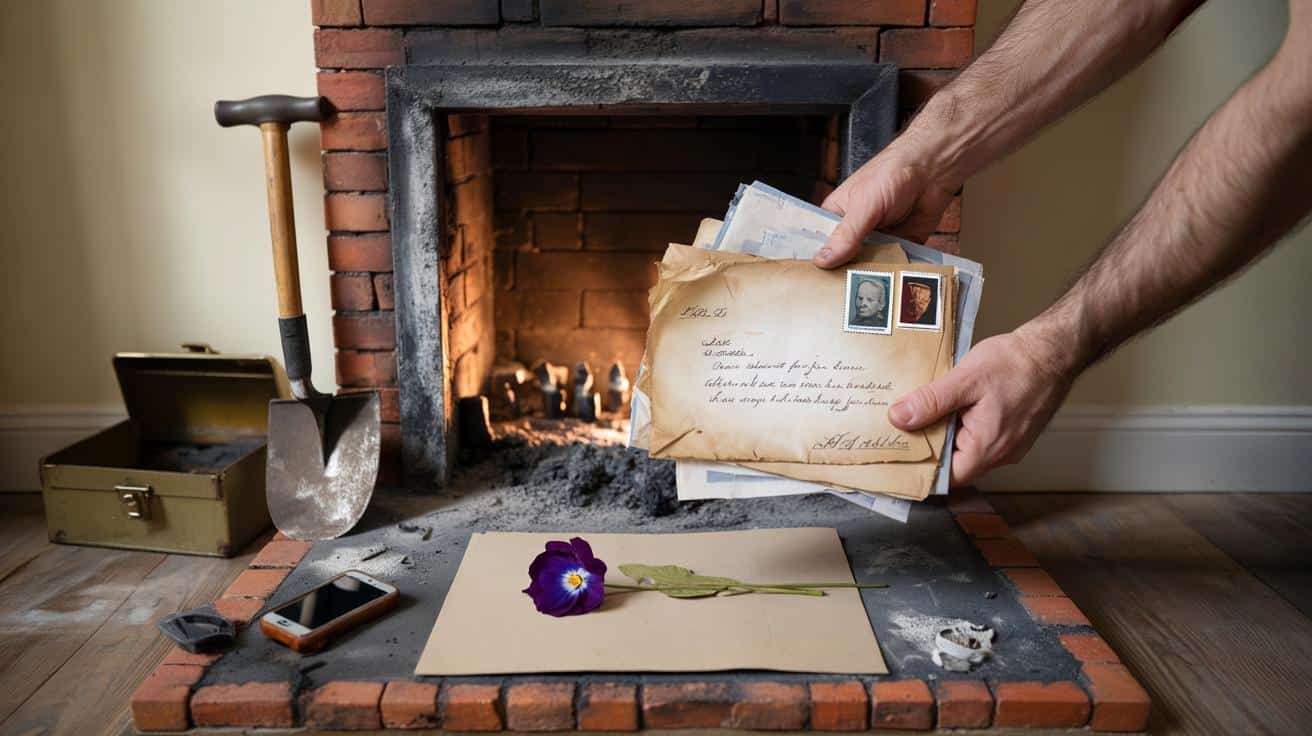
A small pile of soot, one crowbar, and a whisper from 1927: a Leeds renovation turned into a time capsule when workers found a fistful of letters hidden behind a fireplace.
The paper was the colour of weak tea and dusted with fireplace ash, the ink a sturdy, faded blue, the stamps worn but still proud under George V. A silence followed—the practical kind workers share when a job shifts from simple noise to delicate handling—and the room felt suddenly crowded, as if the past had stepped in wearing its best coat.
Someone had tucked these letters away for safekeeping. They were waiting.
Under the hearth: brittle paper, loud echoes
There’s a particular smell when you open old post, a cross between damp books and iron railings after rain, and it filled the terraced house like a memory you can breathe. The first envelope carried a Leeds postmark and the year 1927 in a firm stamp, its flap sealed with a neat lick and a pencilled “To keep!” in the corner. **History doesn’t always sleep quietly.** A worker—calloused fingers turned gentle—slid a blade along the edge, and out came a voice from a century ago describing the market, the trams, and the price of coal in a city learning to live with itself again.
One letter talked about weaving shifts at a mill by the Aire, the clatter “like rain on metal”, and a Saturday picture show at Hyde Park with seats for sixpence if you queued before the doors. Another mentioned the aftertaste of the General Strike the year before, the way neighbours swapped stories and tea, and how “Mam says the soot creeps into everything.” The handwriting arched, brisk and hopeful, the kind that keeps pace with life. A small pressed pansy fell out of one fold, flattened and brave, a tiny garden smuggled through time.
Why hide letters behind a fireplace? Warmth and secrecy once shared a wall; mantel voids made convenient hiding places, snug and solid. Families tucked away deeds, rent receipts, ration books from later decades, love notes that felt too loud for drawers, and small proofs of who they were when the world felt uncertain. Leeds is full of brickwork that doubles as a diary, and heritage forums overflow with similar finds from terrace refits and chimney removals. **A handful of paper can redraw a city’s memory.** When the builders paused, you could hear the old house settling, as if it, too, was relieved to be heard.
If you stumble on a time capsule: what to do next
First, stop the mess before it spreads. Lay a clean cloth, move wet tools and cups away, and take a quick photo of how and where you found everything—context is a clue. Lift letters with two hands, slide thin card underneath, and rest them flat; don’t shake, don’t blow, and don’t brush soot with your fingers. If the paper feels damp or sticky, let it dry in a cool room with low light and steady air, not near a radiator or in the sun. Paper is skin-thin, memory is heavier. Slip each item into a new, unprinted paper folder or a sandwich of baking parchment until you can find archival sleeves.
Common mistakes happen when excitement runs the show. People try to clean ink with water, vacuum loose grit, or peel envelopes too fast, and that’s how dates and names get erased. Keep clips, tape, and plastic wallets out of reach; those tidy fixes turn acidic over time and eat history from the edges. We’ve all had that moment when adrenaline takes over and your hands move before your head. Let’s be honest: nobody catalogues their attic finds with cotton gloves every day. Take a breath, slow it down, and let the story wait for you—it already has waited this long.
“If you find letters like these, treat them as you would a living witness—listen, document, and don’t rewrite the testimony,” says a local archivist who sees such treasures more often than you’d think.
“Context matters: the soot on the flap, the stamp on the corner, the crease where someone paused—these are part of the evidence.”
For a quick action plan, keep this box handy:
- Photograph the find in place, then item by item.
- Store flat, dry, and in neutral paper folders.
- Note addresses, names, and dates in a separate notebook.
- Call your local archives or a conservator for next steps.
- Think before you post everything online; privacy spans generations.
What these letters give back to Leeds
A city is never just streets and postcodes; it’s also the things people were too shy to say out loud, pressed into an envelope and hidden where warmth lived. The Leeds of 1927 wasn’t a museum version—it argued over tram fares, treasured Saturday nights, and worried over wages, and the handwriting proves it in loops and smudges. Reading those lines beside a modern combi boiler hum cracked open the day; the builders made tea, the kettle clucked, and everyone seemed to speak a little softer, as if not to scare off the past. **These letters shrank the gap between “then” and “now” to the width of a fireplace brick.** Maybe the person who hid them wanted a future stranger to listen. Maybe they wanted their own future self to remember. Either way, Leeds got a little more itself.
| Key point | Detail | Interest for the reader |
|---|---|---|
| Hidden cache revealed | Workers found 1920s letters behind a Leeds fireplace during renovation | A true-life spark that turns a dusty job into a living story |
| How to handle fragile paper | Photograph in place, keep items flat and dry, avoid tape and cleaning | Practical steps you can follow the moment you find something |
| Where to take it next | Contact local archives or conservators; record names, dates, and addresses | Turns luck into legacy, keeping stories safe and shareable |
FAQ :
- Are these finds common in UK homes?More than you might think—fireplace voids, attics, and under-stairs cupboards often hide letters, deeds, and ticket stubs from the last century.
- Should I open sealed envelopes?If they feel brittle or stuck, wait for a conservator’s advice; slit along the edge only when the paper is stable and you’ve photographed the envelope.
- Who owns what I find in my house?In most cases, items found within your property belong to you, though local or family claims can be sensitive, so a quick chat with archives can guide you.
- Can I post photos on social media?Yes, but blur modern addresses and consider the privacy of descendants; sharing responsibly preserves the story and the people in it.
- How do I preserve letters long-term?Use acid-free sleeves and boxes, store in a stable, cool place, and keep them out of direct light; revisit them gently rather than frequently.




Goosebumps reading this—those letters just shrank a century to a fireplace brick! 😊
Cool story, but are we sure these weren’t planted during a previous reno? Any provenence beyond the stamps?