
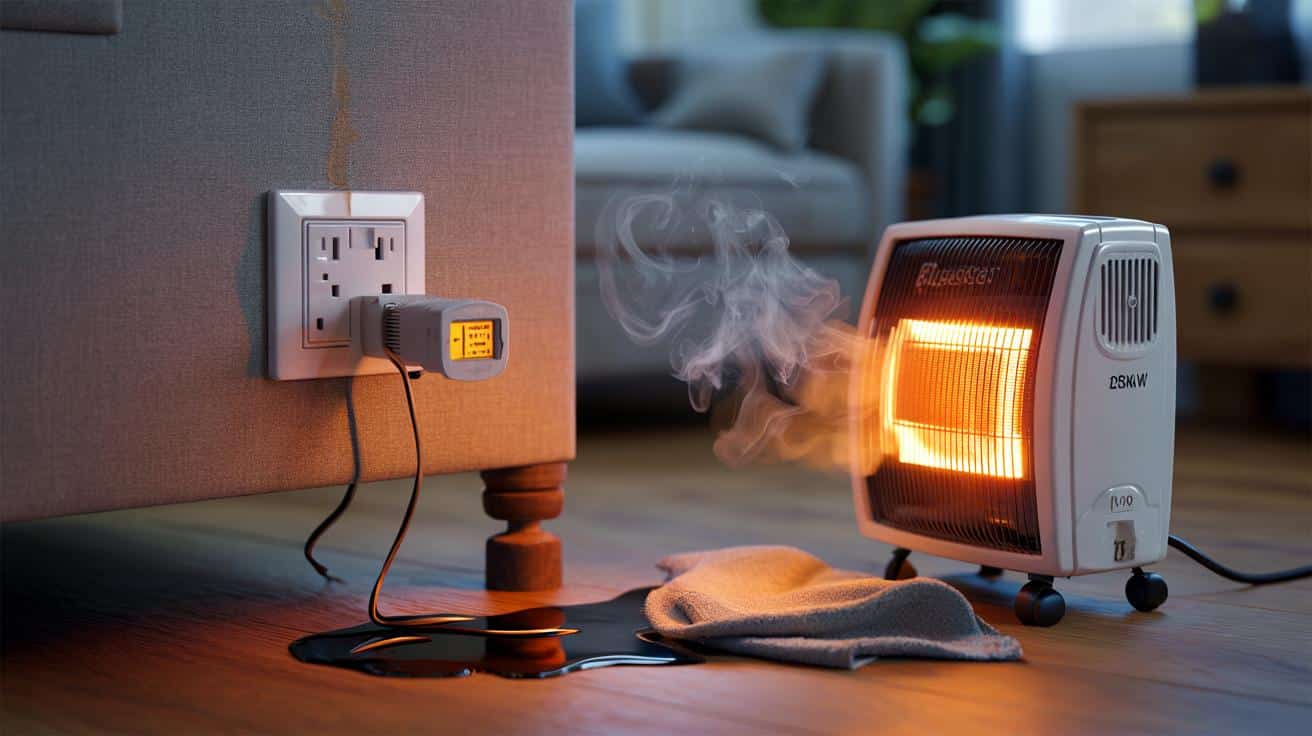
UK fire crews are sounding the alarm about a surge of risky portable heaters showing up in living rooms, home offices and rented flats. Three look‑alike models keep cropping up after callouts — and the advice is blunt: unplug them now.
A faint plastic tang in the hallway, then a hiccup of light as the breaker tripped. The kind of moment where your feet freeze on the landing and your brain does the maths between flicking the switch back on and going to bed cold.
Downstairs, a little plug‑in heater blinked 32°C in cheerful red digits. The fan was still whirring. The socket faceplate was hot. Not warm. Hot. A mug of tea went cold on the counter while I watched the display. A minute later, a thread of smoke curled out from the side like a warning sign in a language you don’t want to learn.
I flicked it off and stood there listening to the quiet ticking of cooling plastic. The house felt suddenly fragile. Something else was still nagging.
The three heaters firefighters keep finding after a callout
Fire services across the UK say the same trio of portable heaters keeps appearing at incidents. They’re sold under dozens of names, usually online, often shipped fast, always cheap. The first is the tiny 350W wall plug‑in with a digital display and no cable.
It clips straight into the socket, sits proud by a couple of inches and promises low‑cost warmth. Many units use flimsy EU‑to‑UK adaptors, lack a proper BS 1363 fused plug, and run warm enough to discolour sockets. Crews describe scorched plastic around the outlet, scorched skirting boards, and timers that fail stuck “on”. If yours matches this shape, don’t negotiate with it. **Unplug it now.**
The second repeat offender is a 2kW white plastic fan heater — the classic “toaster” shape with a carry handle and two rotary dials. On safer versions, you’ll find a clear tip‑over switch and overheat cut‑out stamped on the rating label. On the risky clones, that hardware is missing or fake-marked, and the cable is worryingly thin.
A London crew told me they’d arrived at a bedsit where one of these sat inches from a hanging towel. The heater had toppled on its face and kept blasting. The towel didn’t ignite — it smouldered, then filled the space with toxic smoke. A neighbour smelled it at 3 am and banged the door. The tenant survived. The carpet didn’t.
Third on the list is the budget oil‑filled radiator: nine to eleven fins, neon rocker switch, and a small clip‑on thermostat module. The safe versions are fine kit. The sketchy ones leak at the welds, run hot enough to blister paint, and sometimes carry counterfeit conformity marks. Reports mention “pops” and oily residue pooling under the casters.
Firefighters say these three “models”, or more precisely designs, show up again and again in near‑miss logs. They look legitimate, they feel familiar, and they hide their shortcuts in the parts you don’t see: undersized wiring, missing thermal protection, fake fuses. That mix makes a hazard that doesn’t look like one — until it is.
What to do tonight: quick checks, safer swaps
Start with the rating label and the plug. You’re looking for a BS 1363 fused plug (13A fuse with “BS1362” on the metal cap), a CE/UKCA mark that isn’t wonky, and a clear model identifier. Press the unit gently onto a table to test a tip‑over switch. If the fan keeps running flat on its face, that’s your sign.
Touch the socket after ten minutes of use. Warm is tolerable; hot means stop. Don’t run any portable heater from a multi‑way cube adaptor or a reel that’s still coiled. Use a single socket, a short, heavy‑duty extension if you must, and keep a metre of breathing room around soft furnishings. Let’s be honest: nobody logs serial numbers over a cuppa. But snap a photo of the label. If a recall drops, you’ll know where you stand.
If your heater matches one of these designs, park it. **3 heaters firefighters want gone tonight**: the 350W plug‑in brick with the digital display; the unbranded 2kW white fan heater with missing safety kit; the budget oil radiator that weeps at the seams.
“If in doubt, pull the plug and walk away,” says a line you’ll hear from crews up and down the country. “Warmth is replaceable. People aren’t.”
You can spread the word fast:
- Snap a picture, share it to your WhatsApp street group.
- Check elderly neighbours’ heaters; offer a safer spare.
- Report dodgy listings to the online marketplace and Trading Standards.
*It takes seconds to check a plug; it takes minutes to lose a home.*
Why these designs trip people up — and what to buy instead
These heaters trade on convenience. The plug‑in brick looks clever, the white fan looks familiar, the oil radiator looks grown‑up and solid. Cheap units cut corners in silent places: thermal cut‑outs, clearances inside the case, proper strain relief on cables. You can’t see any of that at checkout.
There’s also the money trap. A £14 heater promising “efficiency” feels like a win when the tariff makes you flinch. The reality is brutal physics: a 2000W heater costs the same to run no matter the brand. Any “eco” claim without a thermostat and timer that actually works is just marketing froth. **Check the model label before you sleep.**
So what’s the alternative? Look for a reputable brand, clear UKCA/CE marks, a real BS 1363 fused plug, and a visible tip‑over switch. Go for thermostatic control and a footprint that won’t topple. Pair it with fresh smoke alarms in the hallway and on the landing. Swap cube adaptors for a short surge‑protected bar and don’t daisy‑chain them. Small habit changes beat heroic rescues.
There’s also a human truth here. We’ve all had that moment when the room is cold, the bills are scary, and the quickest fix wins. That’s why firefighters are being so direct this winter. A dodgy heater is a shortcut that ends in a long night. Warmth matters. Safety does, too.
Fire services aren’t asking you to bin everything with a fan. They’re asking you to ditch the look‑alikes they keep finding on smoke‑stained floors. If your unit matches the shapes described above, it’s not a maybe. It’s a pause, a pull of the plug, a text to the seller asking about compliance, and a quick browse for something built right.
This isn’t scaremongering. It’s pattern‑spotting shared in time to help someone you love. A kettle costs pennies to boil; a house costs years to rebuild. Share this with a mate in a cold bedsit, a parent with a draughty lounge, the student upstairs who thinks the plug‑in block is clever. Stories move faster than recalls. So does care.
| Key point | Detail | Interest for the reader |
|---|---|---|
| Spot the risky trio | 350W plug‑in brick, unbranded 2kW fan heater, budget oil‑filled radiator with leaks | Instant visual ID of heaters firefighters want gone |
| Do quick safety checks | BS 1363 fused plug, working tip‑over switch, cool socket after 10 minutes | Fast actions that cut real risk tonight |
| Buy smarter, run safer | Reputable brand, thermostat/timer, single socket use, clear space around | Save money without inviting a 3 am scare |
FAQ :
- Are all plug‑in mini heaters unsafe?Not all, but many look‑alike 350W bricks use flimsy adaptors and lack proper thermal protection. If the unit plugs straight into the wall and runs hot at the socket, stop using it.
- How do I know if my heater has a real tip‑over switch?Place the heater gently on its side while it’s running. A safe unit should shut off within a second or two. If it keeps blasting, that’s a red flag.
- Can I use a heater on an extension lead?Use a short, heavy‑duty extension, fully uncoiled, not a cube adaptor. Heaters draw high current that can overheat cheap strips and reels.
- Is a 2kW heater cheaper to run if it says “eco” or “energy‑saving”?Running cost depends on wattage and time. “Eco” claims without a working thermostat and timer don’t change the maths. Heat is heat, and you pay by the kilowatt‑hour.
- What should I do if I suspect a recall?Unplug the heater, photograph the label, and check the UK’s product recall listings. Contact the seller for a refund or remedy, and report unsafe goods to Trading Standards.






Unplugged my 350W wall plug‑in after reading this. The socket was actually hot—couldn’t keep my finger on it. Not “warm.” Glad I caught it before bed.
This sounded like scaremongering at first, but the specifics (BS 1363 fuse, tip‑over test, fake UKCA marks) are convincing. Could you link the Trading Standards recall pages and, if possible, a list of known aliases? “Look‑alikes” is helpful but still a bit vague. Also, renters: are landlords definately responsible to replace unsafe heaters under HHSRS? Would love clarity and any reccomended wording for requesting a swap.