
The deadline is 2026, and the aim is simple: the same things recycled everywhere, food waste picked up weekly, fewer grey areas at the kerb. The changes are landing street by street, with new caddies, clearer labels and, yes, fresh habits to learn.
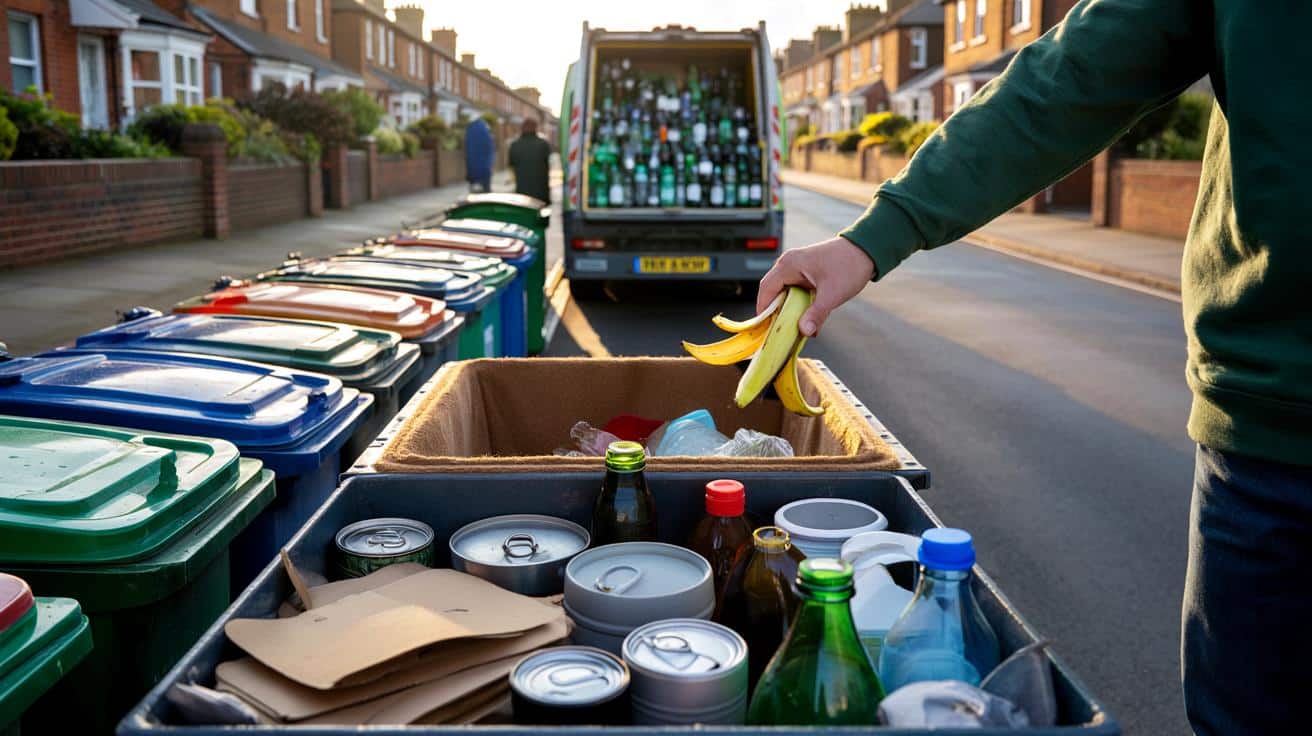
I watched a bin lorry edge down a terraced street just after dawn, the crew moving like a practised pit-stop. Blue lids. Green lids. A neat line of brown caddies perched like little helmets on the kerb. One neighbour jogged after the truck with a banana peel, laughing at himself. Another peered into her new caddy, unsure whether tea bags count.
The driver shrugged as he hauled a crate of glass: “People want to do it right.” He’s right. You can feel the shift. The old patchwork of rules is being stitched into one pattern, and councils are rolling out the new design in phases. Something bigger is coming.
And it will touch every kitchen.
What’s changing in 2026 — and why your street will feel it
From March 2026, every council in England will collect the same set of core recyclables. Glass bottles and jars, metal cans, paper, cardboard and widely recycled plastics like bottles, pots, tubs and trays will be in, wherever you live. Food waste moves to weekly pick-up as standard, with most homes getting an indoor caddy and a sturdier kerbside one.
This is the “Simpler Recycling” push: not a brand-new idea, but the tightest attempt yet to end postcode confusion. Your council can still choose the system — one mixed bin or a couple of separate streams — but the contents list stops changing at the borough boundary. That single tweak is bigger than it looks.
On a pilot street in the West Midlands, the change felt immediate. Crews reported fewer “sorry, wrong bin” stickers after just a month. Households filled the food caddies fast at first, then steadier, as routines set in. One dad told me he halved the black-bin smell by moving scraps out of the kitchen bin. WRAP’s long-held estimate is that roughly a quarter of typical black-bin waste is food; when it gets its own collection, the whole system breathes.
There will be bumps. Some estates with shared bins will switch later, and rural rounds may roll out in stages. Plastic film and flexible packaging won’t be universal until after 2026 in many areas, as infrastructure catches up. Still, the centre of gravity shifts next year, and the message on your fridge magnet becomes the same one on your mum’s.
Councils aren’t being told how often to pick up general waste. Many will stick with fortnightly collections, and a few are already testing three-weekly rounds once food waste is out of the black bin. Expect some bin sizes to shrink to match the lighter loads. Garden waste stays a paid subscription in most places, since that funding model props up the system.
Labels are getting simpler too. You’ll see clearer pack recycling logos on more products, moving toward a plain “Recycle” or “Do Not Recycle” instruction. That dovetails with the council side of the equation. Same list at home. Same words on the box. Less squinting by the sink at 10pm.
How to make the new rules work in real life
Start small. Put a mini tub or bowl on the counter where the scraps actually happen — by the chopping board or the kettle. Empty it into the kitchen caddy after meals, then out to the kerbside caddy each evening. If your council allows liners, pick a method and stick with it: compostable liner, a bit of newspaper, or just rinse the caddy every few days. Your nose will tell you what rhythm works.
Give your recycling a quick “empty, clean, dry” moment. It’s two seconds of a hot tap, a shake, and a drain on the rack. Flatten cardboard once, not five times. Keep lids on plastic bottles so they’re captured at sorting plants. And if you’re not sure about a weird plastic, leave it out rather than risk contaminating the whole bin. Let it be boring. Boring works.
We’ve all had that moment where the bin lid won’t close and the street is already awake. Build tiny habits so you don’t meet that moment as often. Label the inside of cupboard doors with the 2026 list. Move food storage jars to the front of the shelf so leftovers get eaten first. And if your council shifts to three-weekly general waste, treat your caddy as the pressure valve that stops the black bin from bulging.
“The win is not perfection, it’s consistency,” says a waste strategy lead in the Midlands. “When collections are predictable and the list is the same everywhere, people stop guessing. That’s when contamination drops.”
- Weekly food waste collections in most areas by 2026.
- One national list of core recyclables: glass, metals, paper, card, plastic bottles/pots/tubs/trays.
- Plastic film and flexibles become more common later, not everywhere in 2026.
- Garden waste remains a subscription service in many councils.
- General waste frequency set locally; some areas may tighten schedules.
The pitfalls to dodge — and the quiet wins that add up
Pizza boxes are the classic trap. The clean lid can be recycled; the greasy base belongs in general waste, not with paper and card. Black plastic trays still trip people up too, as some local facilities struggle to sort them. If a label says “Recycle” but looks flimsy or crinkly like film, it may sit in a grey zone in your area until infrastructure catches up. When in doubt, check your council’s updated list as the 2026 rollout hits your postcode.
Let’s be honest: nobody really does that every day. So build a five-second rule. Before the bin, pause and ask: “Is it on the 2026 list?” If yes, in it goes. If no, hold it or bin it. One thoughtful second beats three later rummaging sessions on the pavement. And if you slip and put the wrong thing in, don’t spiral. Next time is the point.
Side waste limits are likely to tighten as food waste moves out of the black bin. That means fewer extra bags on the kerb. If you routinely overflow, track what’s causing it for one week — bulky packaging, nappies, DIY waste — then target that one thing. Some households find swapping one product a month makes more difference than heroic sorting.
“We’re not trying to turn residents into waste managers,” a collection supervisor in the North West told me. “We want tidy, reliable streets. The new rules make that easier, not harder.”
- Rinse and drain, don’t deep-wash. Water and a shake is enough.
- Keep batteries and vapes out of any bin; use a drop-off point to avoid fires.
- Use the food caddy as a smell control tool, especially in summer.
- Check bulky waste collections for one-off clear-outs instead of side bags.
Costs, climate — and what this means for your corner of the map
Councils are under pressure. Fuel, staffing and materials all cost more than they did. The 2026 changes cut across that reality with a bet: less confusion means cleaner recycling, which means better prices for sorted materials and fewer rejected loads. Weekly food waste trims the weight of black-bin rounds and diverts leftovers to composting or energy. The climate case and the budget case point in the same direction.
The home case is simpler. Your kitchen gets a new rhythm. Your street gets tidier mornings. And the nation gets one shared language for what goes where. It’s not flashy. It works.
| Key point | Detail | Interest for the reader |
|---|---|---|
| Weekly food waste | Caddies for most homes, with separate kerbside collection by 2026 | Less smell in the black bin, more room between collections |
| One recyclables list | Glass, metals, paper, card, plastic bottles/pots/tubs/trays everywhere | Fewer mistakes, fewer “wrong bin” stickers |
| Local flex | General waste frequency and bin sizes set by your council | Know your street’s rules; plan space and routine around them |
FAQ :
- Will I get new bins or just a caddy?Most households will receive a food caddy set and keep existing recycling bins. Some areas will swap or relabel bins to match the 2026 list.
- Are tea bags and coffee grounds OK in the food caddy?Yes in most schemes, including grounds and filters. Check your council’s guidance for any exceptions on plastic tea bag mesh.
- What about plastic film and crisp packets?Many councils won’t collect flexible plastics kerbside in 2026. Use supermarket drop-offs where available until local services expand.
- Can I use compostable liners in the caddy?Often yes, though some crews prefer no liner or newspaper. Only use regular plastic bags if your council explicitly allows it.
- Will my general waste move to three-weekly?Some places will trial it once food is collected weekly. Others will stick with fortnightly. Watch for local announcements as rollout nears.








Great explainer, thanks. The single recyclables list should definately cut the guessing—finally! One question: are black plastic trays in or out for 2026, or still facility-dependent? And any rough date for film/flexibles beyond “not everywhere in 2026”?