
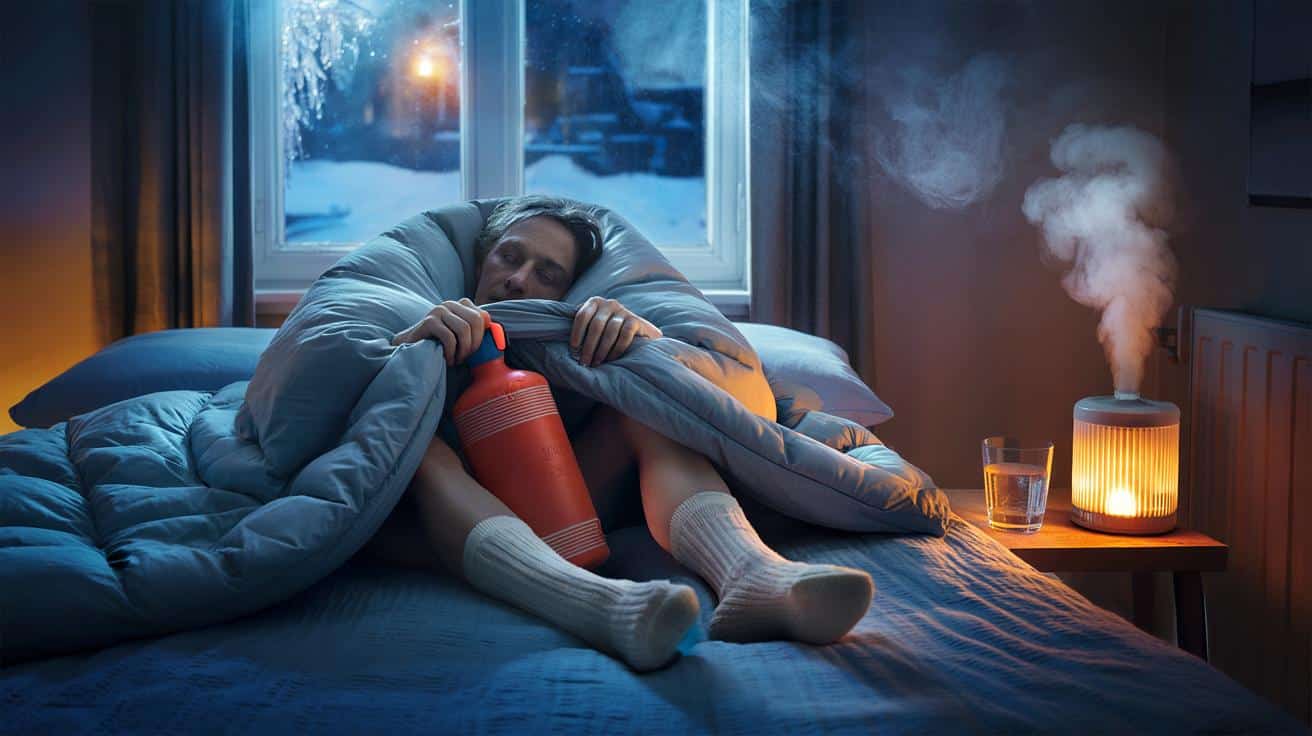
Cold snaps change the way we drift off, wake up, and dream. Not because winter is “bad for sleep,” but because your body’s night-time systems are trying to keep you warm, safe, and synced with shorter days.
I lay in bed swaddled under a heavy duvet, toes still cold, listening to the hush between the pipes. There’s a peculiar stillness to winter bedrooms, as if the house is breathing more slowly than you are.
At 3:17 a.m., I woke for no clear reason, just a thin itch of chill across my shoulders and the faintest dryness at the back of my throat. A sip of water, a tug at the duvet, a glance at the orange glow of the boiler light. Sleep came back, but softer, patchier, like snow settling on cobbles. Something about cold changes the plot of the night.
What gives?
What cold really does to your sleeping body
Your brain expects your core temperature to fall a notch before sleep, then stay steady till dawn. Colder rooms help that drop, yet chilly air on skin can spark tiny “keep warm” alarms. We’ve all had that moment when a cold foot feels like a fire alarm in a quiet church.
Vessels tighten in your hands and feet to conserve heat for vital organs. If your extremities stay cold, sleep onset can stall because your body reads “not safe yet.” **Cold isn’t the villain; it’s the mismatch between what your core needs and what your skin feels.**
Look around and the pattern shows up in small ways. A commuter in Leeds told me she sleeps longer on frosty weeks, but wakes more to nudge the duvet edge or re-tuck a corner before the draft finds her neck. Big sleep trackers report winter nights run a touch longer on average across millions of logs, yet they’re more fragmented in homes with drier air and rattly heating.
Shorter daylight pushes evening melatonin slightly earlier, so you may get sleepy sooner and wake earlier too. If your boiler roars on at 5 a.m., that warmth can nudge you toward wakefulness just when your body wants to finish a dream. The smallest change in light, sound, or temperature becomes a lever.
There’s also the dryness problem. Heated rooms often drop humidity, drying nasal passages and nudging mouth-breathing or snores that crack sleep open. On cold nights your body burns a bit more energy to stay warm, and tiny shivers can pop up in lighter sleep stages. **Your brain cares about gradients, not absolute numbers.** A stable, gentle slope of cool-to-cosier is soothing; sudden swings jolt you out of deep sleep like a door slam in a library.
That’s why the same 17°C bedroom can feel either perfect or punishing, depending on airflow, bedding, and timing.
How to sleep better when the temperature drops
Think of warmth as a choreography. Aim for a cool room, warm skin, and a core that can drift down slowly. Most sleep clinicians steer people toward 16–18°C in the bedroom, but the trick is local warmth: socks, a light hot-water bottle near the torso, and breathable layers that trap air without creating a sauna.
Time your heating so it settles before lights-out, then give your mattress five minutes of pre-warmth and let it fade. A 10–15 minute warm shower or bath an hour or two before bed speeds heat release at the skin, which actually helps you feel drowsy as you cool. Small draft fixes—closing the gap under a door, a heavier curtain—do more than a thick winter duvet.
What trips people up in winter isn’t laziness; it’s routines colliding with weather. That steaming nightcap? It fragments sleep later as your body metabolises alcohol and your temperature rebounds. Overheating the room leads to sweaty wake-ups, then you peel the duvet off and boom—chill spike. Let’s be honest: nobody actually does that every day.
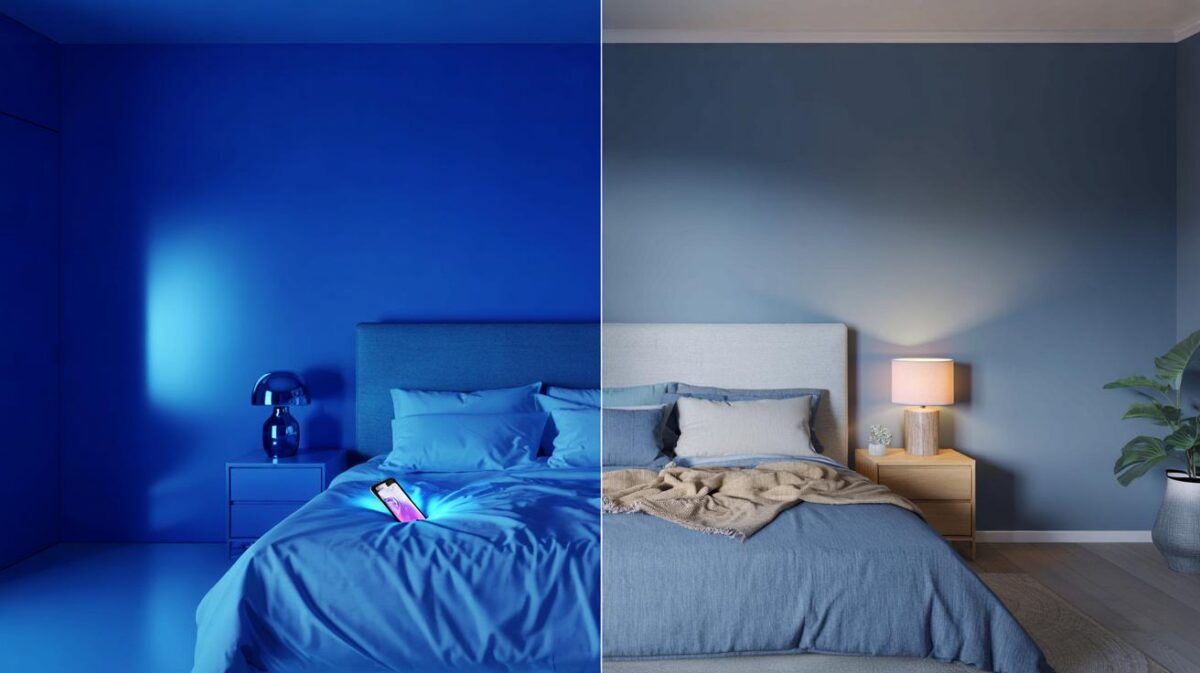
Go for lighter, layered bedding you can adjust at 2 a.m. without wrestling. Keep a glass of water nearby to fight heated-air dryness. If early darkness makes screens irresistible, set the phone to warmer tones at sunset and park it outside the duvet. A quiet humidifier near 40–50% can calm dry throats and snoring.
Here’s a simple way to think about it: set the stage, then let your body do the play.
“Sleep happens when your environment quietly tells your brain you’re safe, slightly cool at the core, and warm enough at the edges.”
- Room: 16–18°C, minimal drafts, stable across the night.
- Skin: warm feet and hands (thin socks, hot-water bottle), breathable pyjamas.
- Air: humidity around 40–50%, gentle fresh-air exchange, no blasting vents.
- Timing: warm shower 60–120 minutes pre-bed, heating taper before lights-out.
- Light: strong daylight in the morning, cosy low light after dusk.
- Noise: steady background hush beats sudden boiler clanks—try soft white noise.
Winter is a season, not a sleep disorder
Cold weather doesn’t rewrite your biology; it shifts the cues your biology listens to. Shorter days pull your melatonin a shade earlier, drier air scratches at your throat, and home heating adds hiccups your brain hears even while you swear you’re out cold.
**Small, boring tweaks—warm hands, cooler air, steady humidity—do the heavy lifting.** The art is to give your body a smooth ramp into sleep and keep the night uneventful. That might mean socks in bed, the tiniest draft stopper, or opening curtains at dawn so your clock catches morning light without you thinking about it.
A season is a story, and winter’s chapters run a little quieter, a little earlier. If your nights feel different, they are—and they’re telling you something useful about light, air, and warmth. Share what works with your people; borrow what works for them. Your future winter-self will thank you in March, when the first birds start their rehearsal before sunrise.
| Key point | Detail | Interest for the reader |
|---|---|---|
| Thermoregulation drives sleep | Core temperature must drop while skin stays comfortably warm | Explains why cold feet stall sleep and how to fix it |
| Light and timing shift in winter | Earlier darkness nudges melatonin and wake time | Helps plan routines that align with the season |
| Air and noise matter | Dry heat, drafts, and boiler cycles fragment sleep | Simple home tweaks reduce night-time wake-ups |
FAQ :
- What’s the best bedroom temperature in winter?Most people sleep well around 16–18°C with warm extremities and breathable bedding. Stability beats perfection.
- Why do I wake to pee more on cold nights?Cold causes blood vessels to constrict, shifting fluid balance and nudging the bladder. Warmer feet and a steady room temp can reduce those trips.
- Do we actually need more sleep in winter?Many people drift slightly longer due to light changes, yet fragmentation can rise. Think quality and continuity, not just total hours.
- Are weighted blankets good when it’s cold?They can calm restlessness but trap heat. Choose a breathable cover and lighter tog so you get pressure without overheating.
- How do I handle winter blues and sleep?Get bright morning light, move your body earlier in the day, and dim evenings. If mood dips persist, talk to a clinician about light therapy or care options.







Loved the line about “cool core, warm edges”—finally explains my cold-feet insomnia. Any tips for people in noisy apartments with clanky radiators?
So my toes are the night-shift managers of my brain? That explains a lot. Time to promote them with socks and a hot-water bottle.