
New research is piling up: when we lock in warmth, we also trap what we exhale, burn and clean. Winter air indoors is becoming a quiet health story, with real-world consequences for colds, coughs, and worse.
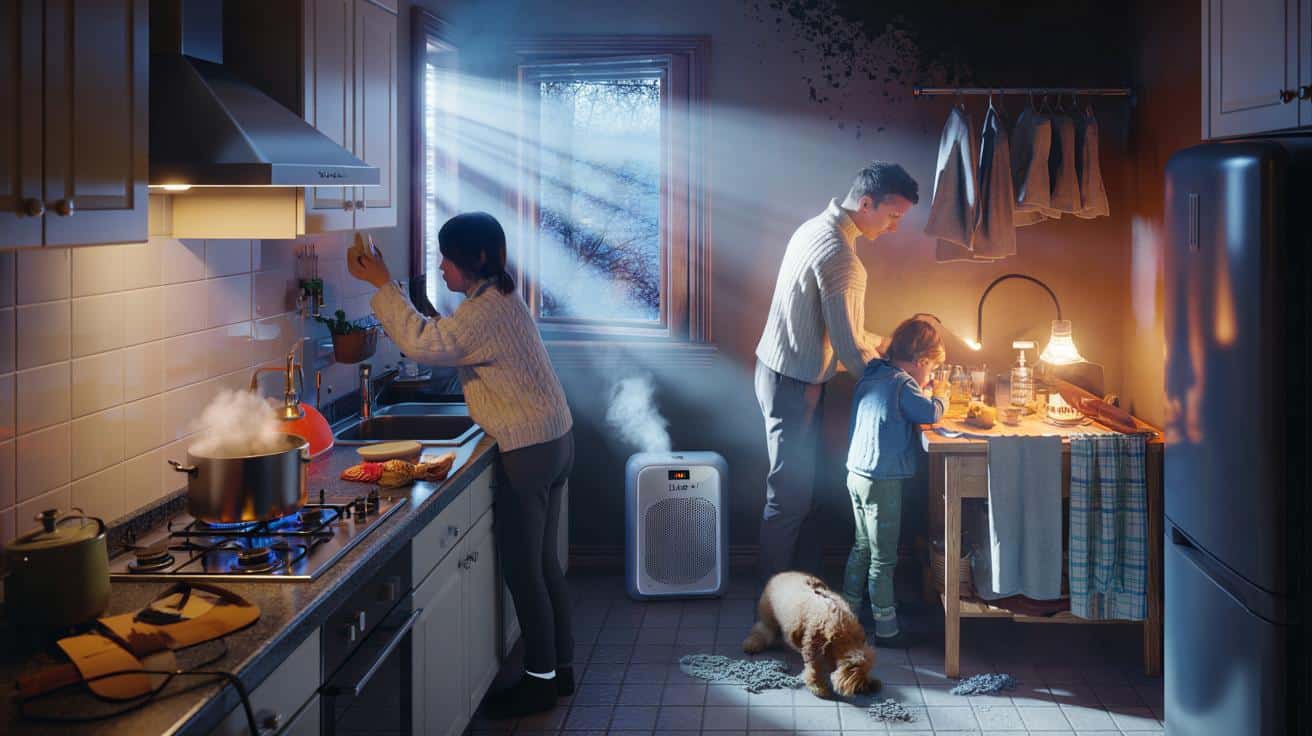
It starts on a January morning with the kettle hissing and the dog’s paws squeaking on a cold kitchen floor. The window is fogged with condensation, a tidy row of school shoes drying by the radiator, the extractor fan still from last night’s roast. A small plastic monitor on the counter clicks upward, green to amber, as the room wakes. We’ve all had that moment when you notice the air feels thicker somehow, like a room after a long meeting. You crack the window an inch, wince at the chill, and close it again. Heat is precious. Time is tight. The cough at the breakfast table lingers. What you can’t see starts to matter. The air is busy.
Why winter air indoors turns against us
Winter changes the rules of indoor life. We seal our homes to keep warm, dial up the heating, and add hours of cooking, candles, and hot showers. That means drier air, stubborn aerosols, and a stew of particles that ride the updraft. It feels cosy, yes. It’s also a perfect stage for viruses, pollutants, and mould to do more.
In a small Leeds flat last December, a family cooked pasta and dried laundry by a radiator. Their CO2 monitor drifted above 1,500 ppm within an hour — outdoors sits near 420. The toddler’s wheeze flared that night, nothing dramatic, just that fretful rasp parents recognise. They weren’t reckless. They were doing winter. That’s the trap.
Here’s the rough physics and biology. Dry heated air shrinks respiratory droplets, letting viral particles hang longer and travel further. Your nose and throat dry out, weakening that sticky mucous barrier that catches invaders. Fine particles from frying, wood burners, and dust slip deep into lungs, nudging inflammation. NO2 from gas hobs irritates airways, and mould releases spores that crank up allergies and asthma. Air moves like water — it finds the easiest path and carries what we shed. Clean air is not a luxury — it’s basic winter protection.
Simple moves to make your winter air kinder
Try “micro-bursts” of fresh air. Open two opposite windows for four to six minutes, twice a day, to flush the room without tanking the temperature. Run kitchen and bathroom extractors 15–20 minutes after heat and steam. Keep cooker hoods on during the whole session, not just at the start. Aim for 40–60% indoor humidity, and place a small HEPA purifier where you spend the most time.
Common traps are surprisingly ordinary. Drying clothes indoors with no vent. Lighting scented candles nightly. Spraying strong cleaners that sting the nose. Overshooting with humidifiers until the walls sweat. Blocking trickle vents with tape because they “feel draughty”. It’s all understandable. Let’s be honest: nobody does that every day. Better is a small daily habit than a heroic weekend blitz.
Listen to what the room tells you, then act in tiny, repeatable steps. CO2 isn’t the villain; it’s the signpost. A cheap monitor or even a foggy window is feedback you can use.
“Think of ventilation the way you think of brushing your teeth,” says a respiratory nurse I spoke to in Manchester. “Short, regular, and before there’s a problem.”
- Open opposite windows for a short cross-breeze when people gather.
- Use lids when cooking and keep the extractor on high during frying.
- Move drying racks near a window; crack it open for ten minutes.
- Vacuum slowly with a HEPA filter and damp-dust, not feather-dust.
- If you can, fit a higher-grade filter (MERV 13) on your system.
A winter of small decisions
When researchers link indoor air to winter health, they’re not pointing at villains. They’re mapping how everyday choices add up. A mug of tea, a pan on the hob, a door kept shut, a window cracked for five minutes — each nudges the air one way or the other. The pattern matters more than any single act.
That’s the mindset shift: not sterile, just smarter. If you can see your breath outside, let a little of that clarity in. If the room feels stuffy, take a lap with the vacuum, then pause the candles tonight. If the bath steamed up the mirror, flick the fan and leave the door ajar. *Small air habits reward you quietly.*
Share what works in your home. The corner that traps damp. The time of day that gives the best breeze. The purifier that freed you from “morning-after” headaches. Homes aren’t laboratories, and life is messy. Yet winter is the season when air hygiene pays back fast — fewer sore throats, calmer chests, better sleep. You don’t need perfection. You need rhythm.
| Key point | Detail | Interest for the reader |
|---|---|---|
| Cold months trap pollutants | Closed windows, longer cooking and heating mean higher indoor loads of particles, NO2, and aerosols | Explains why sniffles and headaches surge when the heating is on |
| Humidity sweet spot | Aim for 40–60% relative humidity to support your airway and limit viral survival | Simple target you can hit with micro-venting or a small humidifier |
| CO2 as proxy | CO2 isn’t the villain; it’s the signpost for stale air and crowding | Gives you a way to time ventilation without guesswork |
FAQ :
- Is CO2 itself harmful at home levels?At typical indoor concentrations, CO2 is mainly a proxy for rebreathed air, not a toxin. If it climbs well above 1,000–1,500 ppm, it’s a nudge to bring in fresh air.
- Do I need an air purifier?A HEPA purifier helps for particles in bedrooms and living rooms, especially near roads or during cooking. It won’t fix gases like NO2, so pair it with ventilation.
- How do I ventilate without losing all my heat?Use short cross-breezes: open two windows opposite each other for 4–6 minutes. The walls stay warm, and the stale air swaps out fast.
- Are gas hobs and wood burners a problem?They can be. Gas adds NO2, and wood smoke adds fine particles. Use strong extraction, proper fuel, and extra ventilation, or consider induction for daily cooking.
- What’s a safe way to deal with mould?Wear gloves and a mask, wipe small spots with detergent, then dry the area. Fix the moisture source and ventilate. For large or recurrent patches, seek professional help.







Thanks for the clear tips—micro-bursts and the 40–60% humidity target feel doable. I didn’t realize CO2 was more of a signpost than a toxin; that reframes how I think about the foggy-window mornings. One quik question: for tiny kitchens with weak extractors, is it better to open a single window near the hob, or two windows across the flat for a brief cross-breeze?