
Many of us are crossing fingers and turning up the thermostat. Our parents in the 1960s didn’t have that option in most homes. They had habits. Winter was a season to manage, not a bill to fear.
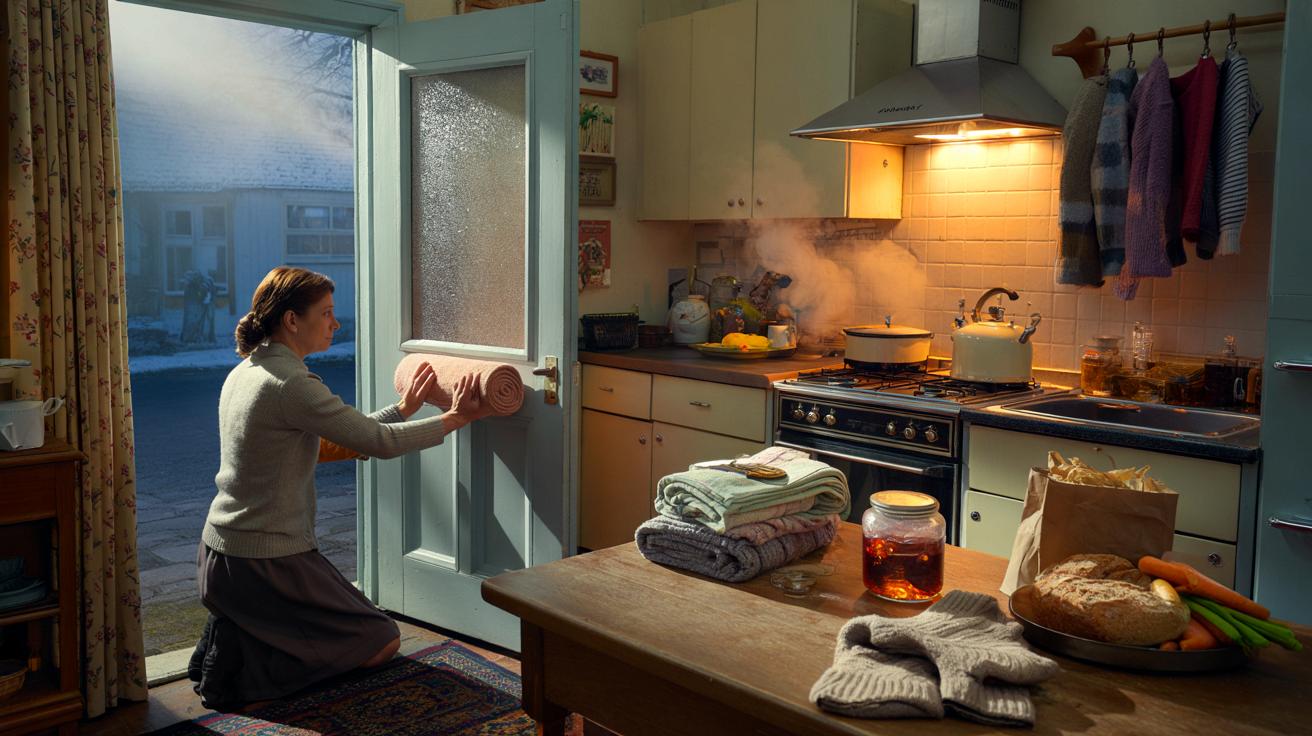
The kitchen window is fogged and glowing, a small sun in a dark street. It’s half six, kettle chattering, and a mother in a faded cardigan is laying towels under a door to keep the draught out. The kids’ school jumpers hang near the oven, warm as toast. A hot-water bottle slides between cold sheets like a secret. She pours tea into a jam jar because it holds heat better than a thin mug. A friend knocks to swap a loaf for carrots. Someone laughs about nothing. No one expects the house to be warm all over. They expect to be warm enough. They weren’t being quaint.
The muscle memory of making do
Parents in the 1960s treated warmth and money like rainwater caught in a barrel. Every drop counted. **Cold teaches you to plan.** Doors were shut on purpose, sleeves were rolled down, and the evening revolved around the room that was actually warm.
A neighbour told me her mum would pop bed-warming bricks in the oven while shepherd’s pie browned on top. Beds were layered like lasagne: sheet, blanket, blanket, coat. Many British homes didn’t have central heating then, so families created heat islands—around the fire, in the kitchen, under a pile of wool. A pot of soup was a radiator you could eat, bubbling away from lunchtime to dusk.
This wasn’t romantic hardship. It was system thinking. When you don’t expect an entire house to be 21°C, you design little routines that carry you through the cold hours. You eat meals that steam. You time laundry so it dries near the warmest spot. You wear slippers that actually warm your feet. The result is smaller bills and fewer panics, yes, but also a calmer mind. You’re acting, not fretting.
What to copy, practically
Start with one rule from the 1960s: heat the person, not the house. **Heat your core, layer smart, choose a warm corner and make that corner glorious.** Close internal doors, roll a towel against the gap, draw thick curtains before the sun goes. Make a nightly “warm-through” routine—kettle on, hot-water bottle filled, throw blankets folded on the sofa like an invitation.
Make a soup habit and a drying habit. One pot simmering most afternoons means fewer takeaways and a warmer kitchen at the coldest hour. Dry clothes near, not on, the heat source to avoid damp. Let’s be honest: nobody really does that every day. Start with three days a week and call it a win. If you’re renting, removable draught excluders and stick-on film for leaky windows can change the feel of a room in one hour.
Every old-school household had a phrase, passed down like a wooden spoon.
“Cold isn’t a crisis, love. It’s a prompt.” — Margaret, 79
Put that prompt in a tiny winter toolkit:
- One-room warm rule after 6pm
- Weekly soup base: onions, carrots, lentils
- Draught kit: door snakes, tape, curtain hooks
- Hot-water routine: bottles, flannel, socks on radiator
- Borrow list: blankets, slow cooker, spare lamp
This winter: why it matters
There’s a romance in the old rituals, but the point is practical. The 1960s mindset shrinks the problem down to the size of your own hands. It’s energy literacy you can feel—warm feet, warm bowl, warm corner. **Community was a survival tool, not a slogan.** Borrowing a slow cooker for a month. Trading a stack of books for a bag of coal. A neighbour texting when they’re doing a shop so you combine lifts and save on fuel.
We’ve all had that moment when the radiators click and your stomach drops at the thought of the bill. Swap that script. Share a pot, swap a skill, split a delivery, cook once and reheat twice. *We can learn without losing our modern comforts.* The old ways aren’t about austerity. They’re about choice. About moving from “I hope the system holds” to “I’ve got a plan for a cold snap.”
Think of this winter as an experiment in agency. Warmth by design, not accident. Dinner that doubles as heating. A home that closes ranks at sundown and loosens again with the light. There’s dignity in a hot-water bottle, and there’s joy in a living room that feels like a small pub snug at night. Your children will remember the glow, not the kilowatts. And a year from now, the habits will feel ordinary. That’s the quiet win.
| Key point | Detail | Interest for the reader |
|---|---|---|
| Heat the person | Layer clothing, hot-water bottles, one warm room | Cut costs while staying genuinely cosy |
| Cook for warmth | Daily soup, oven timing, steam and storage | Cheaper meals that also warm the home |
| Block the leaks | Draught stoppers, curtains, stick-on window film | Immediate comfort lift for pennies |
FAQ :
- What did 1960s parents actually do that we can copy fast?Close doors, create a warm “hub” room, use hot-water bottles, cook stews, and layer textiles—blankets, rugs, thicker curtains.
- How do I start without feeling deprived?Pick one habit for a week: the one-room warm rule or a nightly hot-water bottle. Small wins beat grand declarations.
- Isn’t this just telling people to put on a jumper?No. It’s a whole-home strategy—airflow, textiles, routines, food timing, and neighbourly help. The jumper is just one tile in the mosaic.
- What if I’m renting and can’t make big changes?Use reversible fixes: stick-on glazing film, door snakes, tension rods for heavy curtains, and plug-in lamps for warm light in your hub room.
- How do I get the family on board?Make it feel good. Name the room, light a lamp, plan a soup night, keep blankets within reach. Comfort first, lectures never.





Briliant piece. The “heat the person, not the house” rule hit me hard. I grew up with hot-water bottles and towels under doors, then forgot it all once I got central heating. Your checklist feels doable—soup base, door snakes, one warm hub—without sounding preachy. Tried the stick-on film last winter and it made a suprising difference. Thanks for reminding us that comfort is a practice, not just a thermostat setting.