
” Beyond the blizzard headlines, there’s a quick, almost cheeky fix that turns thin, shivery rooms into something you can actually live in. It costs pennies and takes minutes. And it works.
It begins with a glaze of frost on the back window, one of those spare British mornings that smell like wet leaves and bus brakes. The heating clicks on and the radiator does its little metal sigh, yet the window radiates cold like a silent, stubborn fridge. You hold a palm to the pane and feel the city’s chill pushing through.
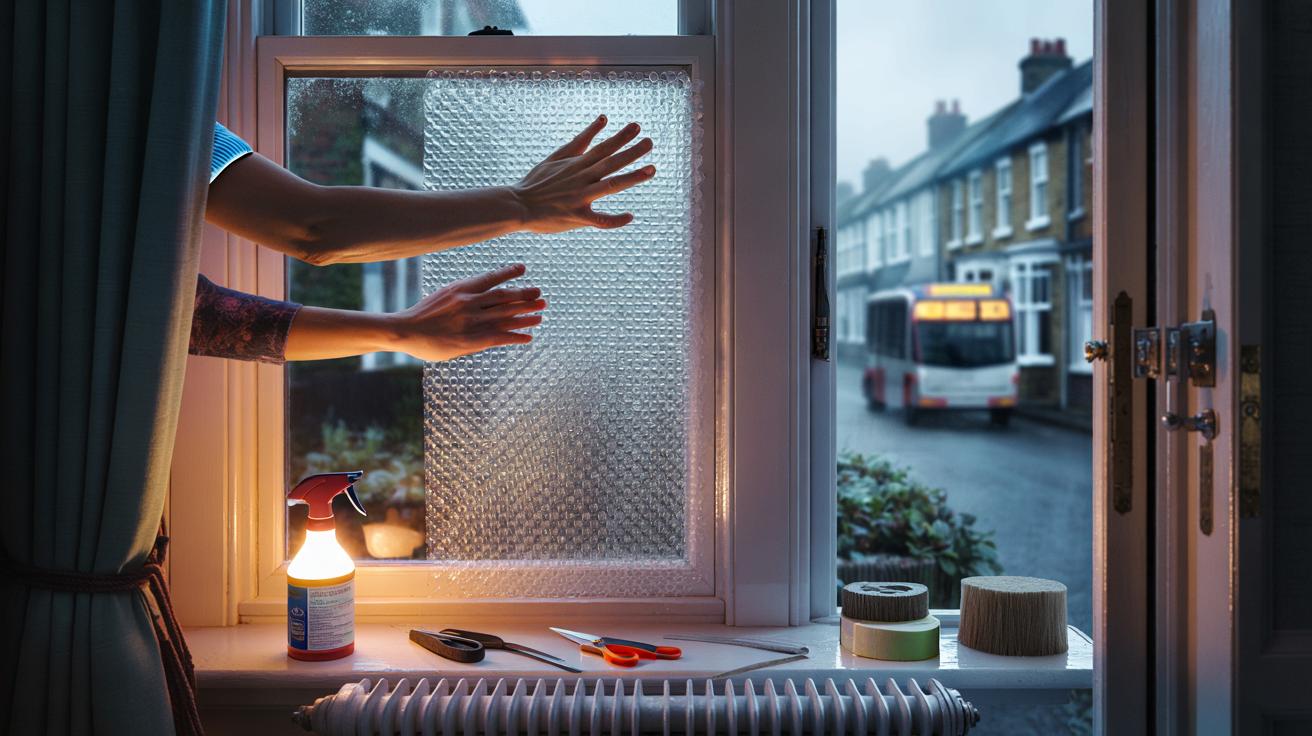
Down the street, a neighbour is taping something to their glass. Not a fancy film kit. Not a new frame. Just bubble wrap from a delivery box, cut neat and pressed to the inside of the window with a mist of water. It looks almost daft for a second. Then you stand in front of it and notice the difference. The cheapest fix isn’t where you think.
The hidden leak you can feel with your fingertips
Stand by a single-glazed window on a windy night and there’s a cold river running down your shins. Even double glazing throws a little chill. The glass loses heat fast, and the air next to it sinks, setting a loop that steals warmth from the room. One gap, multiplied across a home, becomes a slow, expensive draught.
In a small terrace in Leeds, a renter called Naomi tried the hack in one room first: bubble wrap on two big panes, then a cheap strip along a leaky sash. The room stopped feeling “thin”. Her plug-in heater came on less, and the radiator finally caught up. Across typical UK homes, windows account for around 10% of heat loss; reduce the bite here and the rest of the house settles.
Why bubble wrap? Those sealed pockets of air act like tiny quilts. You’re not turning glass into a wall; you’re blunting the worst of conduction and slowing convection where it starts. The bubbles lift the interior surface temperature just enough to calm that cold downdraft. It’s not pretty art. It’s functional comfort — the difference between shivering by the sofa and staying put with a book.
The cheap insulation trick: bubble-wrap glazing in 10 minutes
Here’s the move. Clean the glass quickly with a cloth. Lightly spritz the pane with water. Press bubble wrap (bubble side toward the glass) onto the wet surface and smooth from the centre out. Trim the edges with scissors so it sits snug to the frame, then run a thin line of removable tape round the edges if your frames are draughty. That’s it — instant second skin.
Choose mid or large-bubble wrap for best effect and save your nicest views for uncovered panes. Don’t block trickle vents or fire escapes. If you’ve got painted or delicate frames, test a tiny bit of tape first or skip it and rely on the water cling. Remove in spring, wipe the glass, and roll the wrap for next year. Let’s be honest: nobody does this every day. You’ll do it once, then forget your windows were ever icy.
Some people worry it’ll look scruffy or trap moisture. Keep the glass and frame dry before you stick, and leave a whisper of gap at the bottom if you’re in a very humid kitchen or bathroom. I’ll take five minutes and a roll of bubble wrap over a week of shivering. And once you taste the calmer air, you might layer two more quick wins.
“The biggest feedback I hear is: it just feels less harsh. People don’t notice the hack after a day — they notice they’re not hugging the kettle,” says Louise, a housing officer in Newcastle.
- Radiator reflector foil: a thin sheet behind radiators on external walls bounces heat back into the room.
- Draught-proofing: foam strips for frames, a letterbox brush, and a door snake stop that low, icy creep.
- Thick, lined curtains: close at dusk for a “soft wall” over glass; open by day to snag free sun.
Make the room kinder before the cold arrives
There’s a reason this hack spreads from one flat to the next each winter. It’s small, reversable, and you feel it right away. We’ve all lived that moment when the forecast dips and the house feels suddenly older than it is. A layer of bubble wrap, a foil panel, and a brush on the letterbox turn that panic into a plan.
| Key point | Detail | Interest for the reader |
|---|---|---|
| Bubble-wrap glazing cuts the chill | Trapped air pockets raise interior surface temp and slow downdrafts | Immediate comfort boost with £0–£5 materials |
| Radiator reflector foil helps on external walls | Reflects radiant heat back into the room rather than into brick | Warmer rooms without turning the thermostat up |
| Draught-proofing seals the sneaky leaks | Foam strips, letterbox brushes, keyhole covers reduce infiltration | Lower bills, fewer cold spots, cosier evenings |
FAQ :
- Does bubble wrap damage windows?No. It clings with water and peels off cleanly. Use low-tack tape on frames if needed, testing paint in a discreet corner first.
- Will it stop condensation?It can reduce it on the room side by warming the inner surface. In very humid rooms, leave a small gap at the bottom or ventilate briefly each day.
- Can I see through it?It’s translucent, not transparent. Light still comes in, but the view blurs. Keep key views uncovered and treat the rest.
- Is this safe for renters?Yes. It’s temporary and reversible. Skip strong adhesives; water cling and gentle tape are your friends.
- What else should I do before a cold snap?Bleed radiators, fit reflector foil, roll a draft snake at doors, close thick curtains at dusk, and set a steady, modest thermostat to avoid cold-soak.





Just tried this on our leaky sash in Glasgow — wild difference. Radiator finally keeps up. Cost me £0 with parcel bubble wrap. Definately warmer.