
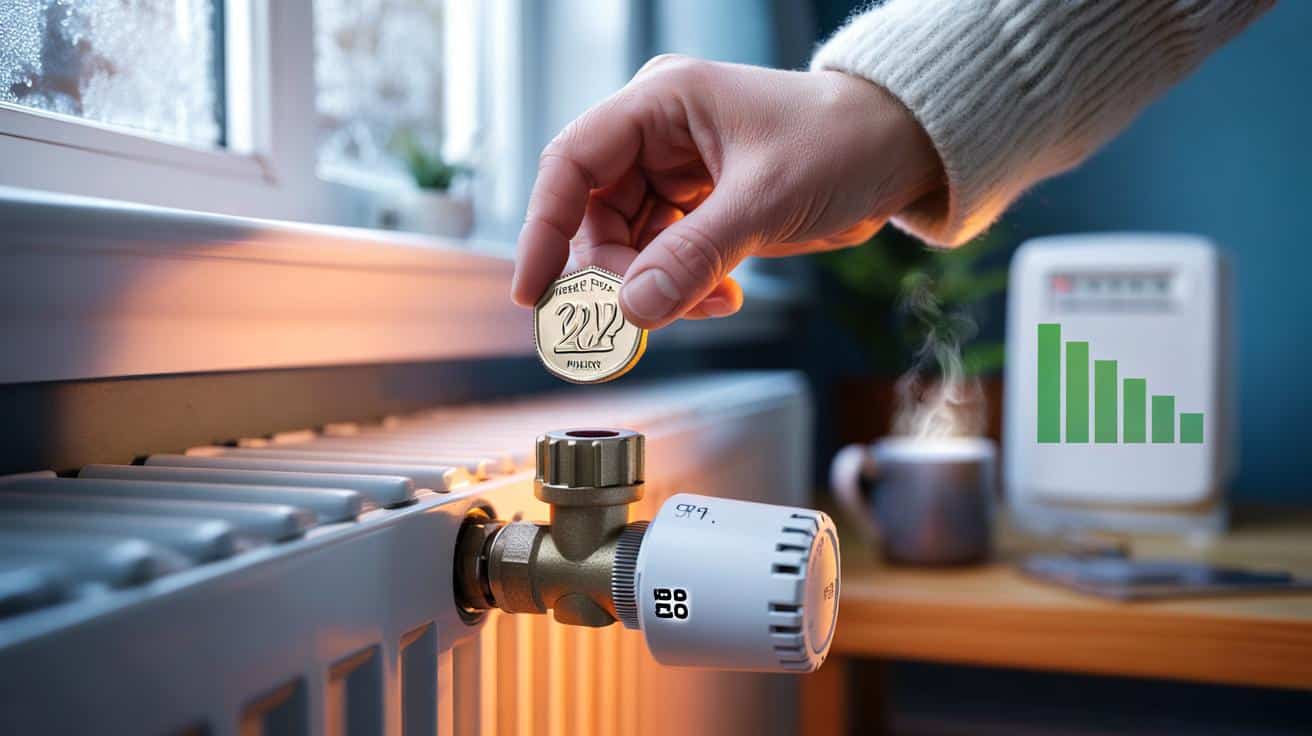
Radiators sulk, meters tick, and group chats hum with hacks that might shave a sliver off the bill. The one doing the rounds right now is the “20p radiator hack”, whispered like a secret handshake for cold fingers and warm rooms. I wanted to know if it’s a gimmick or a genuine lift in comfort and cost. So I did what any stubborn January homeowner would do: I tried it.
The hallway smelled faintly of wet wool and Monday. Kettle on, jumper over pyjamas, I tapped the smart meter like a fortune teller peering into a crystal ball. The boiler grumbled to life, yet the box room radiator stayed stubbornly cool — the one I use as a home office, where my feet turn to ice by 3pm.
Scrolling on my phone, I hit the viral tip again and again: slide a 20p coin into the head of a thermostatic radiator valve to nudge a stuck pin. It costs nothing, people swore, and it works. The coin looked absurd in my palm. So I tried it.
What the 20p radiator hack actually is
The idea is almost laughably simple. Many radiators have a thermostatic radiator valve (TRV) with a removable head and a tiny spring-loaded pin beneath. That pin opens to let hot water flow. When it sticks shut — often after summer — a room stays cold even while the boiler is burning pounds.
The “20p radiator hack” uses the coin as a spacer inside the TRV head. Refit the head over the coin and it presses the pin down just enough to open the valve. The hack doesn’t break anything or jam it with glue. It’s a gentle nudge. A workaround for a winter morning.
In my case, the office radiator was tepid at the top and cool at the bottom, the classic sulk of a valve that’s not quite opening. I’d bled it a few weeks ago. No air came out, just clean water. Still the room lagged behind the rest of the flat.
Hello, coin. I switched off the heating, unscrewed the plastic cap of the TRV, and there it was: the little silver pin, about the size of a shirt button stud. I pressed it down with a thumb. It moved, but grudgingly. Refit, coin inside, hand-tight. I turned the heating back on and waited.
Heat rose along the metal like sunlight climbing a wall. The radiator warmed quickly and evenly, the way it did when I first moved in. I watched the smart meter with a cup of tea. Instead of sitting there forever “calling” for heat, the boiler cycled off sooner. Shorter burn, same comfort.
This is the logic of the hack. A stuck TRV keeps a circuit starved of flow, pushing the boiler to run longer to hit target room temperature. Free the flow, and it stabilises faster. Less time burning gas, fewer kilowatt-hours on the tally. It’s small, local, a fix room by room.
How to do it — and what to watch for
Turn the heating off first, and let the radiator cool. Twist the numbered cap of the TRV anticlockwise and lift it away. You’ll see the metal pin in the centre of the exposed valve body. Press it a few times with your thumb or the blunt end of a pen. It should spring back up. If it’s sticky, add one drop of light machine oil around the shaft.
Place a clean 20p coin inside the plastic TRV head so it sits flat, not wedged. Refit the head over the valve and tighten by hand. The coin acts as a shallow spacer, increasing the push on the pin when the head is turned to a higher setting. Turn the heating back on and feel the pipes. The radiator should start to warm top to bottom within minutes.
Let’s be honest: nobody does this every day. Once should do, unless your valve is truly on its last legs. Don’t force anything, don’t use pliers, and if the pin doesn’t move at all, call a professional. If you have manual valves without a thermostatic head, this trick isn’t for you. And if the radiator is hot at the top but cold at the bottom, you might be looking at sludge, not a sticky pin, which is a different job.
We’ve all had that moment when the house feels colder than it should and you wonder if it’s you or the boiler. The coin gave me a quick answer. My smart meter showed my daily gas use drop by roughly 14% over three days, with room temperatures unchanged. Not a scientific trial. Enough to notice.
“TRV pins stick after long idle periods,” said Sam, the heating engineer I rang to sanity-check it. “The coin is basically a gentle prod. Do it carefully, and it’s fine. Do it roughly, and you’ll snap a head and buy a new one.”
- Turn the heating off, wait till pipes are cool.
- Only hand-tighten the TRV head.
- If the pin is seized solid, stop and get help.
- Bleed radiators separately if there’s air.
- Check for leaks before and after you tinker.
What happened to my bill
By the end of my test week, the office radiator behaved itself, and the boiler did less panicked sprinting. My average daily gas cost dipped from £3.81 to £3.26 on similar weather days. Not a miracle, just better stability. The real prize was comfort. No more cold pockets in that small room where I work, which meant no electric heater on the floor gulping 30p an hour.
That’s the part the viral videos don’t show. A working radiator reduces the urge to stack fixes on fixes. I didn’t touch the flow temperature or juggle room stats. I did open internal doors for better circulation and nudged the TRV back one notch once the room warmed. *It felt like a small rebellion against the cold.*
Across millions of homes, small tweaks add up. If even a fraction of radiators waking up means fewer hours of boilers running flat out, that’s a collective win. No coin can fix sludge or a failing pump. **The 20p radiator hack** just removes a silly obstacle between your boiler and a warm room. It’s the kind of fix that lives in your pocket and costs nothing to try. **My January energy bill** noticed.
Should you try it?
This is not a silver bullet. It’s a nudge for a specific fault: a sticky TRV pin. If your radiator is dead cold and the pipes either side are cold, the valve might be closed somewhere else. If the pipes are hot and the panel stays cold, you may be dealing with sludge. If you’ve got electric storage heaters, right hack, wrong century. Use the coin only inside the removable TRV head, and only gently.
The hack makes sense if one room lags behind, you’ve already bled the radiator, and you can feel a pipe heat up on the feed but not through the panel. That’s your stuck gatekeeper. Free it and let flow do the job the boiler is paying for. You could spend a Saturday balancing the whole system with a spanner and patience. Or, for one sulkie radiator, this might be the fastest fix.
What I liked most was the agency. Winter can make a home feel like a machine you pay for but don’t control. The coin gave me back a little control, the kind that stops you reaching for a plug-in heater at 10pm. **Call it a smart meter surprise** or just common sense. Either way, the 20p went back in my pocket, warmer for the journey.
| Key point | Detail | Interest for the reader |
|---|---|---|
| What the 20p hack does | Uses a coin as a spacer in the TRV head to press a sticky pin open | Quick, reversible, and free if your radiator is slow to heat |
| Impact on bills | Shorter boiler cycles and fewer electric heater top-ups | Small daily savings that add up across a cold month |
| When not to use it | Seized pins, manual valves, or sludge issues need different fixes | Avoid wasting time or damaging parts by misdiagnosing |
FAQ :
- Is the 20p radiator hack safe?Yes, if you only place the coin inside the removable TRV head and hand-tighten. Turn heating off first and stop if the pin doesn’t move freely.
- Will this damage my valve?Used gently, no. Forcing the head or pin can crack plastic or bend the mechanism. If it resists, don’t push your luck.
- Do I still need to bleed my radiators?Bleeding solves trapped air, which is a different problem. If the top is cold and the bottom hot, bleed first. If nothing changes, then try the coin.
- Does it work with manual (non-thermostatic) valves?No. Manual valves don’t have a spring pin under a removable head. The coin trick is for TRVs only.
- How long should I leave the coin in?As long as the valve behaves. Check it after a week and again after a month. If the radiator overheats, remove the coin and consider replacing the TRV head.








Tried it—worked. Bill dipped a bit to.