
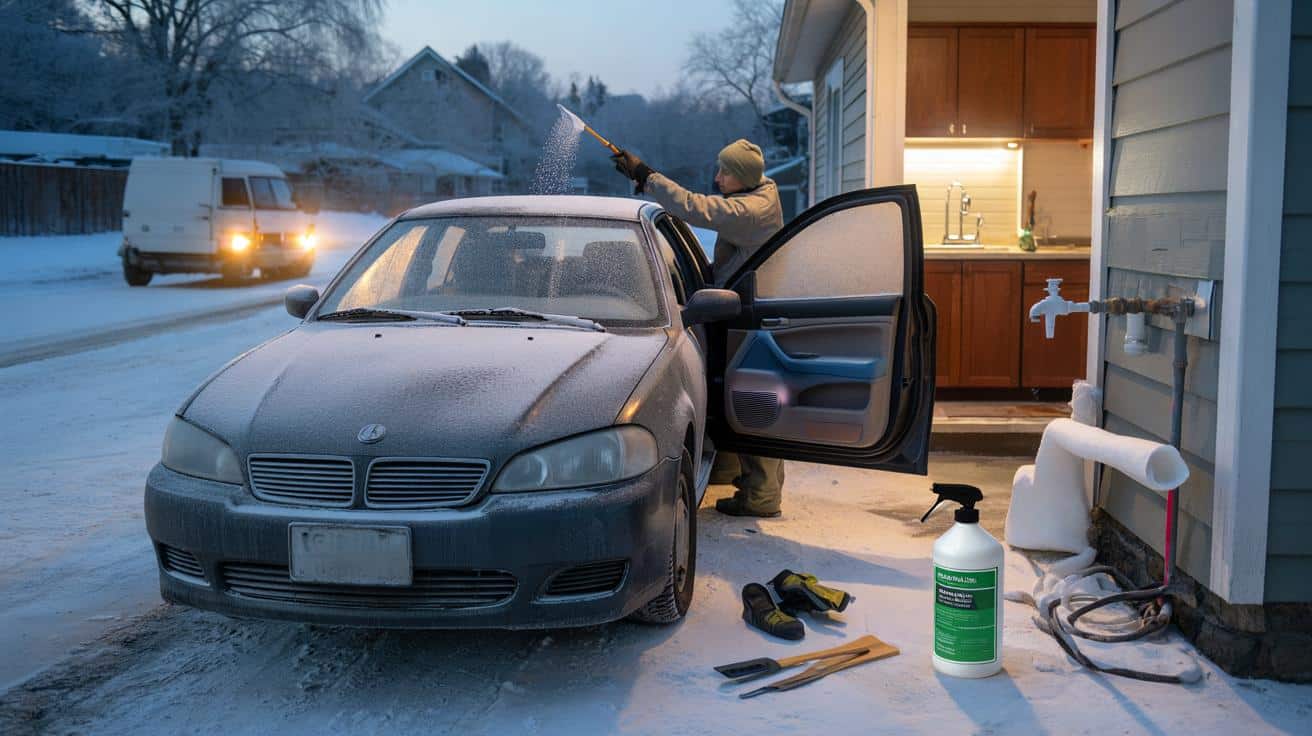
A brutal cold snap is cutting across the country, and the first heavy bite lands tonight. Between now and the next 48 hours, your car and your home’s pipes will either be ready—or painfully not. The difference comes down to a few small moves you can still make.
The kind of cold that makes your breath sound louder, like you’re intruding on the morning. A neighbour stood over his hatchback with a kettle in his gloved hand, staring at a windscreen you could ice-skate on. Four doors down, a van from a plumbing firm idled low, orange beacon blinking against a sky that didn’t quite become daylight.
We’ve all had that moment when the key turns and nothing happens—just a sullen click from under the bonnet. Or that sickening tap on the floor, a drip that becomes a trickle, and then a curtain of water from somewhere it never belonged. Small oversights, big mess. The air felt brittle enough to shatter. The clock is already ticking.
Why the next 48 hours matter for your car and your pipes
Cold doesn’t just arrive; it infiltrates. Tonight’s deep freeze will test everything that carries water or power. Cars fail as batteries lose bite and fluids thicken. Pipes freeze in quiet parts of the house, where warmth never quite reaches, and metal forgets how to bend.
Your morning begins in the dark, chasing a windscreen with a credit card and a prayer. Meanwhile, a concealed pipe in the loft decides to expand and split, not at the ice but just beyond it. By lunchtime, the flooring buckles. Insurers say the average escape-of-water claim often runs into the thousands, which hurts long after the thaw. Breakdown services report surges on icy mornings, with flat batteries topping the list.
There’s a blunt physics to all this. Water expands as it freezes, so a pipe packed with ice builds pressure between the freeze point and the nearest closed tap—snap, rupture, chaos. In cars, chemical reactions in the battery slow down, reducing cranking power right when thickened oil demands more. Screenwash without winter protection turns slushy, wipers smear, and visibility becomes a gamble. Small weaknesses meet big cold, and the cold wins.
Your 48-hour plan: simple moves that prevent a cold-weather mess
Start with the car. Top up coolant with the correct antifreeze mix (your handbook will tell you the right spec and ratio). Swap autumn screenwash for a winter-rated blend good to at least -15°C, and lift the wipers off the glass overnight to stop the rubber freezing onto the windscreen. Keep the fuel tank at least half full to reduce moisture in the system, and spray door seals and locks with silicone or graphite to stop them sticking.
If the battery is more than four or five years old—or has been sluggish—get it tested at a local garage and clean the terminals. Park nose-out where possible so jump leads can reach, and stash a scraper and de-icer on the passenger floor, not the boot, in case it freezes shut. Let’s be honest: nobody does this every day. Tonight’s the night to be that person. If you can, use a windscreen cover or even an old sheet, and don’t pour hot water on cold glass unless you like cracks.
Now the pipes. Lag exposed sections in lofts, garages, and under sinks with foam insulation you can cut with kitchen scissors. Fit a cover to the outdoor tap and disconnect hoses. Set the heating to a steady low temperature—around 15°C—to keep the whole home gently warm, and open the kitchen and bathroom cabinet doors so warm air can reach the pipework. Find your stopcock, and give it a quick turn so it won’t seize in a crisis. If you have a stubborn run that freezes every year, a very slow overnight trickle from the cold tap can keep water moving.
One plumber told me the same line he tells his own family: “Frozen pipes rarely burst where you can see them—they burst just out of sight while you sleep.” It stuck.
“Frozen pipes rarely burst where you can see them—they burst just out of sight while you sleep.”
- Move what matters: Brushes, scraper, de-icer, torch, gloves within arm’s reach in the car.
- Protect the weak: Lag the shortest visible stretches of pipe first—kitchen sink and loft feeds.
- Test the stopcock: Quarter turn each way so it frees up, then leave it fully open.
- Warm the cold corners: Crack open loft hatch a touch to let heat drift up.
- Neighbour check: Share this with the person next door who’s always away early.
Think beyond tonight: small habits that keep you ahead of the frost
Cold snaps don’t punish the prepared; they punish the hopeful. A few habits in the next two days will carry you through the week and into the next front. Park smart, facing the sunrise if you can. Keep the kit by the door. Make a quick map in your head: stopcock, mains, external tap, loft run, that one shady bit of guttering that always looks sullen.
Think too about the people around you. A quick knock for the older couple at number 12, a WhatsApp to the street group, a spare tap cover left on someone’s step. The cost of a coffee now can beat the cost of a soaked hallway later. *A home is never truly ready for winter until the people inside it feel a little less alone.*
Tomorrow morning won’t last forever. The frost will lift, the glass will clear, pipes will breathe again. Talk about what worked, what didn’t, and what you’ll change before the next cold front. There will be another one. Sharing the small fixes makes the next one easier—and turns a nervy forecast into a story you control.
| Key point | Detail | Interest for the reader |
|---|---|---|
| Car readiness in 10 minutes | Antifreeze mix, winter screenwash, battery check, wipers lifted, seals lubricated | Fewer breakdowns, faster mornings, safer visibility |
| Pipe protection where it matters | Lag exposed runs, open cabinets, steady low heating, outdoor tap covers | Lower risk of bursts and expensive water damage |
| Emergency mindset | Know your stopcock, keep tools handy, plan parking and access | Respond quickly if something freezes or fails |
FAQ :
- How do I know if my car has enough antifreeze?Check the coolant reservoir markings and your manual for the correct spec. A garage can test the freeze protection in minutes.
- Should I leave a tap dripping overnight?For a pipe that has frozen before, a slow trickle can help keep water moving. Focus first on insulation and steady heat.
- My car battery is cranking slowly—what now?Drive a decent run today to top it up, clean the terminals, and plan a test. If it’s older than four or five years, budget for a replacement soon.
- What’s the safest way to thaw a frozen pipe?Turn off the water at the stopcock. Warm the pipe gently with a hairdryer or warm towels, starting at the tap end. Never use an open flame.
- Is it OK to de-ice a windscreen with hot water?No. Thermal shock can crack the glass. Use de-icer spray and a proper scraper, or a windscreen cover the night before.





This is the rare ‘do it now’ piece that actually made me move. Coolant topped up, stopcock located, and cabinet doors open—took 15 mins. Truely helpful, thankyou!
Quick question: doesn’t leaving a tap dripping waste a lot of water? In a drought‑prone area, is there a better compromise—extra lagging and a small overnight heat boost instead?