
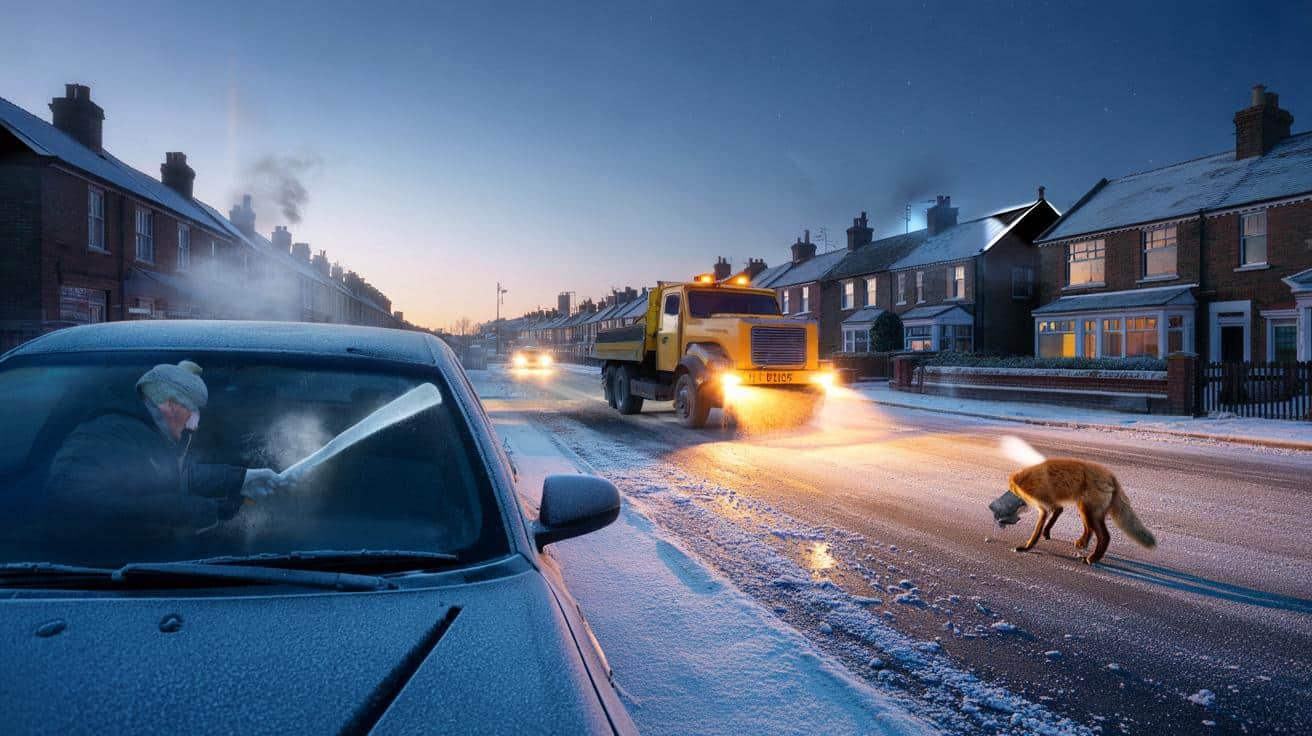
A burst of polar air is sweeping out of the Arctic and straight over the UK, with forecasters signalling a fierce 10‑day spell of sub‑zero nights. Gritters are rolling, pipes are at risk, and the country is bracing for lows near –8°C in the hardest‑hit spots. The deep freeze starts tonight.
The bin lids were sealed shut by a skim of ice, my breath rising in slow ghosts as a fox slid across the pavement like a shadow on skates. From a neighbour’s open window came the clatter of a kettle and the scrape‑scrape of a credit card on a windscreen.
A push alert buzzed the phone: Arctic air locking in for around ten days, with a sharp, dry cold that bites fingers through pockets. You could already feel the air thinning, the sky bleaching to pale metal as the sun tried and failed to bite. Somewhere in the distance a gritter hummed, yellow lights flicking over the frost like a warning beacon. It starts after dark.
What an Arctic plume really means on your street
This won’t be the soft, slushy cold that turns to drizzle by lunchtime. It’s a bone‑dry chill driven by northerly air, the kind that polishes pavements and keeps ice stubborn in the shade all day. Roads that look fine at 4pm will flash‑freeze by 7, and the quiet corners of car parks become little rinks. You’ll notice the small things: the car door that resists, the garden tap that sulks, the way laundry stiffens on the line like thin tin.
There’s a rhythm to these spells that people remember. In 2018, during the Beast from the East, breakdown services recorded big spikes in early‑morning callouts and mid‑school‑run mishaps. Sales of rock salt rocket, then the supermarkets run thin on de‑icer by day three. The first night, everyone posts frosty photos. By night five, it’s all about boots and buses. A deep freeze doesn’t just lower temperatures; it rearranges a day so that trips get shorter and steps get slower.
Behind it all sits a familiar pattern: cold air pooling south as high pressure parks up to the west or north, blocking mild Atlantic air. The jet stream bows, Arctic air spills down, and long January nights do the rest. Rural frost hollows can dip towards **–8°C**, while cities sit a touch less severe under the glow of streetlamps and bricks. Ground temperatures fall quicker than the air, which is why shallow puddles plate over first and shaded lanes turn slick while the main road still looks normal.
Staying warm, safe and sane for a 10‑day freeze
Start with the simple wins. Layer up thin fabrics to trap air, keep wrists and ankles covered, and pull curtains at dusk to lock in heat. Set the heating to tick over so pipes don’t see‑saw between hot and cold, and check your boiler pressure reads where it should. A door draft‑strip can work small miracles; an old towel at the bottom does the job too. Before bed, bleed the radiator that never seems to warm properly and run a quick cycle in the spare room to warm any exposed pipework.
Out and about, think slow and steady. Pack a small kit in the boot: scraper, torch, blanket, snacks, and a power bank. Charge the phone before you leave and leave extra time for the school drop‑off or that early train. We’ve all had that moment when the bus sails by and the chill finds its way into your bones. Let’s be honest: nobody does that every day. Warm socks and a hat change everything, and so does choosing the gritted route rather than the scenic cut‑through.
Check on people, then check again — the cold finds gaps in routines. One hot meal, one warm room, one place to sit without a draft can keep spirits up as much as fingers warm.
“Keep it boring, keep it regular, and the cold loses its edge,” said a neighbour folding an extra blanket on the sofa. “Tea, a lamp, something on the telly — that’s half the battle.”
- Quick check tonight: set heating schedules for mornings and evenings.
- Lag exposed pipes in lofts and under sinks; open cupboard doors to let warm air circulate.
- Move slippers and a coat to the front door so you don’t nip out in socks.
- Top up windscreen wash with winter‑grade fluid; keep the scraper by the handbrake.
What happens next, and why this cold will be talked about
Ten days sounds neat on paper. In real life, it’s a mood. The first night brings photos of glittering hedges and rising moons, the second brings the rhythm of warm‑up, wrap‑up, step wide on the dark patch near the lamppost. By day four you know the dry tick of salt under tyres, and your shoulders drop when a bus arrives with its lights fogged and heaters roaring. The weather app becomes a companion, the front step a test strip for the day’s ambition. This is winter in the small details.
That’s why this Arctic plume will linger in the chat even after the thaw. People will remember how quiet the pavements sounded, how close the stars felt on the really clear nights, how every front garden turned into a tiny Antarctic. And tucked under the headlines there’ll be small stories — a borrowed scarf, a neighbour’s spare key, the dog refusing to step on a metal grate. **Cold snaps expose the bones of everyday life**, and sometimes make it kinder.
| Key point | Detail | Interest for the reader |
|---|---|---|
| Arctic plume timeline | Around 10 days of below‑average temperatures, starting tonight | Know when to plan commutes, school runs, and deliveries |
| How cold it gets | Rural lows near **–8°C** with sharper wind chill on exposed hills | Set expectations for home heating and outdoor time |
| Practical prep | Layering, pipe protection, car kit, slower routes | Reduce stress, avoid mishaps, stay comfortable |
FAQ :
- What is an Arctic plume?A surge of cold air pushing south from polar regions, often guided by a kinked jet stream and a blocking high that keeps milder Atlantic air away.
- Will everywhere hit –8°C?No. The sharpest lows tend to show up in rural frost hollows and sheltered valleys. Urban centres usually sit a few degrees higher, though ice risk remains.
- How long will the deep freeze last?Forecasts point to a roughly 10‑day spell of colder‑than‑average conditions, with the chilliest nights clustered in the early to middle part of the period.
- Could schools or transport be disrupted?It’s possible where ice persists or local conditions turn treacherous in the early morning. Check local authority updates and operator feeds the night before and at dawn.
- What are the best quick wins at home?Close curtains at dusk, block drafts, keep one warm room to retreat to, and run the heating on a steady schedule so pipes don’t swing hot‑cold. Keep a kettle, blankets, and a torch to hand.





Official and confirmed by whom? Is there a Met Office warning (yellow/amber) to go with this, or just modle runs? A link would help.