
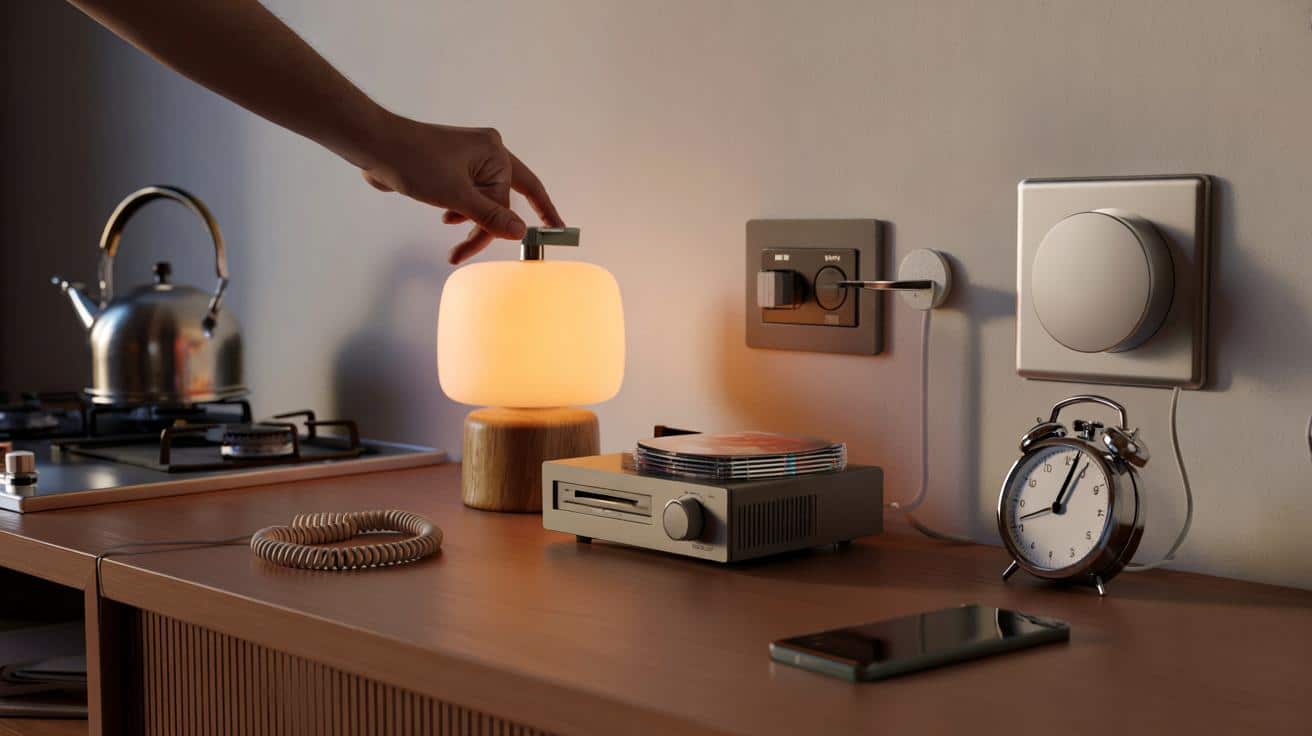
Gen Z is building “Manual Homes”: kitchens with whistling kettles, bedrooms with wind-up alarms, living rooms with CD players that clunk. Not as a retro cosplay, but as a way to feel in control again. The 1990s are back, and they’re wired—literally.
On a damp Wednesday in Hackney, I watch a friend make tea the long way. The hob ticks, the kettle sings, and there’s a stack of jewel case CDs under a lamp that has a lumpy, satisfying switch. Her phone—an unapologetic flip—stays dark and closed, like an animal sleeping. A router timer clicks off at 10 pm. No Alexa. No auto-dimming lights. Just hands, objects, and the little pauses that technology once promised to erase.
The thing is, the room feels calmer. The clock hums. The desk is free of wires and blinking nonsense. She presses play on a Discman, and that tiny whirr is almost intimate. It’s a scene I didn’t expect to like as much as I did. Something’s shifting.
What changed?
The Manual Home mood
The Manual Home is less about nostalgia than it is about boundaries. Young people are discovering that convenience has a cost, and it’s often paid in attention and mood. Smart homes are slick, but they blur the line between being at home and being online. A switch, a knob, a key: these are edges. You feel them. This feels slower, and that’s the point.
Take Maya, 22, who swapped her smart speaker for a radio and a £15 kitchen timer. Her evenings went from an endless string of voice prompts to a pot of pasta that cooks while she reads a paperback. She told me her screen-time nudges dropped without any motivational hacks—just because her flat stopped “suggesting” things. We’ve all had that moment where a room suddenly feels noisy for no reason. She invited some of that noise to leave.
Why now? Gen Z grew up with the cloud and learned its weather. Privacy feels fragile. Subscriptions creep. Updates break things that didn’t need fixing. The Manual Home flips the logic: fewer apps, more agency. A basic thermostat with a dial is legible and repairable. A CD is finite, which makes the album feel like an event. **Friction is back on trend.** And it turns out friction can be warming, like a match struck in the dark.
How to build a Manual Home that still feels modern
Start with a 30-day “manual reset.” Pick three everyday actions and make them deliberately physical. Wake up with a wind-up alarm. Boil water on the hob. Use a paper list for groceries. Keep your smart gear boxed in a cupboard, not binned, and reintroduce only what you truly missed. One simple rule helps: one button, one task. If the button’s labelled “scenes” and “modes”, it’s not manual.
Go room by room. In the bedroom, choose a lamp with a clicky switch and keep a real book within reach. In the kitchen, swap auto-dispensers for jars and a measuring spoon. In the lounge, try a small hi‑fi and a stack of CDs or records you actually like. Let some dead zones exist. Let silence exist. Let tasks have a beginning and an end. Let’s be honest: no one actually does that every day, but doing it most days changes the weather.
Don’t fetishise purity. Keep the tools that save your sanity—maps, banking, the group chat—and strip out the ones that nibble at your focus. **A light switch is not a downgrade; it’s a boundary.** Designers I spoke to call it “legibility”: when a thing shows you what it does, you relax into it.
“When technology vanishes into ‘ambient intelligence’, the user’s labour becomes invisible too,” says a London-based interaction researcher. “Manual cues make our effort honest again.”
- Manual Home starter kit: wind-up alarm, wired headphones, small hi‑fi/CD player, paper calendar, hob kettle, analogue thermostat or radiator valve, surge-protected power strip, a real pen.
- Keep one “bridge device” only: a laptop or a tablet stays; the rest stays in a drawer.
- Fix one thing: change a bulb, repair a hinge, clean a switch. Momentum matters.
Where this is heading
What’s interesting isn’t the retro shopping list. It’s the cultural correction. Smart homes promised a house that thinks for you. The Manual Home says, I want to think for myself in my house. That preference reshapes retail, design, even landlords’ choices. Expect more appliances with big dials and fewer inscrutable touch surfaces. Expect right‑to‑repair to feel mainstream, not niche. **Silence is a feature, not a bug.**
There’s a social layer too. Friends borrow CDs again and compare notes on rewiring a lamp. Parties drift towards board games, not because screens are evil, but because a pile of cardboard and dice focuses a room. The dopamine doesn’t spike, it accumulates. Brands will chase the look—grainy plastics, clacky keys—but the feel is harder to fake. A Manual Home is not a theme; it’s a tempo. The real win is getting your evenings back.
| Key point | Detail | Interest for the reader |
|---|---|---|
| Friction as a feature | Manual switches, dials and physical media create boundaries | Sharper focus, calmer rooms, fewer nudges |
| Selective downgrade | Keep essential digital tools, ditch ambient “smart” layers | Control without going off‑grid |
| Repairable by design | Buy devices with parts, screws, and clear labels | Save money, extend lifespans, feel capable |
FAQ :
- Isn’t this just nostalgia?It looks nostalgic, but the motive is practical: attention, privacy, and repair. The 1990s are a toolkit, not a costume.
- Will I lose convenience?You’ll lose some automations. You’ll gain predictability and fewer interruptions. Many people report tasks feel richer, not harder.
- Do I need to bin my smart devices?No. Box them for 30 days and reintroduce only what you missed. Treat it like a food elimination diet for your home.
- What’s the cheapest way to start?One wind-up alarm, one lamp with a switch, one pair of wired headphones. Under £50 if you hunt second‑hand.
- What about accessibility?Manual doesn’t mean exclusionary. Choose tools that fit your body and brain, and mix in assistive tech where it truly helps.




BRB, buying a wind-up alarm.
Thanks for the « one button, one task » rule—it actually makes sence. Boxed my smart speaker and my evenings got quieter, like, immediately.