
A new wave of research is making parents pause: were the scraped knees, the long walks to school and the “be back by tea” rules of the 60s quietly building tougher adults? Across Britain, and in the big longitudinal studies, scientists are pointing to a clear pattern — more freedom, more responsibility, more grit.
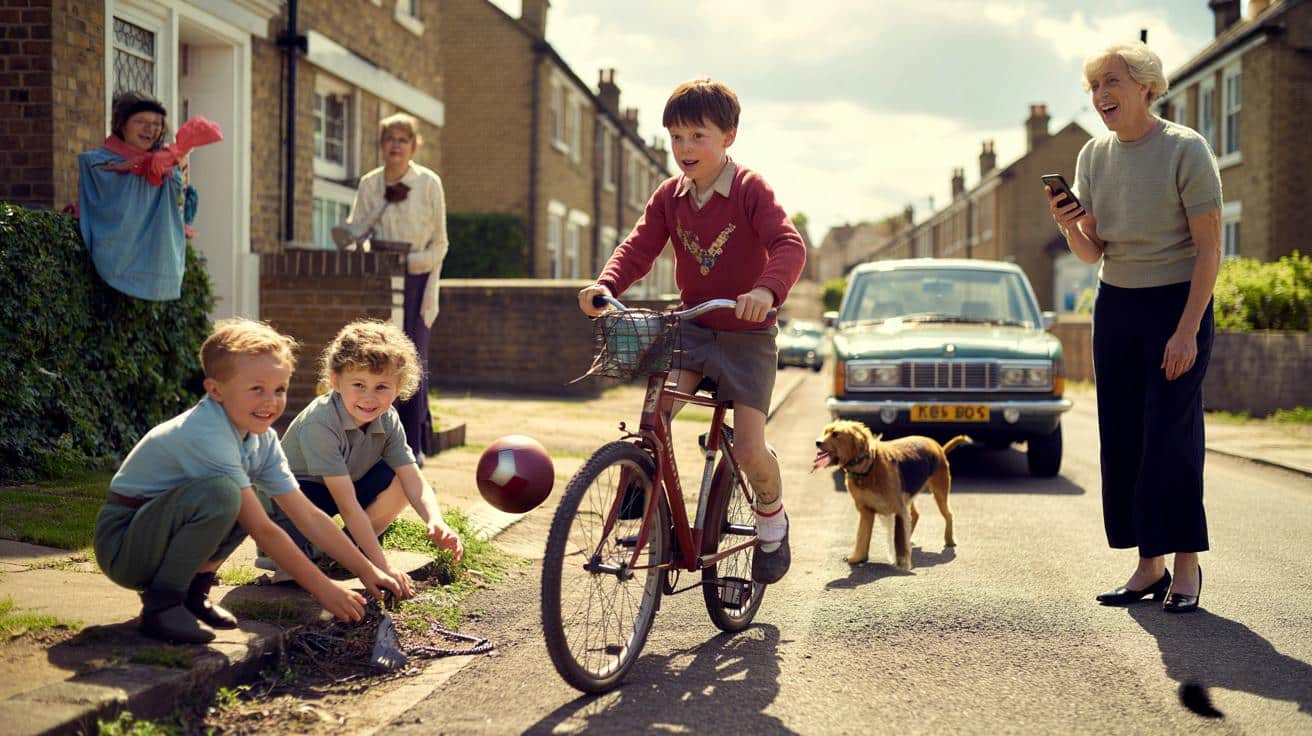
A boy in a hand‑me‑down jumper pedals a creaky bike, chasing a scuffed football, no adult in sight except a mum shouting from a doorway that tea’s at six. The pavement is a map of minor risks: kerbs, nettles, a loose dog that’s more bark than bite.
Next to me, a modern parent scrolls a phone and flinches. “Where are their helmets?” she says. A grandad leans in, smiling. “We did all this every day.” The kids wobble, argue, make up, get on with it. No one steps in. The scene settles into a kind of ordinary courage.
What if that was the secret?
The data that rewrites the parenting playbook
Researchers tracking British and international cohorts keep seeing the same thing. Kids given autonomy — chores, street play, real responsibilities — tend to grow into adults who handle stress better. They don’t panic as quickly. They recover faster.
In the famous Dunedin Study, children with better self-control at seven had healthier bodies, stronger finances and fewer arrests by midlife. That self-control wasn’t magic. It looked a lot like daily limits and small freedoms. UCL scientists have echoed this with UK data, linking early independence to lower adult distress and higher life satisfaction.
Ellen Beate Hansen Sandseter’s work on “risky play” adds a layer. Children who climb higher, roam wider and manage small risks build a calmer relationship with fear. Peter Gray’s research on free play shows those scrappy games teach negotiation and grit. **Resilience isn’t born in comfort; it’s forged in manageable challenge.**
Think of the 60s as an informal training ground. Unstructured time meant kids became their own referees, their own repair shops. A broken toy needed fixing, not replacing. A late bus meant reading a timetable, not calling a parent to rescue.
We’ve all had that moment when a tyre pops or a plan collapses. If you’ve practised finding a way through, even as a child, the adult version lands softer. That’s what the longitudinal data reflects — the muscle memory of coping.
It wasn’t all rosy. There was smacking, silence around emotions, and kids left to sink or swim. Yet scientists aren’t praising neglect. They’re spotlighting a mix: warmth plus space, connection plus responsibility. The old school bits that aged well.
Why does this cocktail work? Because agency is a deep human fuel. When a child chooses a route, cooks a meal, or solves a playground dispute, the brain files a vital note: “I can.” That note compounds over years like quiet interest.
Chores and freedom also create “stress inoculation.” A small dose of difficulty, then a return to safety, trains calm. You fall out with a friend, you fix it. You get lost, you ask a shopkeeper for directions. The world feels navigable, not hostile.
There’s also attention. Unscheduled time nudges kids to notice — the sound of traffic at the crossing, the change in a friend’s voice. That noticing becomes judgement, becomes street smarts. Combined with caring adults, it lays down durable confidence.
How to borrow the best of the 60s — safely
Start tiny. Give a child one daily responsibility that truly matters to family life. Pack their own PE kit. Walk the last ten minutes of the school run alone while you trail behind. Pay for the bus and let them map the route.
Give them permission to be a bit bored. A “find your own fun” hour after school can be gold. A pocketknife for whittling, with rules. A Sunday roast they cook end‑to‑end, with you as sous‑chef. Make the risk real but reasonable, and celebrate the fix, not perfection.
Introduce “permission slips” for small independence. “You can cycle to the corner shop if you text when you leave.” Set a family “repair before replace” rule. Broken zip? YouTube and thread first. **Start smaller than you think.** Then nudge the line out, week by week.
Common pitfalls show up fast. Doing everything for a child to speed things up. Standing over them narrating every move. Filling every hour with clubs until there’s no space to play.
Let go of the tidy timeline. A ten-year-old might crack omelettes before tying perfect laces. A thirteen-year-old might be great at navigating buses and hopeless at packing. That’s fine. **Warmth plus freedom is the winning mix.** And yes, set clear boundaries — roads are real, people are complex, the world has edges.
Let’s be honest: nobody actually does that every day. Progress is lumpy. There are weeks when comfort wins and that’s human.
“Give children real work, real trust, and a safe harbour. They’ll surprise you,” says a child development researcher I spoke to in London.
- One real chore daily, not token tasks.
- One pocket of unstructured outdoor time per week.
- One “mini-journey” they lead — shop, bus, library.
- One repair challenge before any replacement.
- One debrief at the end: what worked, what’s next.
The bigger picture this points to
The 60s gave children a wide radius and a thick skin. Modern life gives us better science and safer streets in many places, plus new anxieties and screens. The sweet spot is a hybrid — old-school independence with today’s emotional literacy.
This isn’t nostalgia. It’s pragmatic design. If we want twenty-five-year-olds who can handle a tough meeting, share a flat without drama, and stay steady when plans go sideways, we can rehearse those skills at nine. On bikes, in kitchens, on pavements.
The resilience adults carry today often began with small victories that no one Instagrammed. A stuck zip. A wrong bus. A tricky friend. Each one filed under “I can.” That’s the quiet power the scientists keep finding. If we share those chances again — on purpose — the next generation might just breathe easier when life gets loud.
| Key point | Detail | Interest for the reader |
|---|---|---|
| Autonomy builds resilience | Chores, unstructured play and small risks correlate with better adult coping | Practical ways to boost a child’s future grit at home |
| Mix warmth with freedom | Supportive adults plus real responsibility beat strict control | A humane model that feels doable, not harsh |
| Start tiny, grow weekly | One real chore, one outdoor pocket, one mini-journey, one repair | A clear starter kit you can try this week |
FAQ :
- Does this mean 60s parenting was perfect?Not at all. The science points to specific ingredients — autonomy, responsibility, unstructured play — not to everything that happened back then.
- What about safety in modern cities?Use gradual independence. Shorter distances, buddy systems, text check-ins, trusted routes. Safety and freedom can coexist.
- Won’t my child feel abandoned?Not if you pair freedom with warmth. Agree the boundaries, debrief after, and stay emotionally available. The message is “I trust you,” not “You’re on your own.”
- How do screens fit into this?Think substitution. Swap one scheduled club or one hour of scrolling for an autonomy task: cook, cycle, plan a mini-trip. Keep it concrete.
- Any quick win for this weekend?Yes: let your child plan and lead a simple errand to the corner shop with a small list and budget. Debrief with hot chocolate.







I love the warmth + freedom mix — feels doable. Starting with a mini bus route and a Sunday roast they cook? We’re trying this week 🙂
Correlation isn’t causation. Did the Dunedin and UCL analyses control for socioeconomic status, parental education, neighborhood safety, and parental mental health? Also curious about selection bias: families that grant autonomy might also model calm problem‑solving. How do the studies tease apart parenting style from underlying temperament?