
Bills are up, boilers are tired, and renters can’t tear into walls. So people are turning to a humble fix: a thin, silvery thermal film that costs about 20p a sheet. It’s changing January, one taped corner at a time.
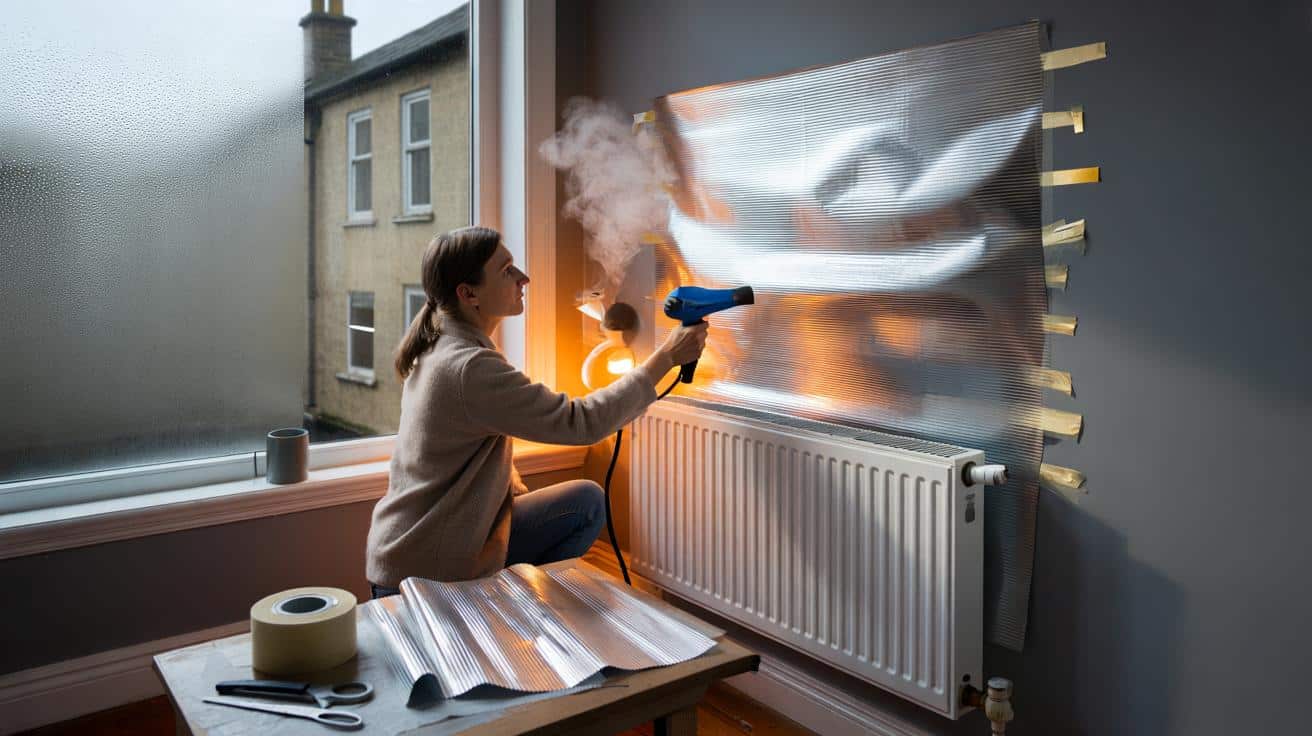
On a damp Tuesday in Leeds, a father warms his hands around a mug while the kitchen radiator clicks and exhales. His breath fogs the window; the glass is cold enough to bite. He peels a strip of double-sided tape, smooths a wafer of thermal film behind the radiator, then coaxes it tight with a hairdryer. The room shifts from tired to soft in a minute. *I could swear the room stopped shivering.* He laughs at the tiny cost, at the small audacity of it. This winter, a sheet of film is stealing the show.
The ‘death of the radiator’ starts with a roll of foil
The old picture of British heat is simple: turn up the radiator, pull on a jumper, repeat. That picture is fading. The modern move is to make the radiator smarter by reshaping the room around it. A 20p thermal film, tucked behind your panel, bounces radiant warmth back into the space and stops it bleeding into cold walls. It’s not glamorous. It’s quietly brilliant.
In Croydon, Kemi and her partner tried it on one external wall and felt the difference before the kettle boiled. The front room stopped gulping heat; the radiator cycled less; the chill off the plaster softened. Engineers will tell you windows and walls are where much of your heat slips away — roughly a fifth through the glass in many homes, and plenty through uninsulated external walls. A few sheets of film target those losses at the source. It’s a small thing that feels big.
Think of a radiator as a campfire. Half the heat radiates straight out; the rest warms the air that slides up and loops around the room. When that fire sits beside a cold brick wall, a chunk of the warmth is simply soaked up and lost. Reflective film creates a thermal mirror, so the heat you’ve already paid for re-enters the room and the convective loop gets a gentle turbocharge. **It’s not magic; it’s physics and a bit of tape.** And in a country of draughts and bay windows, physics wins.
How to install 20p thermal film without the faff
Choose a roll of reflective radiator film or a multi-pack of cut panels. Measure the radiator width, cut the film to sit just smaller than its outline, and stick thin strips of high-temperature tape to the wall, not the metal. Slide the film down the back, reflective side facing the room, then smooth it flat. If you’re using window insulation film, apply tape to the frame, stick the film, and shrink it taut with a hairdryer.
Work on the coldest external walls first. Avoid blocking any radiator valves or vents, and leave a little gap at the top so hot air can circulate freely. If condensation is a regular guest, pair the film with gentle ventilation and a cheap hygrometer. Let’s be honest: nobody really does that every day. Try a simple habit instead — crack a window for five minutes after showers and cooking, then close it. Your film will thank you.
Some people worry film looks tacky or “temporary”. It doesn’t have to. Tuck edges neatly and cut clean lines. A heating engineer told me,
“If you can use scissors and a hairdryer, you can save heat. Start with the worst wall. You’ll feel it on the next bill.”
For quick wins, use this checklist:
- External walls behind radiators first, then north-facing rooms.
- Pair with simple draught strips on doors and letterboxes.
- Keep curtains from smothering radiators — hang them to just skim the sill.
- Don’t cover thermostatic valves or block airflow grills.
- Revisit and retension window film mid-winter if it loosens.
**No drilling, no landlord dramas, just warmer rooms.**
Why this tiny fix is suddenly everywhere
We’ve all had that moment when the room looks fine but feels thin, as if the warmth can’t quite find you. The cost-of-living squeeze has turned millions of us into forensic investigators of lost heat. A decade ago, the answer was “new boiler, new radiators, new everything”. Now the answer is often tape, foil, and ten minutes of care. There’s pride in the scrappy elegance of that.
Radiators aren’t literally dying; they’re losing their crown as the only story. The plot now includes reflective surfaces, sealed gaps, smarter controls, and, yes, lower flow temperatures that suit heat pumps. Thermal film is the gateway drug to efficiency, because it gives you a win today. **This is a 20p tweak with outsized impact.** People feel that straight away, which is why it’s bouncing around group chats and corner shops in midwinter.
There’s something else happening too. Small upgrades return agency to renters and flat-sharers who can’t rip out floors or apply for grants. When the power sits with landlords or long waiting lists, a DIY fix changes the mood in the room. The radiator becomes a partner, not a complaint. The phrase “death of the radiator” ends up sounding less like doom, more like evolution. The warmth moves from a single metal box to the whole envelope of the home.
| Key point | Detail | Interest for the reader |
|---|---|---|
| Thermal film redirects wasted heat | Reflective backing behind radiators bounces radiant energy back into the room and improves convection | Warmer rooms from the same boiler setting and less cycling |
| Costs can be tiny | Bulk-buy panels land at around 20p each; tape and scissors are all you need | Immediate, low-risk experiment before pricier upgrades |
| Best used on cold boundaries | External walls and north-facing rooms first, then pair with simple draught-proofing | Maximises the “first sheet” impact where heat loss bites hardest |
FAQ :
- Does thermal film replace a radiator?No. It helps your existing radiator deliver more of its heat into the room instead of the wall. Think of it as a booster, not a substitute.
- Will it work with heat pumps and low-temperature heating?Yes. Improving the room’s envelope helps any heat source. Reflective film and window film reduce losses, which is ideal for lower flow temperatures.
- Is it safe behind hot radiators?Use products sold for radiator or insulation use and stick the film to the wall, not the metal. Keep it clear of valves and electrics, and don’t cover radiators entirely.
- What about condensation and mould?Thermal film can warm interior surfaces slightly, which helps. Still, manage moisture with short, sharp ventilation and lids on pans. If mould appears, address moisture at the source.
- How long does it last, and can renters remove it?Radiator film can sit happily for years. Window film often lasts a season or two. Both peel away with care; a quick wipe removes tape residue when you move out.






Anyone tried this with old cast-iron column radiators?
Just installed the 20p foil behind two radiators in a draughty rental. Followed the tape-to-wall tip and used a hairdryer—took 15 mins. Room feels less “thin” and the boiler isn’t short-cycling as much. Cheers for the checklist.